Page Tools


Scientific Report


Scientific Report

Download the Scientific Report [7.5 MB]

View the entry for
Matthew D. Weitzman


Matthew D. Weitzman

Matthew D. Weitzman

Associate Professor and Pioneer Developmental Chair
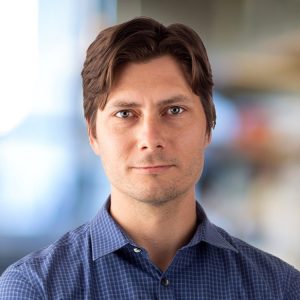
Laboratory of Genetics

"Viruses are powerful model systems to study cell biology. Our lab has become particularly interested in how viruses are recognized by the cellular DNA damage pathway, and we have uncovered ways that viruses either exploit or manipulate the cellular machinery as they commandeer the cell for virus production. Our findings have important implications for understanding DNA repair and genomic instability."

Like all viruses, herpes simplex virus (HSV)–the culprit behind cold sores–requires a living host in order to multiply. But before it can hijack the cellular machinery to produce scores of copies of itself, it needs to evade the cell's security system. To the host cell, invading viral DNA looks just like the product of DNA damage, which must be repaired or removed in order for the cell to stay healthy. This led Weitzman to suspect that viral DNA would be recognized by the cell's DNA repair machinery and that the virus must somehow override the cell's response to this foreign DNA.

To test this hypothesis, Weitzman and his team looked at what happens in a virus-infected cell when its DNA is damaged. In a normal cell, DNA damage sensor proteins rushed to the site of damage. In cells infected with HSV, however, the cells' emergency repair teams didn't respond properly. They identified a single viral protein, known as ICP0 that takes out the DNA damage response in human cells. It attaches so-called ubiquitin marks to two important DNA "security guards," the proteins called RNF8 and RNF168. Ubiquitin flags proteins for destruction, in this case instructing the cell to get rid of the very proteins that protect it. Others had recently reported that RNF8 and RNF168 play a central role in DNA repair, where they ubiquitinate a protein called histone H2A, which directs DNA damage response proteins to accumulate at the sites of damage. The Weitzman lab found that through the degradation of these security guards, the virus prevents ubiquitination at sites of cellular damage and therefore diminishes the cell's ability to call in repair proteins.

Watching these battles unfold yields important insights into fundamental mechanisms that allow HSV to dismantle its hosts' defenses and may suggest a common mechanism by which viruses can successfully infect host cells. It also points out the key steps in maintaining an undamaged genome, which is a continuous challenge and crucial to prevent a cell from turning cancerous.

Lab Photo

Left to right:
Inigo Narvaiza, Brandon Lamarche, Nicole Orazio (seated), Liz Boice, Mira Chaurushiya, Matthew Weitzman (seated), Caroline Lilley, Marius Tham, Ayumi Kudo (seated), Sebastien Landry

Print version -
Matthew D. Weitzman

Faculty

Matthew D. Weitzman

Matthew D. Weitzman

Associate Professor and Pioneer Developmental Chair

Laboratory of Genetics

Matthew D. Weitzman, an associate professor in the Laboratory of Genetics, is studying the interactions between viruses and their host cells. While the virus tries to commandeer the cellular machinery to aid its own replication, the host cell responds with defense systems that create obstacles for the virus. Watching these battles unfold has contributed significantly to our understanding of fundamental cellular mechanisms and has established viruses as powerful models to study cell biology. The lab is using human DNA viruses to study DNA damage responses, DNA repair, and innate antiviral defenses such as those provided by the APOBEC proteins.
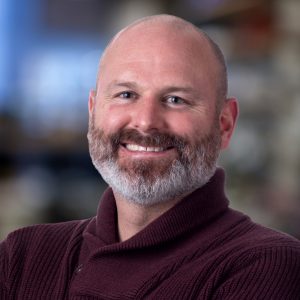

Knowledge from viral systems can also be harnessed to alter the genetic makeup of cells. Viral vectors take advantage of the innate ability of viruses to transfer genetic material into target cells. Weitzman is developing novel delivery systems based upon DNA viral vectors that can be used for gene therapy applications.

Education

Awards and Honors

Selected Publications

Links

Salk News Releases