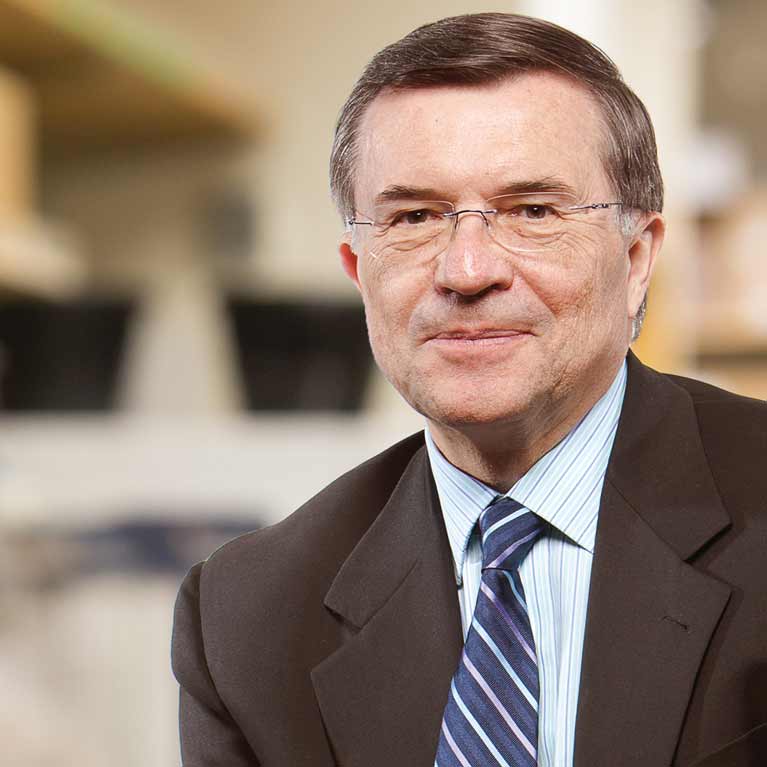
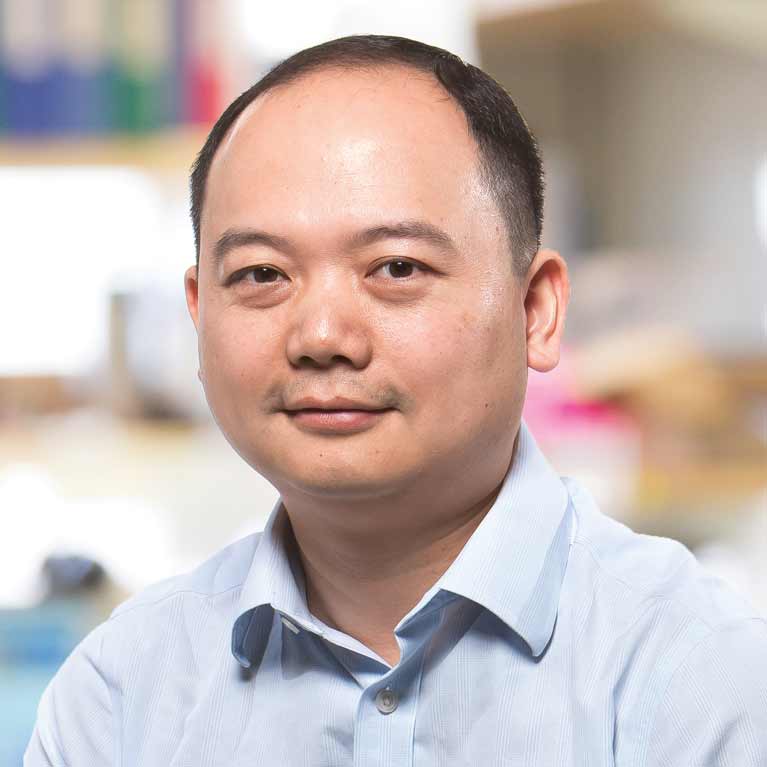
Inder M. Verma
Professor
Laboratory of Genetics
American Cancer Society Professor of Molecular Biology
Irwin and Joan Jacobs Chair in Exemplary Life Science

Research
Inder M. Verma, a professor in the Laboratory of Genetics and American Cancer Society Professor of Molecular Biology, is one of the world's leading authorities on the development of viruses for gene therapy vectors. Dr. Verma uses genetically engineered viruses to insert new genes into cells that can then be returned to the body, where they produce the essential protein whose absence causes disease.
Dr. Verma and Salk colleagues developed a gene therapy vector, based on a stripped-down version of HIV, that can deliver genes to non-dividing cells, which constitute the majority of the cells in our bodies. They have used this vector successfully to deliver the clotting factor gene to laboratory animals and to transfer a therapeutic gene to retinal cells to mice with an inborn deficiency. Dr. Verma's group is also studying two genes implicated in familial breast cancer, BRCA1 and BRCA2, and recently demonstrated that their action is linked to the cell's division cycle and that BRCA1 regulates gene activity.
"One of the major interests in our laboratory is understanding the molecular mechanisms of cancer and the role of inflammation, which is the underlying cause of many diseases."
The mouse has long provided researchers with valuable insights about cancer. But the most commonly used technique for producing a cancer mouse model–transplanting human tumor tissue or cancer cell lines in immunocompromised mice– ignores the role of the immune system in cancer. Other animal models either express oncogenes in a tissue-specific manner or shut down the expression of tumor suppressor genes in the whole tissue. But tumors generally develop from a single cell or a small number of cells of a specific cell type, which is one of the major determinants of the characteristics of tumor cells.
To create a better mouse model, researchers in Verma's laboratory turned to gene therapy techniques, using modified viruses to infect cells and ferry activated oncogenes into a small number of cells in adult, fully immunocompetent mice. After initial experiments confirmed that the approach was working, his team injected viruses carrying two well-known oncogenes into three brain regions of mice lacking one copy of the gene encoding the tumor suppressor p53. They specifically targeted astrocytes, star-shaped support cells that are suspected of being the source of glioblastoma, the most common and deadly human brain cancer. Within a few months, massive tumors that displayed all the histological characteristics of glioblastoma developed in two of the regions.
To test whether the induced glioblastomas contained cancer stem cells, investigators isolated and cultured individual tumor cells in the lab, which looked and behaved just like neural stem cells. Less than 100 and as few as 10 cells were enough to initiate a tumor when injected into immunodeficient mice. These findings show that this cancer model will not only allow scientists to gain new insights into the biology of glioblastoma but will also help them answer many questions surrounding cancer stem cells. Verma and his team are currently using this methodology to investigate lung and prostate cancers.
Verma's lab is also exploiting the technologies developed for gene therapy to generate induced pluripotent stem cells (iPCs) from patients and converting them into hematopoietic stem cells, hepatocytes and lung cells.
Standing, left to right: Junko Ogawa, Yifeng Xia, Rajesh Narasimamurthy, Chad Myskiw, Elisa Nigro, Amy Firth, Gabby Estepa, Dino Morvinski, Beth Coyne, Tatiana Hurtado De Mendoza, Quan Zhu, Nina Tonnu, Susan Qualls, Fei Liu, Amy Rommel, Suvasini Ramaswamy
Seated, left to right: Suneer Verma, Martin Preyer, Yasushi Soda, Nien Hoong, Ruben Alvarez, Inder Verma, Narayana Yeddula, Mark Schmitt, Eugene Ke, Tushar Menon, Gerald Pao
Salk News Releases
-
Aggressive brain tumors can originate from a range of nervous system cells
October 22, 2012 -
Salk scientists discover molecular link between circadian clock disturbances and inflammatory diseases
August 1, 2012 -
Salk researchers find new drug target for lung cancer
February 15, 2012 -
New anti-inflammatory drugs might help avoid side effects of steroids
October 24, 2011 -
Salk Institute molecular biologist Inder M. Verma named PNAS editor-in-chief
October 19, 2011 -
Salk findings may give clinicians a way to detect cancer earlier
September 7, 2011 -
New technique boosts efficiency of blood cell production from human stem cells
July 14, 2011 -
Renewal of Agreement Between Ipsen and Salk Supports Cutting-Edge Research
July 12, 2011 -
Conversion of brain tumor cells into blood vessels thwarts treatment efforts
January 24, 2011 -
The mouse with a human liver: a new model for the treatment of liver disease
February 22, 2010 -
Salk technology at the heart of gene therapy success
November 6, 2009 -
Genetic Re-disposition: Combined stem cell-gene therapy approach cures human genetic disease in vitro
May 31, 2009 -
Salk Scientist Inder Verma to Receive 2009 Outstanding Achievement Award from American Society of Gene Therapy
May 29, 2009 -
Salk Receives $6.6 Million Grant to Develop Stem Cell-Based Treatments for Incurable Diseases
April 30, 2009 -
Inder Verma Named First Incumbent of the Irwin Mark Jacobs Chair in Exemplary Life Sciences

February 25, 2009 -
Salk researchers develop novel glioblastoma mouse model
January 5, 2009 -
Multi-tasking molecule holds key to allergic reactions
August 7, 2008 -
PNAS article by Salk scientists wins 2007 Cozzarelli Prize
February 21, 2008 -
Dr. Inder Verma Named Recipient of the 2008 Vilcek Foundation Prize

February 4, 2008 -
New chimeric mouse model for human liver diseases, drug testing
December 3, 2007 -
Salk Institute receives a $2.3 million stem cell research facility grant
June 7, 2007 -
Salk researchers successfully deliver protein across the blood-brain barrier
May 15, 2007 -
Salk scientists named 2006 AAAS Fellows
November 29, 2006 -
Mouse study reveals human X-SCID gene therapy poses substantial cancer risk
April 26, 2006 -
'Fail safe' mechanism that helps keep inflammation in check
August 23, 2005 -
Inflammation's Trigger Finger
July 21, 2004 -
Male Sex Hormones Cooperate With Breast Cancer Gene To Suppress Tumors, Salk Scientists Find
June 9, 2003 -
Gene Transfer Reduces Levels of Key Alzheimer's Disease Protein
March 25, 2003 -
Gene Therapy Reverses Male Infertility In Salk-led Study
May 27, 2002 -
Mice Cured Of Hemophilia By Salk Gene Therapy Protocol
March 29, 1999
Awards and Honors
- NIH Outstanding Investigator Award, 1988
- The Third World Academy of Sciences
- National Academy of Sciences
- March of Dimes Birth Defects Foundation Franklin D. Roosevelt Investigator, 1997
- Institute of Medicine
- President, American Society for Gene Therapy, 2000-2001