Senior Staff Scientists

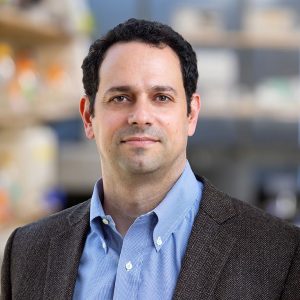
Gerard Manning
Senior Staff Scientist
Razavi-Newman Center for Bioinformatics
We are exploring this rich, but still confusing trove of genome information using protein kinases, a set of genes that constitute about 2% of eukaryotic genes, but alter the behavior of up to 30% of all cellular proteins, and control the majority of biological pathways. They are among the most experimentally characterized of proteins and are a major class of drug targets.
By tracking the evolution of many classes of protein kinases in sequenced genomes, we aim to understand the evolutionary history of this group and relate that to organismal biology, and practical interventions in experimental research and medical therapies. They will also be used as a model system to understand the evolution and function of other gene families.
Other research interests include microbial genomics and metagenomics, and the comparative genomics of promoter sequences in vertebrates and model systems.
We also run a collaboration and support service to bring bioinformatics technologies to labs throughout the Salk, including research collaborations with several Salk investigators.
Education
- B.Sc., First Class Honors, National University of Ireland, Cork
- Ph.D., Stanford University
Selected Publications
- Manning, G, Young, SL, Miller, WT, Zhai, Y (2008). The protist, Monosiga brevicollis, has a tyrosine kinase signaling network more elaborate and diverse than found in any known metazoan. PNAS, 105: 9674-79
- King, N, et al (2008) The genome of the choanoflagellate Monosiga brevicollis and the origins of metazoan multicellularity. Nature 451, 783-788
- Vilar, M, Chou, H-T, Luhrs, T, Maji, S, Riek-Loher, D, Verel, R, Manning, G, Stahlberg, H, Riek, R. (2008) The Fold of α-Synuclein Fibrils. PNAS 105:8637-42
- Natarajan, K, Taylor, S, Zhai, Y, Venter, C, Manning, G (2007). Structure and function of the microbial kinome. PLoS Biol. 5(3): e17
- Yooseph, S. et al (2007). The Sorcerer II Global Ocean Sampling Expedition: Expanding the Universe of Protein Families. PLoS Biology. 5(3): e16
- Sea Urchin Genome Sequencing Consortium. The genome of the sea urchin Strongylocentrotus purpuratus. Science 314(5801):941-52.
- Bradham, CA, ..., Manning, G. (2006). The Sea Urchin Kinome: A First Look. Dev. Biol. 300(1):180-93.
- Eisen JA, et al (2006). Shotgun sequencing and analysis of the macronuclear genome of the model eukaryote, the ciliate Tetrahymena thermophila.PLoS Biol. 4 (9): e286.
- Schröfelbauer, B, Senger, T, Manning, G, Landau, NR. (2006). Alteration of HIV-1 Vif allows functional interaction with primate APOBEC3G. J. Virol. 80 (12), 5984-91.
- Goldberg, JM, Manning, G, Liu, A, Fey, P, Pilcher, KE, Xu, Y, Smith, JL. (2006) The Dictyostelium Kinome – Analysis of the Protein Kinases from a Simple Model Organism. PloS Genet 2 (3): e38
- Manning, G. (2005). Genomic overview of Protein Kinases (December 13, 2005), WormBook, ed. The C. elegans Research Community, WormBook, doi/10.1895/wormbook.1.60.1, http://www.wormbook.org
- Caenepeel, S, Charydczak, G, Sudarsanam, S. Hunter, T., Manning, G. 2004. The Mouse Kinome: Discovery and comparative genomics of all mouse protein kinases. PNAS 101(32), 11707-12.
- Manning, G, Whyte, D, Martinez, R. Hunter, T, Sudarsanam, S. 2002. The protein kinase complement of the human genome. Science 298:1912-1934.
- Manning, G, Plowman, G, Hunter, T, Sudarsanam, S 2002. Evolution of protein kinase signaling from yeast to man. Trends in Biochemical Sciences 27(10), 514-20.
Links
- Our public site for kinase analysis is: http://kinase.com
- Salk bioinformatics core: http://bioinformatics.salk.edu
Salk News Releases
- Can you hear me now?, July 8, 2008
- Darwin's famous finches and Venter's marine microbes, March 13, 2007
- Salk Institute and SUGEN Scientists Map 'Human Kinome', December 5, 2002