Page Tools


Scientific Report


Scientific Report

Download the Scientific Report [7.5 MB]

View the entry for
Ursula Bellugi


Ursula Bellugi

Ursula Bellugi

Professor and Director
Laboratory for Cognitive Neuroscience

"Williams syndrome is a perfect example where a genetic predisposition interacts with the environment to sculpt the brain in unique ways. It provides a unique window of understanding for how missing genes and the resulting changes in brain structure and function ultimately shape behavior."

It's long been accepted that both genes and the environment shape human behavior. But just how much sway the environment holds over our genetic destiny has been difficult to untangle. Bellugi and her collaborators have found a clever way to sort one from the other: They compared the social behavior of children with Williams syndrome–which arises from the deletion of virtually the same set of 20 genes in all individuals–across cultures with differing social mores.

Despite myriad health problems and a generally low IQ, children with Williams syndrome–a rare genetic disorder–are extremely sociable and affectionate, enamored of music and able to remember songs with uncanny ease. Yet they are confounded by the visual world around them: While they can't scribble more than a few rudimentary lines to illustrate an elephant, they can verbally describe one in almost poetic detail.

To determine the extent to which this behavioral profile is universal across cultures, Bellugi settled on two vastly differing environments: the United States and Japan. In both countries, children with Williams syndrome were rated significantly higher in global sociability and their tendency to approach strangers than were their typically developing counterparts. But cultural expectations clearly influenced social behavior, since the sociability of normal American kids was on a par with that of Japanese Williams syndrome kids, whose social behavior is considered out of bounds in their native country. In an earlier study, Bellugi's team collected oral narratives from children and adolescents with Williams syndrome in the U.S., France, and Italy and came to a similar conclusion.
Very rarely, individuals diagnosed with Williams syndrome miss fewer than the standard set of 20 genes, allowing Bellugi to parse the contribution of individual genes to the typical behavioral profile. Her results suggest that a gene known as GTF21 influences social behavior, while GTF2IRD1 affects visual-spatial skills. A better understanding of their role in Williams syndrome may provide insight into human brain development and how genes shape human behavior.

Lab Photo

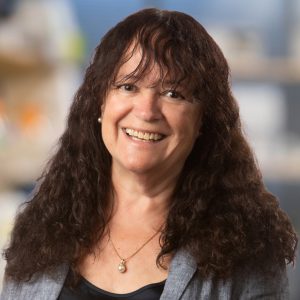
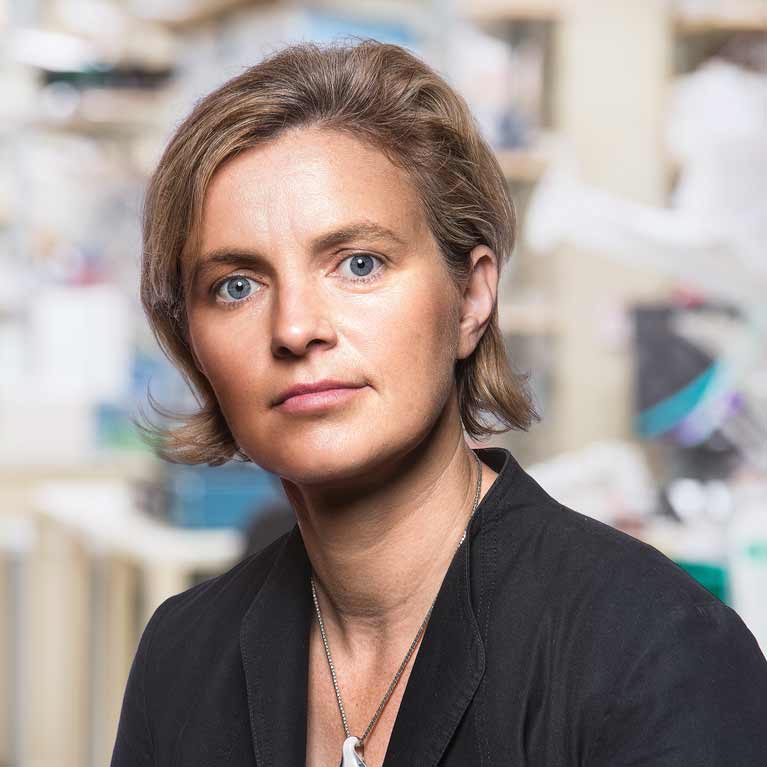
Left to right: Yang Zhang, Rowena Ng, Yvonne Searcy, Inna Fishman, Patricia Fillet, Adam Sacks, Ursula Bellugi, Mark Grichanik, and Kiley Hill

Print version -
Ursula Bellugi

Faculty

Ursula  Bellugi

Ursula Bellugi

Professor and Director
Laboratory for Cognitive Neuroscience

Ursula Bellugi, a professor and director of the Laboratory for Cognitive Neuroscience, is a pioneer in the study of the biological foundation of language. She is regarded as the founder of the neurobiology of American Sign Language, because her work was the first to show it is a true language, complete with grammar and syntax, and is processed by many of the same parts of the brain that process spoken language. Her work has led to the discovery that the left hemisphere of the human brain becomes specialized for languages, whether spoken or signed, a striking demonstration of neuronal plasticity.

Constantly seeking new avenues for understanding the ties between neural and cognitive functions, Bellugi is currently studying individuals with Williams Syndrome. This puzzling genetically based disorder leaves language, facial recognition and social skills remarkably well-preserved in contrast to severe inadequacy in other cognitive aptitudes. The search for the underlying biological basis for this disorder is providing new opportunities for understanding how brain structure and function relate to cognitive capabilities.

Education

Awards and Honors

Links

Salk News Releases