Page Tools


Scientific Report


Scientific Report

Download the Scientific Report [7.5 MB]

View the entry for
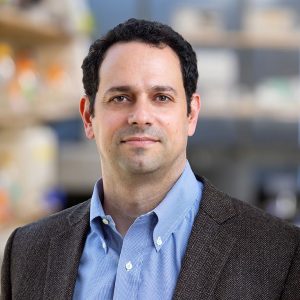
Andrew Dillin


Andrew Dillin

Andrew Dillin

Associate Professor and Pioneer Developmental Chair

Molecular and Cell Biology Laboratory

"Aging is the single biggest risk factor for most human diseases, ranging from arthritis and cancer to diabetes and neurodegenerative disease. Our goal is to unravel the basic molecular mechanisms that drive the aging process, which will allow us to promote healthy aging for humankind."

While lifestyle factors such as obesity clearly influence life expectancy, genetic factors are considered central to the process of aging. To date, there are only three known genetic networks that ensure youthfulness when manipulated. One is linked to calorie restriction, the second centers on the insulin/insulin growth factor-1, which regulates metabolism and growth, while the third is driven by mitochondria, the cell's power plants. Surprisingly, these genetic networks that program youthfulness are almost identical in worms, flies, mice and, presumably, humans.

Recently, Dillin discovered that the worm gene pha-4 is essential for the increased longevity seen in mice and other animals kept on near-starvation diets. Humans possess three genes highly similar to worm pha-4, all belonging to what is called the Foxa family. All three play an important role in development and then later on in the regulation of glucagon, a pancreatic hormone that unlike insulin increases the concentration of blood sugar and maintains the body's energy balance, especially during fasting. Identifying a key link between calorie restriction and aging also opens the door to development of drugs that mimic the effects of calorie restriction and might allow people to reap health benefits without adhering to an austere regimen that only ascetics can endure.

Like most neurodegenerative diseases, Alzheimer's disease usually appears late in life, which prompted Dillin to ask if the toxic protein aggregates that cause the disease simply take a long time to form or whether it is a direct and disastrous consequence of aging. If the latter, than genetic manipulation to provide longer periods of youthfulness should delay the onset of agerelated neurodegeneration. He discovered that the harmful beta amyloid aggregates accumulate when aging impedes two molecular clean-up crews from getting rid of these toxic aggregates. One's job is to break up the toxic protein jumbles, while the other sequesters them in even bigger clumps. Continued strides in understanding the genetics of aging and longevity should ultimately lead to the discovery of drugs that slow down the aging process and facilitate people's ability to delay and perhaps escape age-associated diseases altogether.

Lab Photo

Left to right:
Zheng Liu, Gina Artale, Erik Kapernick, Thomas Heimbucher, Johan Paulsson, Virginia Butel, Ehud Cohen, Andy Dillin, Derek Joyce, Kristen Berendzen, Rebecca Taylor, Will Mair, Hyun-Eui Kim, Siler Panowski, Jenni Durieux, Marcela Raices

Print version -
Andrew Dillin

Faculty

Andrew  Dillin

Andrew Dillin

Associate Professor and Pioneer Developmental Chair

Molecular and Cell Biology Laboratory

Andrew Dillin, Pioneer Developmental Chair and an associate professor in the Molecular and Cell Biology Laboratory, uses the tiny roundworm Ceanorhabditis elegans to study the process of aging by looking at a hormone that is most widely recognized for its role in diabetes among humans: insulin. The insulin signaling pathway in worms is not only almost identical to that found in humans, but Dillin discovered that insulin also controls many physiological aspects in the worm's body, including reproduction and aging. In humans, interfering with insulin/IGF-1 signaling to generate a life-prolonging benefit would lead to type 2 diabetes and possibly cancer. In worms, larval development and reproduction are affected along with longevity.


Some of Dillin's earlier research had hinted at the possibility to genetically manipulate one element of the pathway without disrupting its additional functions, this led him to search for "specificity" factors that may control how and if insulin and IGF-1 impact a wide range of target genes. Recently, he and his team pinpointed a protein specifically responsible for extending lifespan and youthfulness without disrupting the worms' response to some forms of stress, development and fertility controlled by the insulin signaling pathway.

Additionally, Dillin is interested in age-onset neurodegenerative diseases. Like most neurodegenerative diseases, Alzheimer's disease usually appears late in life, raising the question of whether it is a direct and disastrous consequence of aging or if the toxic protein aggregates that cause the disease simply take a long time to form. He discovered that the harmful beta amyloid aggregates accumulate when aging impedes two molecular clean-up crews from getting rid of these toxic species.

Education

Awards and Honors

Selected Publications

Links

Salk News Releases