Page Tools


Scientific Report


Scientific Report

Download the Scientific Report [7.5 MB]

View the entry for
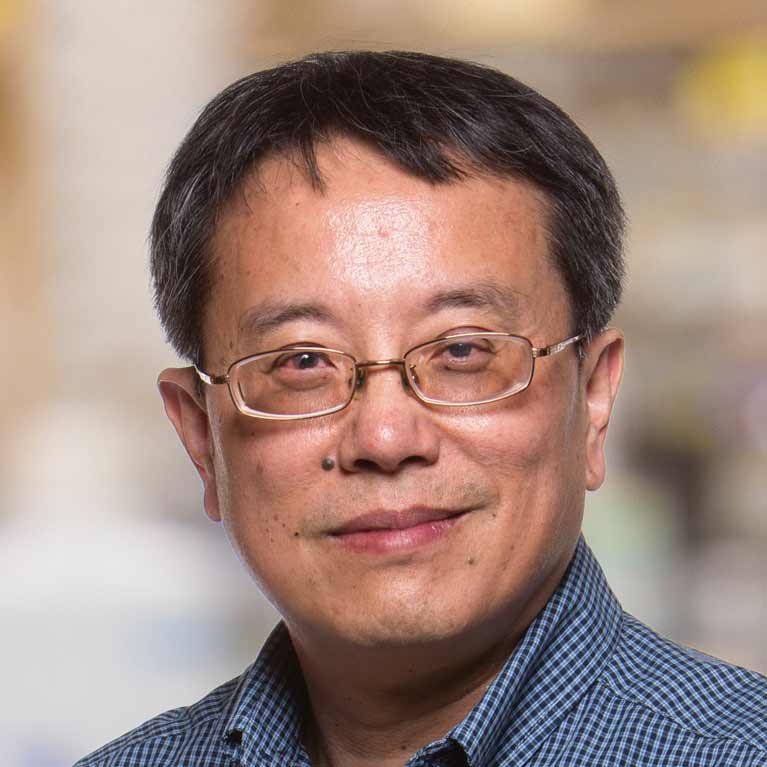
Senyon Choe


Senyon Choe

Senyon Choe

Professor
Structural Biology Laboratory

"We are interested in understanding how biological messages are written and delivered between cells by messenger molecules in the body. The two messenger systems we are focusing on are called ion channels (for e-mails) and protein hormone receptors (for snail mail). By visualizing these messengers to better understand how such messages are coded for specific delivery, we can create brand-new messages of our own."

The premise that "form follows function" became a mantra for numerous leading architects and industrial designers during a good part of the last century. In biology, evolution operates according to a similar premise because forms with better functionality are likelier to be selected. Trying to understand the relationship between a molecule's fine structure and the functions it carries out, Choe and his colleagues use x-ray crystallography and NMR spectroscopy to zoom in on ion channels and receptors in the cell membrane to visualize how they interact with messenger proteins. Recent work focused on analyzing the three-dimensional structure of a whole protein complex to illustrate how TGF-beta, a messenger molecule that plays a role in cancer, the immune system, and heart disease, binds to its receptor molecules on specific target cells to instruct them to do its bidding. An extension of this work explores the possibility of designing new messages to instruct cells to carry out non-natural processes such as coaxing differentiated cells back into an immature, pluripotent state. These types of newly created messages will have tremendous clinical potential as guiding molecules.

Receptors and ion channels are both membraneembedded proteins, which are hard to produce and hence notoriously difficult to study. Therefore, Choe and his team are keenly interested in developing new techniques that allow them to penetrate the elusive world of membrane proteins, which keep the lines of communication open between cells and thus are popular targets for the majority of blockbuster drugs. Lately, they discovered a "partner" molecule called Mistic that allows the widespread production of membrane proteins, enabling scientists to determine their atomic structure and design drugs that interfere with disease processes involving membrane proteins. Choe's group has also done pioneering work on the molecular structure of an ion channel, which is important to many physiological functions ranging from heart rate to nerve cell communication. By understanding the atomic details of how channel proteins assemble into an ion-conducting pore and how such a pore is regulated by biological signals, scientists will be more likely to understand fundamental mechanisms of various neurological disorders and come up with a new strategy to treat them.
Lab Photo

Left to right
Back row: Wei Xie, Innokentiy Maslennikov, Witek Kwiatkowski, Elvira Valera, Hae Kap Cheong, Audrae Barton, Mizuki Okamura, Katie Blain Front row: Chihoon Ahn, Hyejin Kim, Alissa Blackler, Hay Dvir, Georgia Kefala, Senyon Choe, Luis Esquivies, George Allendorph, Martin Chuang, Martin Krupa, Christian Klammt, Chris Dickson, Matt Lundberg, Mario Kuo

Print version -
Senyon Choe

Faculty

Senyon  Choe

Senyon Choe

Professor
Structural Biology Laboratory

Professor Senyon Choe joined the Salk Institute in 1993 as the first member of the Institute's newly initiated Structural Biology Laboratory. Choe uses X-ray crystallography as a major tool to determine three-dimensional structures of biologically important molecules. He and his colleagues also study the relationship between a molecule's fine structure and the functions it carries out.

Among Choe's recent interests is the study of molecules that bind to specific cells to instruct them to carry out functions. An extension of this work will explore the possibility of designing new molecules that can be delivered specifically to modulate sick cells. His group also has done pioneering work on the molecular structure of an ion channel, important to many physiological functions ranging from heart rate to nerve cell communication.

Education

Awards and Honors

Selected Publications

Links

Salk News Releases