November 12, 2026
Salk Institute researchers and global collaborators establish 3D single-cell atlas of the brain’s hub for movement, habit, and reward, marking a significant step toward a full human brain atlas
Salk Institute researchers and global collaborators establish 3D single-cell atlas of the brain’s hub for movement, habit, and reward, marking a significant step toward a full human brain atlas
LA JOLLA—Salk Institute researchers have contributed to a landmark accomplishment in neuroscience: a 3D atlas of the human basal ganglia with single-cell genetic and epigenetic detail, published as a collection of 28 papers across Cell Press journals. The basal ganglia are a group of nerve cells that sit deep in the brain, where they control key functions like learning, emoting, and moving. Basal ganglia dysfunction can lead to conditions like Parkinson’s disease, Huntington’s disease, Tourette syndrome, and addiction.

The atlas offers a new window into the brain, through which scientists can identify and pinpoint each cell in the human basal ganglia. This comprehensive database of brain cells and functions could be used to create personalized therapeutics, identify relevant epigenetic and genetic targets for gene-editing therapies, and link genetic risks with particular cell types for more targeted, effective treatments.
The effort is part of the Brain Research Through Advancing Innovative Neurotechnologies® Initiative, or The BRAIN Initiative®, a massive collaboration launched in 2014 that brings together scientists to “revolutionize our understanding of the human brain.” This latest batch of papers are a part of the BRAIN Initiative Cell Atlas Network (BICAN), a sub-goal dedicated to “mapping brain cells and circuits across multiple species, with an emphasis on humans.”
“What BICAN is really all about is coming together to pull up our sleeves and, one by one, identify and characterize every cell in the brain,” says Margarita Behrens, PhD, research professor at Salk and the senior author of multiple papers in the BICAN package. “Salk brings epigenetic expertise to that endeavor.”
“In the long run, we hope to create an atlas that people in any field, whether it’s cancer or Alzheimer’s or neurodevelopmental disorder, can reference to see what cells they are dealing with and how to manipulate them to prevent or treat disease, disorder, and decline,” says Joseph Ecker, PhD, a professor and Salk International Council Chair in Genetics at Salk. Ecker is a co-corresponding author of the package’s landmark paper and an author on multiple others.
The full package includes 28 papers published in multiple Cell Press journals on November 12, 2026. Salk led or contributed significantly to eight of these papers, detailed below.
The package’s milestone paper, published in Cell, introduces BICAN’s goal to create a standardized, integrated cell atlas of the human, macaque, marmoset, and mouse brain. Then, it produces the first fruits of this labor: a cross-species, multimodal atlas of the basal ganglia. It explains the rich single-cell, epigenomic, spatial genomic detail held within the atlas—and the immense effort it took to make it cohesive and standardized.
“With an enormous end-goal like generating a foundational community reference for all future neuroscience research, it was crucial that this first big step was taken carefully—that we set the standard for everything that follows,” says Ecker, co-corresponding author of the paper.
To create the atlas, the scientists had to coordinate standards for tissue processing, metadata sharing, and anatomical reference system usage. They built a framework to make this coordination possible, so that the hundreds of BICAN researchers could map, compare, and interpret information together. This system is now being used to continue work in the rest of the brain and can also serve as a framework in similar projects to catalog other organs.
Other co-corresponding authors of the paper include Michael Hawrylycz, Ed Lein, Carol Thompson, and Hongkui Zeng of the Allen Institute; Bing Ren of the New York Genome Center; Owen White of University of Maryland; and Guo-Qiang Zhang of University of Texas Health, Houston. A full list of contributing authors can be found here.
DOI: 10.1016/j.cell.2026.10.031
While other BICAN teams focused on electrophysiology or anatomical studies, Salk researchers led the epigenetic campaign. Despite nearly every cell in the body sharing the same base genetic code, many different types of cells exist—heart cells, muscle cells, neurons, immune cells, and so on.
This diversity is thanks to epigenetic change, which alters how genetic code is used without altering the code itself. There are many types of epigenetic change, including methylation, where a methyl chemical group gets tacked onto the DNA strand, and chromatin conformation, where the DNA strand’s 3D shape is altered to make genes easier or harder to access, or to separate or bring together genes. Cumulatively, all the epigenetic changes in a cell are called the epigenome of that cell, and they give it a distinct identity.
In this Cell paper, Salk led the charge to profile methylation and chromatin conformation in 197,003 basal ganglia cells from seven human donors. After integrating their data with existing data, they built a unified atlas of 261,331 cells. The atlas revealed extensive cell types and region-specific methylation patterns and found neuronal and non-neuronal cells had distinct 3D genome organization. The multimodal, single-cell, epigenomic atlas can be used to interpret genetic risk locations for diseases and conditions that impact or originate in the basal ganglia.
Ecker and Behrens are co-corresponding authors of the paper. The paper was co-first authored by Wubin Ding of Salk and Amit Klein of Salk and UC San Diego. Other authors include Cindy Tatiana Báez-Becerra, Jonathan Rink, Anna Bartlett, Qiurui Zeng, Ruoxuan Wang, Rosa Gomez Castanon, Joseph Nery, Emma Osgood, William Owens, Alaina Petrella, Chumo Chen, Andrea Saldana Acerbo, Ariana Barcoma, Jiayi Liu, Kaitlyn Russo, Kyle Knutson, Carissa Young, Jackson Willier, Cesar Barragan, Jessica Arzavala, Silvia Cho, Jordan Altshul, Derek Chan, Eshaan Soma, Jammy Luo, Manya Jain, Sarah Velazquez, Natalie Schenker-Ahmed, Guha Sundaram, Austin Manning, Yareli Sanchez, Aleksandra Bikkina, Shuai Fu, Carolyn O’Connor, Michelle Liem, Mikayla Marrin, Cynthia Rose, Shane Alt, Jillian Berry, Colin Kern, Eric Boone, Wei Tian, Yue Wu, Manoj Hariharan, Yuanyuan Fu, Yang Xie, Kai Li, Lei Chang, Wenjin Zhang, Huamin Chen, Nelson Johansen, Zoey Zhao, Jesus Flores, Chu-Yi Tai, Jacqueline Olness, Quan Zhu, Rebecca Hodge, Trygve Bakken, Ed Lein, Daofeng Li, Ting Wang, Xiangmin Xu, and Bing Ren.
DOI: 10.1016/j.cell.2026.10.019
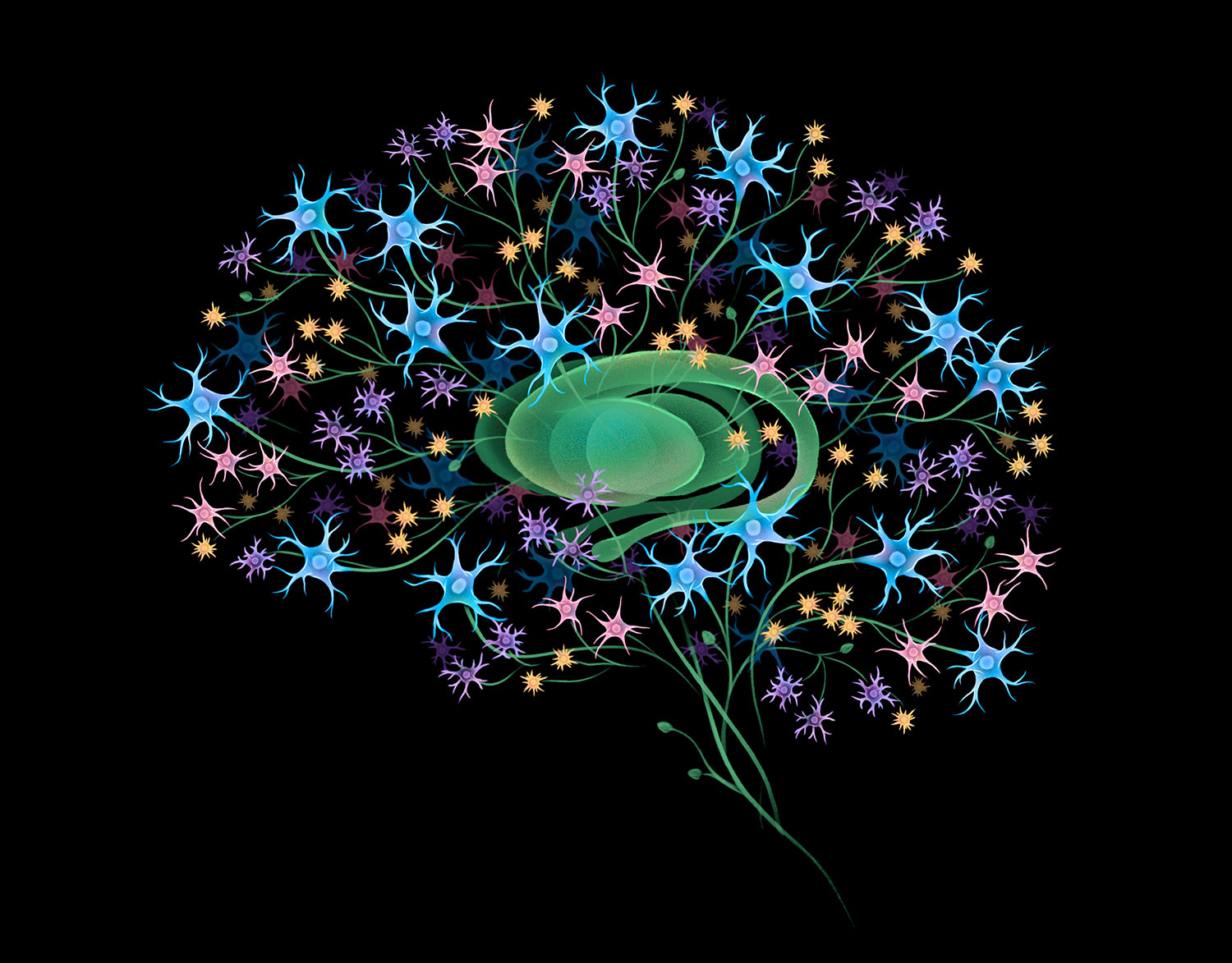
Extending Salk’s epigenetic contributions to the BICAN effort, another Cell paper looks at histone modifications and transcriptomes. Histone modifications are a type of epigenetic change, where the protein spools that DNA wraps around, called histones, are chemically tagged.
As a result of histone modifications and other epigenetic changes, the cell’s transcriptome is altered. The transcriptome is the full set of RNA molecules made by a cell, many of which carry the genetic instructions for building proteins that carry out cellular activities. Cataloging every RNA molecule inside a cell can thus reveal how that cell is functioning.
The study looks at transcriptomes and histone modifications in eight human basal ganglia regions with single-cell detail. The atlas allows scientists to connect gene regulation with disease-associated genes from existing datasets. Since basal ganglia dysfunction contributes to many neurological and psychiatric disorders, this ability to compare is key. Future artificial intelligence models could use this atlas to predict how disease-associated genetic variants in turn alter gene regulation and cell function.
Behrens is co-corresponding author of the paper, alongside Bing Ren of New York Genome Center. The paper was co-first authored by Lei Chang, Kai Li, and Yang Xie of New York Genome Center and UC San Diego and Guojie Zhong of New York Genome Center. Other authors include Jonathan Rink, Cindy Tatiana Báez-Becerra, Audrey Lie, Hannah Indralingam, Keyi Dong, Timothy Loe, Zhaoning Wang, Songpeng Zu, Joseph Colin Kern, Zoey Zhao, Eric Boone, Jesus Flores, Alexander Monell, Jacqueline Olness, Cesar Barragan, Emma Osgood, William Owens, Natalie Schenker-Ahmed, Wenjin Zhang, Di Liu, Ariana Barcoma, Jackson Willier, Kyle Knutson, Kaitlyn Russo, Jiayi Liu, Silvia Cho, Jessica Arzavala, Carissa Young, Guha Sundaram, Austin Manning, Yareli Sanchez, Aleksandra Bikkina, Jillian Berry, Xiaomeng Gao, Carolyn O’Connor, Michelle Liem, Mikayla Marrin, Cynthia Rose, Shane Alt, Chenxu Zhu, Nathan Zemke, Wubin Ding, Amit Klein, Yuanyuan Fu, Nelson Johansen, Trygve Bakken, Rebecca Hodge, C. Dirk Keene, Ed Lein, Daofeng Li, Quan Zhu, Ting Wang, Xiangmin Xu, and Joseph Ecker.
DOI: 10.1016/j.cell.2026.09.008
Another Cell paper details an atlas that integrates all different “-omics” modalities—histone modifications, methylation, chromatin structure, chromatin conformation, and transcriptome—to profile 18 regions across the human brain.
Using a total of 750,000 cells across the adult human, going beyond just the basal ganglia, the team established a reference for determining how single brain cells are regulated. The resource then allowed them to cross-check chromatin conformations with genetic databases to pinpoint relevant genes and vulnerable cell types for neuropsychiatric disorders. The atlas will be a starting point for interpreting genetic variants with associated risks to diseases.
Behrens is co-corresponding author of the paper, alongside Bing Ren of New York Genome Center. The paper was co-first authored by Yang Xie and Lei Chang of New York Genome Center and UC San Diego. Other authors include Guojie Zhong, Jonathan Rink, Tatiana Báez-Becerra, Ethan Armand, Wubin Ding, Kai Li, Eric Bonne, Audrey Lie, Hannah Indralingam, Keyi Dong, Timothy Loe, Bohan Huang, Zhaoning Wang, Ariana Barcoma, Jackson Willier, Kyle Knutson, Jiayi Liu, Silvia Cho, Stella Cao, Kaitlyn Russo, Carissa Young, Jessica Arzavala, Yareli Sanchez, Aleksandra Bikkina, Natalie Schenker-Ahmed, Colin Kern, Zoey Zhao, Amit Klein, Jesus Flores, Chu-Yi Tai, Jacqueline Olness, Alexander Monell, Siavash Moghadami, Cesar Barragan, Chumo Chen, William Owens, Carolyn O’Connor, Michelle Liem, Mikayla Marrin, Cynthia Rose, Shane Alt, Nora Emerson, Julia Osteen, Jacinta Lucero, Daofeng Li, Rebecca Hodge, Ting Wang, C. Dirk Keene, Xiangmin Xu, Quan Zhu, and Joseph Ecker.
DOI: 10.1016/j.cell.2026.08.012
Though humans may be much bigger and far less fuzzy, our brains share a lot of structural and genetic similarities with those of mice, making the mouse brain a critically important model in neuroscience research. This is what prompted another Cell study to profile 2.5 million adult mouse brain cells.
First, the scientists gathered new data on histone modifications and transcriptomes for the millions of mouse brain cells. Then, they integrated their findings with existing data on chromatin accessibility, DNA methylation, and 3D genome organization to create one cohesive atlas that includes it all. Again, the atlas will be a key tool for interpreting relationships between genetic variants and disease risk.
Behrens is co-corresponding author of the paper, alongside Bing Ren of New York Genome Center. The paper was co-first authored by Zhaoning Wang of UC San Diego and Columbia University and Songpeng Zu of UC San Diego. Other authors include Ethan Armand, Timothy Loe, Jonathan Rink, Wanying Wu, Yang Xie, Lei Chang, Chenxu Zhu, Nicholas Johnson, Jasper Lee, Jackson Willier, Silvia Cho, Stella Cao, Ariana Barcoma, Nora Emerson, Hanqing Liu, Kangli Wang, Bharath Saravanan, Zane Gibbs, Xiaomeng Gao, Sunan Xu, David Guo, Zhuowen Tu, Yang Li, and Joseph Ecker.
DOI: 10.1016/j.cell.2026.10.022
The Salk team contributed substantially to three more papers, one in Cell Reports Methods and another two in Cell. The additional findings from these articles include: an accessible web-based platform that holds the epigenomic basal ganglia resource (Cell Reports Methods, DOI: 10.1016/j.crmeth.2026.101567); a detailed map of the transcriptome within individual cells in human basal ganglia, based on brain tissue samples from four donors without known neurological conditions (Cell, DOI: 10.1016/j.cell.2026.09.027); and more granular details about the diversity of a subtype of brain cells, called astrocytes, in the human basal ganglia (Cell, DOI: 10.1016/j.cell.2026.09.041).
With the human basal ganglia atlas easily accessible online, the entire BICAN team is excited to see what discoveries and innovations emerge from it. The basal ganglia data have the potential to reveal the why behind many diseases and disorders, though pinpointing them, developing therapies, and testing those therapies will take time.
All the while, the BICAN team will continue their endeavor to map the entire human brain.
“This effort is such a clear example of what teamwork in science means,” says Behrens. “And it is also a perfect send-off to Salk’s Year of Brain Health, because how do you get to a healthy brain? You understand it at its foundational level—genes, cells, locations, connections.”
“An atlas tells you what’s there; an AI model tells you what may happen. Single-cell maps like these are exactly the kind of data AI needs to learn the brain’s regulatory code, so that one day, we can ask what a disease-linked variant will do to a particular kind of neuron, long before any symptoms appear,” says Ecker.
The full paper package can be viewed here on the Cell Press website or here on the BICAN website.
The work was supported by the National Institutes of Health and private philanthropy. A full list of funders can be found with each manuscript in the package.
The full atlas is publicly browsable at neomorph.salk.edu/SCMDAP/BasalGanglia.
This press release was written by Isabella Davis
Contact: press@salk.edu
Office of Communications
Tel: (858) 453-4100
press@salk.edu
The Salk Institute is an independent, nonprofit research institute founded in 1960 by Jonas Salk, who freely shared the polio vaccine with the world. The Institute’s mission is to drive foundational, collaborative, risk-taking research that addresses society’s most pressing challenges, including cancer, Alzheimer's disease, and crop resilience. This foundational science underpins all translational efforts, generating insights that enable new medicines and innovations worldwide.