
What is foundational science?
Foundational science is where it all begins.
It seeks to understand how life works—without knowing exactly where the answers will lead. By uncovering nature’s fundamental rules, scientists create the knowledge that fuels tomorrow’s medicines, technologies, and industries. Foundational science focuses on generating knowledge that will benefit the next generation—not on immediate translational or clinical applications. It is a high-risk, high-reward endeavor, with even higher stakes: creating the best possible world for our children and grandchildren.
Why does it matter?
Foundational science seeds all future discovery.
Many of today’s biggest medical breakthroughs began with scientists asking simple questions about how life works.
“Can mold kill bacteria?”
penicillin
“How does the body recognize cancer cells?”
cancer immunotherapy
“How does the body control blood sugar?”
GLP-1 drugs
“Why are there repeated sequences in bacterial genomes?”
CRISPR gene editing
“How do cells make proteins?”
RNA vaccines
Four sectors of science
Each sector of science plays a unique and necessary role. Here’s how they differ and depend on each other.
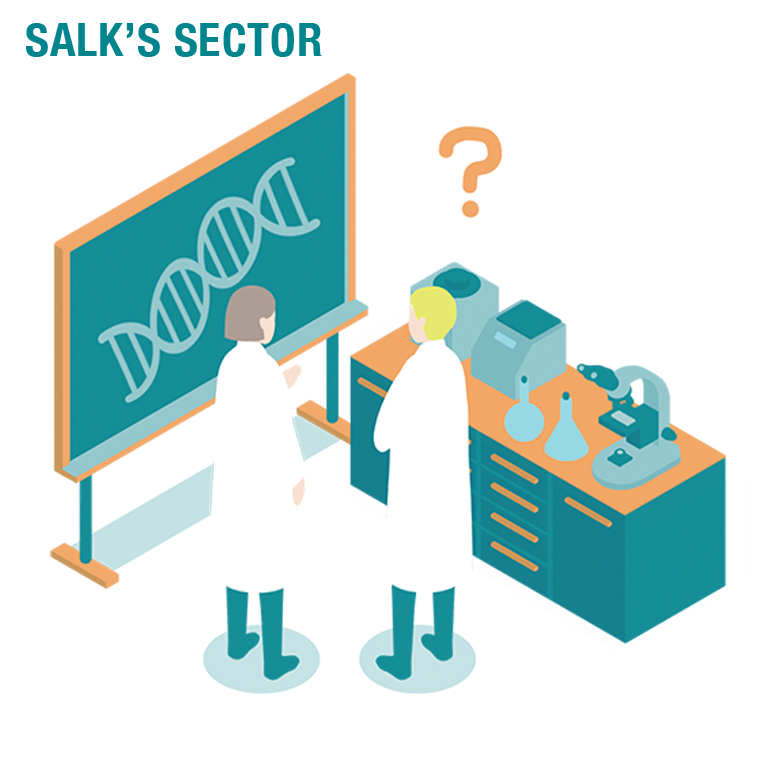
FOUNDATIONAL
Purpose: Investigate how biology works at the molecular, genetic, cellular, and systems levels
Core incentive: Knowledge generation
Funding source: Federal grants, philanthropy
Risk: High risk, high reward—not all discoveries can be immediately translated, but breakthroughs enable entirely new solutions

TRANSLATIONAL
Purpose: Identify promising targets and therapeutic strategies using lab models and high-throughput screens
Core incentive: Early signs of clinical potential
Funding source: Federal grants, private investors, philanthropy
Risk: Most therapeutic candidates fail to progress to effective therapies, but the few that do can change people’s lives

CLINICAL
Purpose: Test therapies in humans to evaluate safety and efficacy
Core incentive: Real-world validation
Funding source: Biopharma, federal grants, philanthropy
Risk: Clinical trials are time intensive and expensive, but necessary for making medical advances

PHARMACEUTICAL
Purpose: Optimize and commercialize therapies; manage FDA approvals
Core incentive: Patient benefit and revenue
Funding source: Commercial profits
Risk: High financial risk, strict timelines, and regulatory hurdles, but huge potential for positive impact
Why Salk?
Salk is the home of foundational science.
“How do we treat disease?”
Why does disease happen in the first place?
These questions often have answers that lead to entirely new approaches to treating disease or solving global challenges. This flow of questions and answers into humanity’s wider body of knowledge is physically embodied on Salk’s campus, as the River of Life water feature carries our discoveries toward the Pacific Ocean. There is also fluidity across traditional disciplinary boundaries at Salk, where curious minds from plant science, neuroscience, cancer biology, immunology, and beyond work together to pursue bold discoveries that deepen our understanding of life and ultimately benefit humanity.