March 5, 2026
Salk Institute researchers find protein that connects GLP-1 agonist drugs to long-term, broad genomic responses that can promote pancreatic health and resilience
Salk Institute researchers find protein that connects GLP-1 agonist drugs to long-term, broad genomic responses that can promote pancreatic health and resilience
LA JOLLA—GLP-1s are building a reputation as “wonder drugs.” First characterized for their ability to improve insulin release and treat diabetes, the drugs were later found to promote weight loss and improve cardiovascular health. In addition to these surprising bonus benefits is the ability of GLP-1 drugs to improve pancreatic beta cell health. But how, exactly, are they doing that?

Salk Institute researchers are burrowing down into the mechanistic details behind how GLP-1 drugs promote viability and stress resistance in pancreatic beta cells. Since cellular performance adaptations arise from gene expression changes, the team screened for regulatory proteins that can flip “on” advantageous gene programs during prolonged GLP-1 use. They identified a protein called Med14—part of a larger protein complex called Mediator—that was enabling the GLP-1-dependent changes in gene expression that lead to pancreatic health benefits.
The study was published in Proceedings of the National Academy of Sciences on March 4, 2026, and was funded by federal research grants from the National Institutes of Health and private philanthropy.
“The broad salutary effects of GLP-1 drugs in diabetes, cardiovascular disease, and obesity have sparked a wave of exciting scientific research at the mechanistic level. We’re left wondering, ‘How are GLP-1s causing these effects?’” asks senior author Marc Montminy, MD, PhD, a biochemist, physiologist, and distinguished professor emeritus at Salk. “We were able to single out a protein, Med14, whose activation downstream of GLP-1 helps reprogram pancreatic beta cell gene expression to improve the cells’ viability and insulin production.”
Often simply called “GLP-1 drugs” or “GLPs,” glucagon-like peptide-1 receptor agonists work by mimicking a hormone our bodies naturally make. The hormone, called glucagon-like peptide-1, helps regulate blood sugar.by promoting the secretion of insulin. They do so by attaching to corresponding GLP-1 receptors on pancreatic beta cells, which then produce and release insulin into the body.
But GLP-1 drugs differ in one significant way from their natural counterpart: Unlike human-made GLP-1 hormones that appear and disappear quickly around mealtimes, artificial GLP-1 receptor agonists can stick around much longer. The Salk researchers suspect this longer-term presence may explain some of the “wonder drug” benefits of GLP-1 drugs. But what, exactly, on the molecular level, are GLP-1 drugs doing when they stick around? And how does their staying power turn into effects like lower risk of stroke or improved osteoarthritis?
“The fact that these drugs based off our hormones are stable seems to be important to the longer-term effects we’re witnessing in pancreatic beta cells and other tissues,” says first author Sam Van de Velde, PhD, a staff scientist in Montminy’s lab. “To understand how we are getting these longer-term effects, we need to study these drugs on a longer time scale—and that’s exactly what we did.”
When the hormone GLP-1 finds a pancreatic beta cell, the ensuing chain of signals, proteins, and gene expression changes that lead to insulin secretion is very well documented. On the other hand, the mechanisms and changes on the longer-term GLP-1 drug scale are poorly understood.
So, the researchers set out on a molecular fishing expedition in a pancreatic beta cell line. The team was hoping to hook a protein (or proteins) that, post-GLP-1 activation, had a particular chemical modification called phosphorylation. And that’s exactly what they found in Med14.
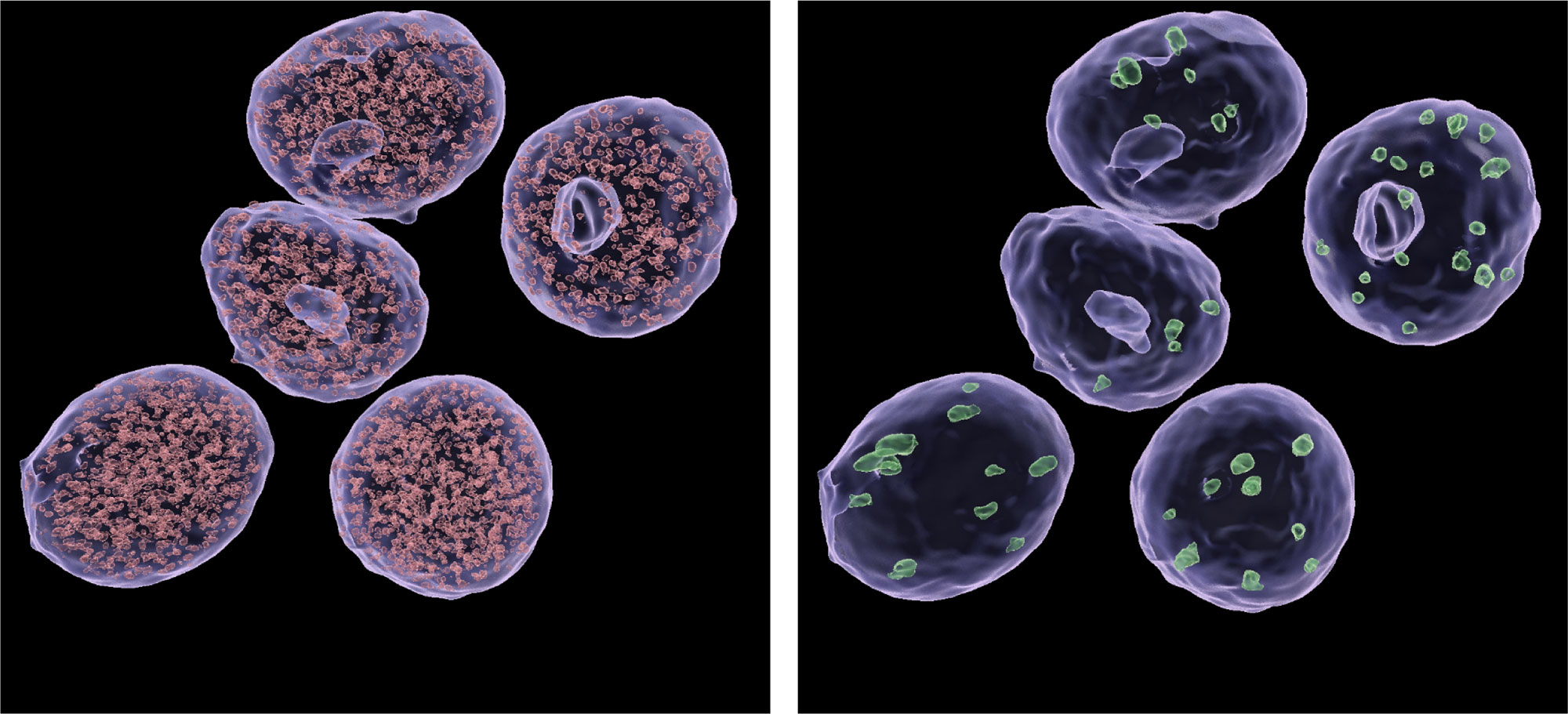
Med14 is a subunit in a multi-protein complex called Mediator, which is a well-described general regulator of gene expression throughout the genome. To confirm whether Med14 was an integral link between GLP-1 drugs and ultimate changes in gene expression and pancreatic beta cell behavior, the researchers decided to mutate Med14, making the protein resistant to phosphorylation.
The gene expression patterns associated with prolonged GLP-1 drug exposure disappeared in a Med14 mutant pancreatic beta cell line and in beta cells of a Med14 mutant mouse model. With working Med14, the helpful gene programs were activated—supercharging pancreatic beta cells to grow and better handle sugar-rich environments after meals.
None of the Salk team’s experiments were conducted in humans, yet the relevance remains. For example, some of the genes regulated by Med14 phosphorylation are known to be linked to type 2 diabetes susceptibility in humans.
“Our findings unexpectedly reveal that phosphorylation of just a small part of the Med14 protein plays a significant role in the response to GLP-1 drugs—and in the metabolic response to hormones more broadly,” says Reuben Shaw, PhD, a professor and holder of the William R. Brody Chair at Salk, and director of the National Cancer Institute-Designated Salk Cancer Center. “Now there are many new questions to answer, from validating our findings in human tissues to seeing whether Med14 has a similar role in other cells and organs.”
The team is especially curious about the effects of prolonged GLP-1 exposure beyond pancreatic beta cells. One of the messenger molecules between GLP-1 and Med14, called cAMP, is a commonly used messenger molecule in many other situations that don’t include GLP-1. With that in mind, could other drugs or hormones activate genetic programs similar to GLP-1? And what’s going on in other metabolically intensive tissues, like fat?
The questions keep coming for the so-called “wonder drug,” and Salk scientists are enthusiastically working to answer them.
Other authors include Jungting Yu, K. Garrett Evensen, Edmund Pakhlevanyan, and April Williams of Salk.
The work was supported by the National Institutes of Health (5R01 DK083834, R35 CA220538), Breakthrough T1D (INO-2022-1125-A-N), Paul F. Glenn Foundation for Biology of Ageing Research, Clayton Foundation for Medical Research, and Leona M. and Harry B. Helmsley Charitable Trust.
DOI: 10.1073/pnas.2536772123
JOURNAL
Proceedings of the National Academy of Sciences
AUTHORS
Sam Van de Velde, Jungting Yu, K. Garrett Evensen, Edmund Pakhlevanyan, April E. Williams, Reuben J. Shaw, and Marc Montminy
Office of Communications
Tel: (858) 453-4100
press@salk.edu
The Salk Institute is an independent, nonprofit research institute founded in 1960 by Jonas Salk, developer of the first safe and effective polio vaccine. The Institute’s mission is to drive foundational, collaborative, risk-taking research that addresses society’s most pressing challenges, including cancer, Alzheimer's disease, and agricultural vulnerability. This foundational science underpins all translational efforts, generating insights that enable new medicines and innovations worldwide.