March 6, 2026
Study co-led by scientist now at Salk Institute finds three new proteins that the body uses to determine “safe” foods, helping understand food tolerance and allergy
Study co-led by scientist now at Salk Institute finds three new proteins that the body uses to determine “safe” foods, helping understand food tolerance and allergy
LA JOLLA—In little moments like when sipping coffee or licking an ice cream cone, it doesn’t seem like your body is pulling off a biological miracle. But it is. That cookie is not you—yet when you put it in your mouth, your body is able to tolerate it and process it without any detriment to your health in a process called oral tolerance. How does the human body make that decision between tolerance and rejection?

A study led by Stanford University scientists—including first and co-corresponding author Jamie Blum, PhD, who conducted the research at Stanford and recently joined the Salk Institute, and senior and co-corresponding author Elizabeth Sattely, PhD, who is an associate professor at Stanford—identifies new bits of food proteins that tell gut immune cells when to tolerate certain foods. They found three of these protein segments, called epitopes—one each from soybean, corn, and wheat. These epitopes interact with specialized immune cells called regulatory T cells to inform that tolerance-or-rejection decision. The findings are an enormous step forward in understanding food tolerance, and may inform future immunotherapies for people with food allergies.
The study was published in Science Immunology on March 6, 2026, and was funded by federal research grants from the National Institutes of Health and National Science Foundation, as well as by private philanthropy.
“As someone interested in foundational science, there’s value in understanding a normal immune process along with pathology,” says Blum, who completed the research at Stanford before joining Salk as an assistant professor in the NOMIS Center for Immunobiology and Microbial Pathogenesis. “Understanding how the immune system can normally see a protein as safe may lead to new therapies to promote tolerance in individuals with allergy.”
Since 6% of young children and 3% to 4% of adults experience food allergies, scientists have been hard at work figuring out exactly what elicits these allergic reactions to foods that should be safe. So far, their efforts have revealed specific proteins in top allergens, like peanut and egg, that cause adverse immune reactions. These proteins are recognized by antibodies, which then activate two of the immune system’s fast-acting inflammatory cells, mast cells and basophils.
If we know how and what the immune system reacts to during allergy, shouldn’t we know how and what the immune system reacts to during tolerance?
Scientists have the “how” mostly covered. Already, there is a solid understanding that regulatory T cells are involved in tolerance. Prior research has revealed the anti-inflammatory and general immune-suppressive role that regulatory T cells play in tolerance—but “what” proteins prompt this non-reaction has remained unknown.
The study began with a bowl of mouse chow. Rather than start piecewise, one food after another, the researchers screened regulatory T cells from mice given a normal diet. They looked for what the regulatory T cells were attaching to, then mapped them backward to specific parts of the chow.
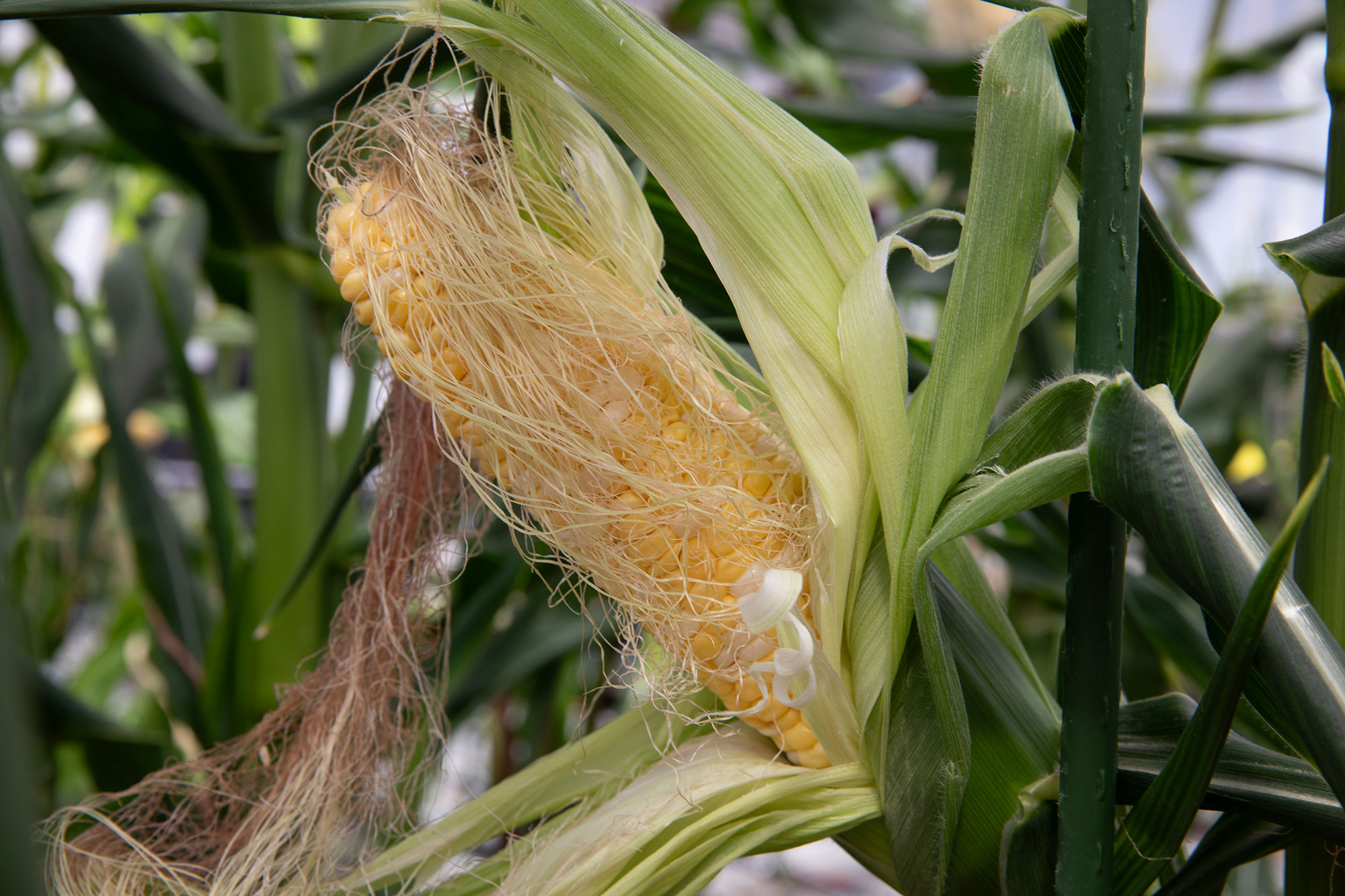
They found three proteins—more specifically, they found small, specific bits of those proteins called epitopes—that the regulatory T cells recognized. The epitopes were found in three different food proteins, one from corn, one from wheat, and one from soybean. Notably, all three epitopes are from seed proteins, suggesting that these highly abundant plant proteins are commonly recognized by the immune system’s tolerance mechanisms.
Furthermore, the most abundant T cells were those reactive to the corn epitope, which makes sense given that corn is not a common allergy. Soy, on the other hand, is one of the major allergies in humans, so the identification of a soybean epitope is especially exciting, notes Blum. Additionally, the mammalian receptor that interacts with the identified soybean epitope also interacts with sesame, helping explain cross-tolerance, or when a tolerance to one food infers a tolerance to another.
With the new epitopes identified, the researchers had a few follow-up questions, like where do these regulatory T cells live? And how do they perform in an inflamed versus healthy environment? They used mice and cell culture models to answer these questions, finding that the regulatory T cells are primarily located in the gut and their activities vary based on whether they are in an inflamed or healthy environment, either working to reduce inflammation or sustain an absence of inflammation.
These seed epitopes are an exciting new addition to our understanding of oral tolerance. Scientists have already considered regulatory T cells as a promising immunotherapy route for people with severe food allergies. It may one day be possible to create regulatory T cells that are pre-programmed to tolerate certain foods and dampen immune responses to common allergens.
“Diet is our most intimate interaction with our environment,” says Blum. “Correctly recognizing foods as safe creates an anti-inflammatory environment to support nutrient acquisition and prevent allergy. Our research advances scientific understanding of the major dietary allergens, and points us toward future therapeutic interventions that could redirect allergic and autoimmune states.”
In the less-distant future, the researchers are excited to see their workflow for mapping proteins adapted to humans. The reagent they developed to track their proteins is now available for others to use, so they’re hopeful that new insights into regulatory T cell-mediated oral tolerance are soon to come.
Other authors include Ryan Kong and E. A. Schulman of Stanford University; Francis Chen, Rabi Upadhyay, Gabriela Romero-Meza, and Dan Littman of New York University; Michael Fischbach of Stanford University and the Chan Zuckerberg Biohub; and Kazuki Nagashima of Stanford University and Harvard University.
The work was supported by the Life Sciences Research Foundation, Howard Hughes Medical Institute, National Science Foundation, National Institutes of Health (F32AI181496, K08CA283272, R01AI158687, K99AI173524, S10RR027431-01, 1S10OD023831-01, P30CA016087), Rosenfield and Glassman Foundation.
DOI: 10.1126/sciimmunol.aeb4684
JOURNAL
Science Immunology
AUTHORS
Jamie E. Blum, Ryan Kong, E.A. Schulman, Francis M. Chen, Rabi Upadhyay, Gabriela Romero-Meza, Dan R. Littman, Michael A. Fischbach, Kazuki Nagashima, Elizabeth S. Sattely
Office of Communications
Tel: (858) 453-4100
press@salk.edu
The Salk Institute is an independent, nonprofit research institute founded in 1960 by Jonas Salk, developer of the first safe and effective polio vaccine. The Institute’s mission is to drive foundational, collaborative, risk-taking research that addresses society’s most pressing challenges, including cancer, Alzheimer's disease, and agricultural vulnerability. This foundational science underpins all translational efforts, generating insights that enable new medicines and innovations worldwide.