Recent Discoveries
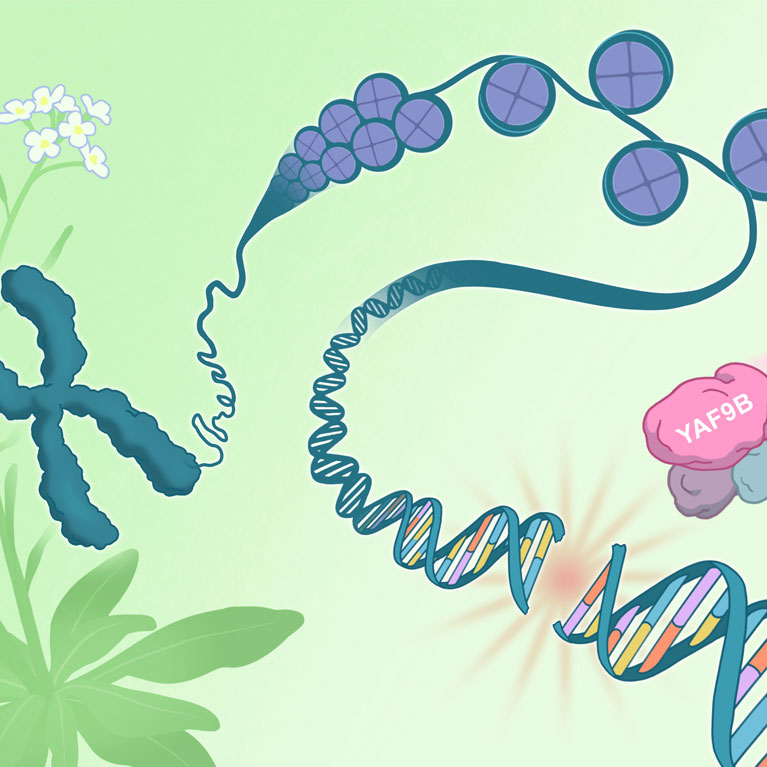
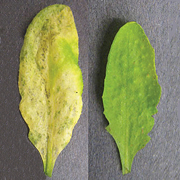
LA JOLLA—Similar to the way DNA damage can contribute to human diseases like cancer, it can also disrupt growth, development, and survival in plants. Every day, plants endure environmental stresses like sunlight, radiation, drought, and soil stress—all of which can damage their DNA. However, they cannot move away from danger. How do plants handle all that damage?
LA JOLLA—El Instituto Salk ha ascendido a Julie Law, doctora, from associate professor to full professor, and Salk Fellow Talmo Pereira, PhD, has now joined Salk’s faculty as assistant professor. The recognition reflects both scientists’ excellence and innovation in their respective research areas.
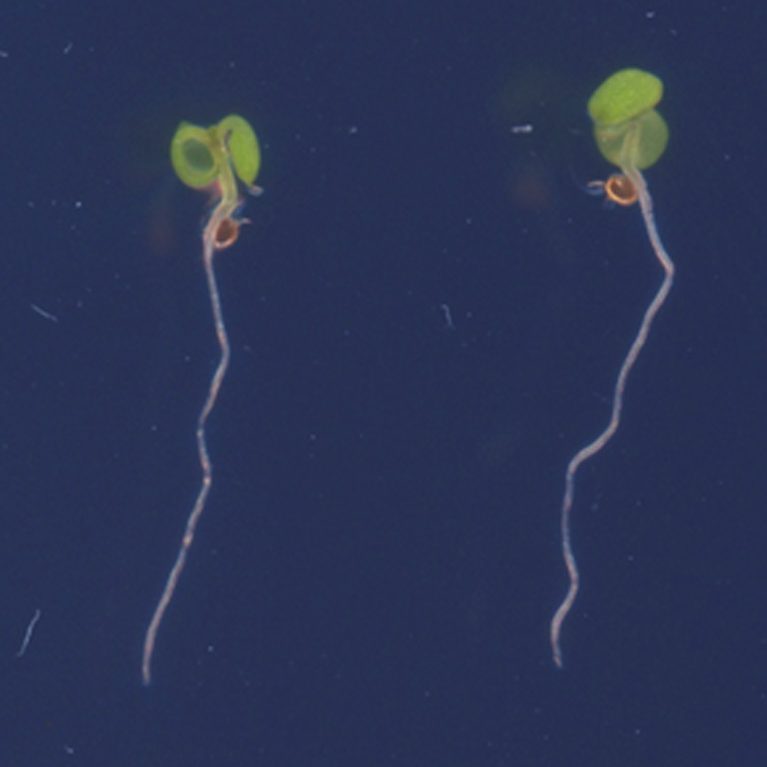
LA JOLLA—Plants can’t move to escape the heat like humans can—they are forced to adapt. As temperatures fluctuate, one key survival strategy is the ability of roots to keep growing, allowing plants to access water and nutrients further away in the soil. But how do plants sense temperature and translate it into growth?
LA JOLLA—Estados Unidos y México atraviesan una megasequía histórica desde principios de siglo. Durante más de 25 años, el suroeste de Estados Unidos ha enfrentado las graves consecuencias sociales y económicas de esta megasequía, incluida una pérdida récord de 1,100 millones de dólares en agricultura en California solo en 2021 ($). Con estas condiciones persistiendo, ¿cómo podemos ayudar a los cultivos a resistir la sequía minimizando la pérdida de rendimiento?
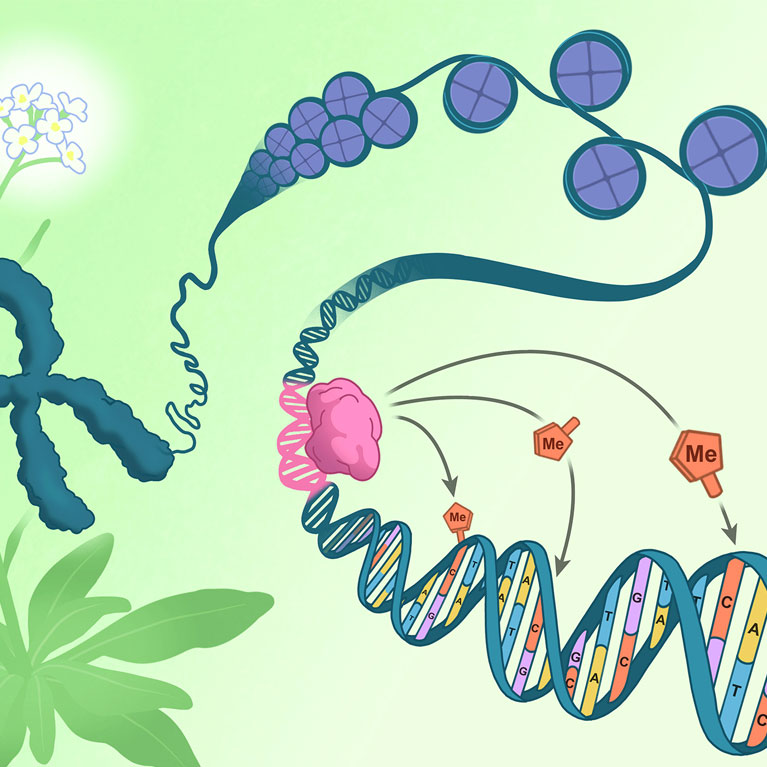
LA JOLLA—Todas las células de un organismo tienen la misma secuencia genética. Lo que difiere entre los tipos de células es su epigenética—etiquetas químicas colocadas meticulosamente que influyen en qué genes se expresan en cada célula. Los errores o fallos en la regulación epigenética pueden provocar graves defectos de desarrollo tanto en plantas como en animales. Esto plantea una pregunta desconcertante: si los cambios epigenéticos regulan nuestra genética, ¿qué los regula a ellos?
LA JOLLA—Salk faculty members Joseph Ecker, PhD, Ronald Evans, PhD, Rusty Gage, PhD, Christian Metallo, PhD, Satchidananda Panda, PhD, Reuben Shaw, PhD, and Kay Tye, PhD, as well as research assistant Joseph Nery have all been named in this year’s Highly Cited Researchers list by Clarivate. The 2025 list includes 6,868 researchers from 60 countries who have demonstrated “significant and broad influence in their fields of research.”
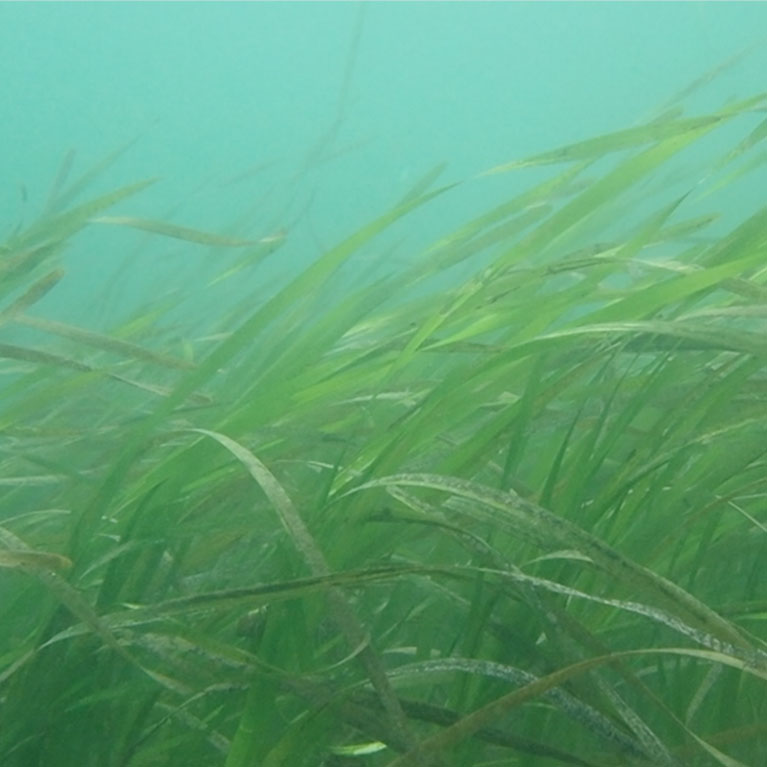
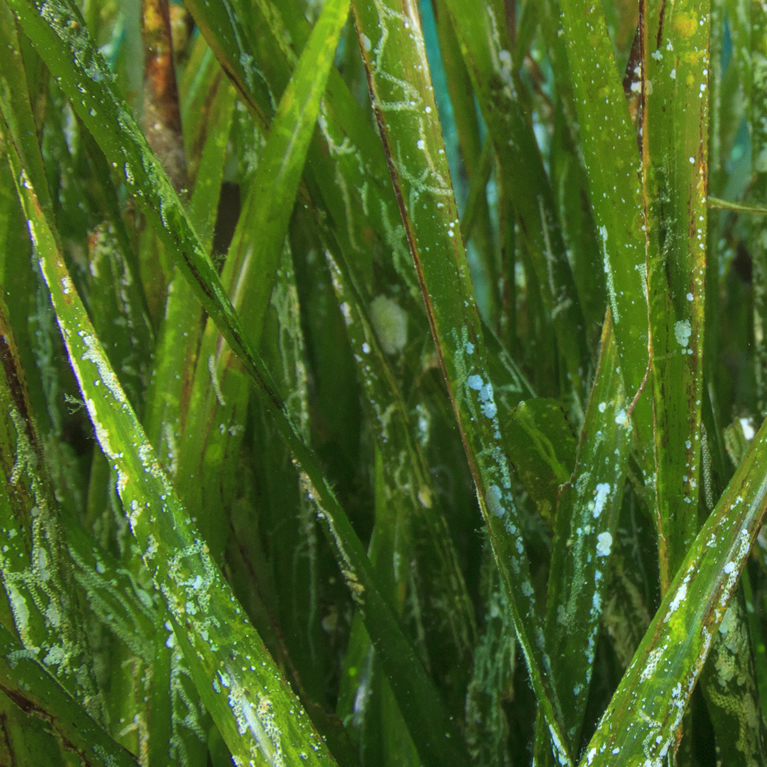
LA JOLLA—Seagrasses preserve our oceans, offering safe harbor for sea life, calming rough waters, and storing excess carbon dioxide. Dozens of seagrass species protect coastlines around the globe, including the common North American eelgrass, Zostera marina. But these beneficial underwater meadows are under threat from boating, dredging, disease, and extreme weather. Restoration efforts that simply replant more eelgrasses fail around half the time—so, what now?
LA JOLLA—Joseph Ecker, PhD, has been awarded the 2026 Barbara McClintock Prize for Plant Genetics and Genome Studies from the Maize Genetics Cooperation, a global organization of maize geneticists and breeders. The prize honors “the most outstanding plant scientists working on both genetics and genomics in the present era.” It is named after distinguished plant biologist Barbara McClintock, whose work in maize genetics earned her the 1983 Nobel Prize in Physiology or Medicine.
LA JOLLA—A plant’s number one priority is to grow—a feat that demands sunlight, nutrients, and water. If just one of these three inputs is missing, like water in a drought, growth halts. You might then think that at the end of that drought, the plant would jump right back into growing. Instead, its priorities shift.
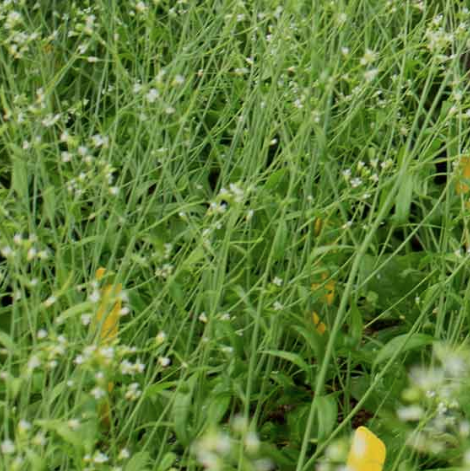
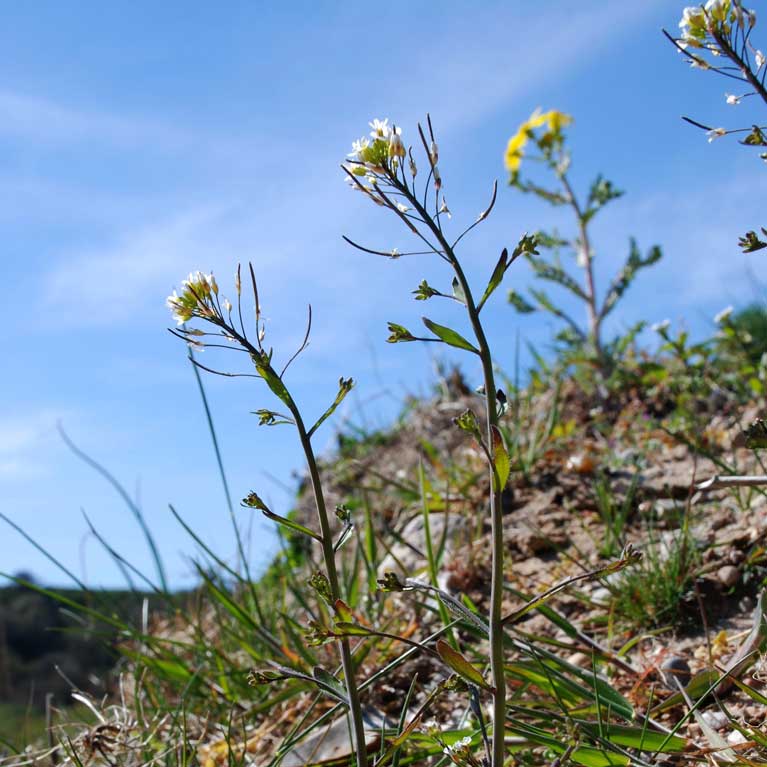
LA JOLLA—Nearly everything you know about plants was first discovered in a plant you’ve likely never heard of. Arabidopsis thaliana, also known as thale cress, is a small, flowering weed that has shaped much of plant biology as we know it. Serving as the representative plant species in most plant research across the last half century, Arabidopsis has taught us how plants respond to light, which hormones control plant behavior, and why some plants grow long, deep roots while others grow them shallow and wide. But despite its beloved reputation among plant biologists worldwide, many elements of the Arabidopsis life cycle have remained a mystery.
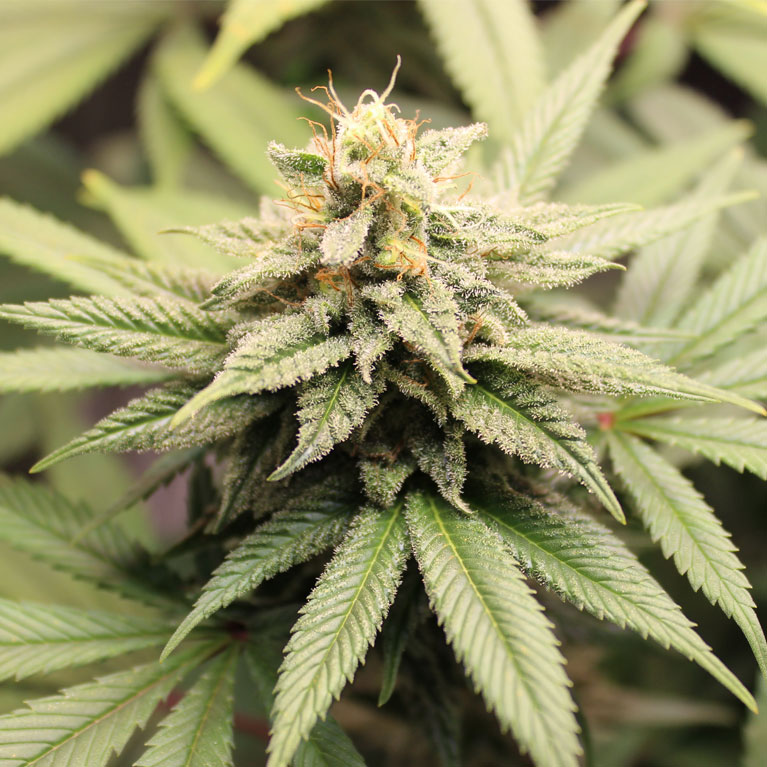
LA JOLLA—Cannabis has been a globally important crop for millennia. While best known today as marijuana for its psychoactive cannabinoid THC (tetrahydrocannabinol), historically, cannabis has been a cornerstone of human civilization, providing seed oil, textiles, and food for more than 10,000 years. Today, cannabis remains an understudied and underutilized resource, but United States legislation passed in 2014 and 2018 have re-energized cannabis crop development for medicinal, grain, and fiber applications.
LA JOLLA—Industrial farming practices often deplete the soil of important nutrients and minerals, leaving farmers to rely on artificial fertilizers to support plant growth. In fact, fertilizer use has more than quadrupled since the 1960s, but this comes with serious consequences. Fertilizer production consumes massive amounts of energy, and its use pollutes the water, air, and land.
LA JOLLA—Plants may burrow into the ground and stretch toward the sun, but they’re ultimately stuck where they sprout—at the mercy of environmental threats like temperature, drought, and microbial infection. To compensate for their inability to up and move when danger strikes, many plants have evolved ways to protect themselves by altering their physiology, such as building armor around parts of their body and roots called the periderm. However, since many plant biologists who study tissue development look at young plants, later-in-life periderm development has remained relatively unexplored.
LA JOLLA—Human bodies defend themselves using a diverse population of immune cells that circulate from one organ to another, responding to everything from cuts to colds to cancer. But plants don’t have this luxury. Because plant cells are immobile, each individual cell is forced to manage its own immunity in addition to its many other responsibilities, like turning sunlight into energy or using that energy to grow. How these multitasking cells accomplish it all—detecting threats, communicating those threats, and responding effectively—has remained unclear.
LA JOLLA—More than 3 billion years ago, on an Earth entirely covered with water, photosynthesis first evolved in little ancient bacteria. In the following many millions of years, those bacteria evolved into plants, optimizing themselves along the way for various environmental changes. This evolution was punctuated around 30 million years ago with the emergence of a newer, better way to photosynthesize. While plants like rice continued using an old form of photosynthesis known as C3, others like corn and sorghum developed a newer and more efficient version called C4.
LA JOLLA—Profesor del Salk Joanne Chory, una de las biólogas vegetales más importantes del mundo, quien lideró la iniciativa para mitigar el cambio climático con soluciones basadas en plantas, falleció el 12 de noviembre de 2024, a los 69 años, debido a complicaciones de la enfermedad de Parkinson. Le diagnosticaron Parkinson en 2004 y, a pesar de los desafíos, continuó liderando su equipo de investigación hasta el momento de su muerte.
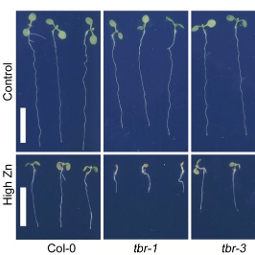
LA JOLLA—El impacto negativo de la actividad humana en la Tierra no solo afecta la atmósfera de nuestro planeta, sino que va mucho más profundo, hasta sus suelos. Por ejemplo, la aplicación excesiva de estiércol o lodos residuales puede aumentar las concentraciones de metales pesados en tierras agrícolas donde se cultivan cultivos vitales. Uno de estos metales pesados es el zinc, un micronutriente necesario para la salud de plantas y animales. Sin embargo, en exceso, el zinc puede ser extremadamente dañino para especies de plantas sensibles.
LA JOLLA—Salk Institute Professor Joanne Chory has been selected by the Wolf Foundation to receive a 2024 Wolf Prize in the field of agriculture for her "key discoveries on plant developmental biology of relevance for crop improvements.” The award is endowed annually to scientists and artists worldwide for their “outstanding achievements in advancing science and the arts for the betterment of humanity.”
LA JOLLA—Global temperatures are on the rise, with experts projecting an increase of 2.7°F by 2050. Because plants cannot regulate their own temperatures, they are especially sensitive to these temperature changes. In higher temperatures, plants instruct their root systems to grow faster, creating long roots that stretch through the soil to absorb more water and nutrients. While this response may help the plants in the short term, new research suggests it’s both unsustainable for the plants and potentially harmful for humans in the long term.
LA JOLLA—The Intergovernmental Panel on Climate Change (IPCC) declared that removing carbon from the atmosphere is now essential to fighting climate change and limiting global temperature rise. To support these efforts, Salk scientists are harnessing plants’ natural ability to draw carbon dioxide out of the air by optimizing their root systems to store more carbon for a longer period of time.
LA JOLLA—Above ground, plants stretch toward the sun. Below ground, plants tunnel through the earth. As roots soak up water and nutrients from surrounding soil, they grow and stretch to develop distinct root system architectures. The root system architecture determines whether roots remain in the shallow soil layers or grow steeper and reach deeper soil layers. Root systems are central to plant survival and productivity, determining the plant’s access to nutrients and water and, therefore, the plant’s ability to withstand nutrient depletion and extreme weather like drought.
LA JOLLA—Salk Institute Professor Joanne Chory has been selected by the Franklin Institute in Philadelphia to receive a Benjamin Franklin Medal in Life Science for her achievements in plant science. She will receive a 14-karat gold medal and a $10,000 honorarium at the Franklin Institute Awards Ceremony in April 2024. Chory joins other extraordinary scientists and engineers as a Franklin laureate, including Nikola Tesla, Marie and Pierre Curie, Thomas Edison, Albert Einstein, and Jane Goodall, among others.
LA JOLLA—Plants and animals alike rely on iron for growth and regulation of microbiomes—collections of bacteria, fungi, and more that co-exist in places like the human gut or the soil around a plant’s roots. Plants face a special challenge when acquiring iron, since the strategies plants use to increase iron availability alter the root microbiome and can inadvertently benefit harmful soil-dwelling bacteria.
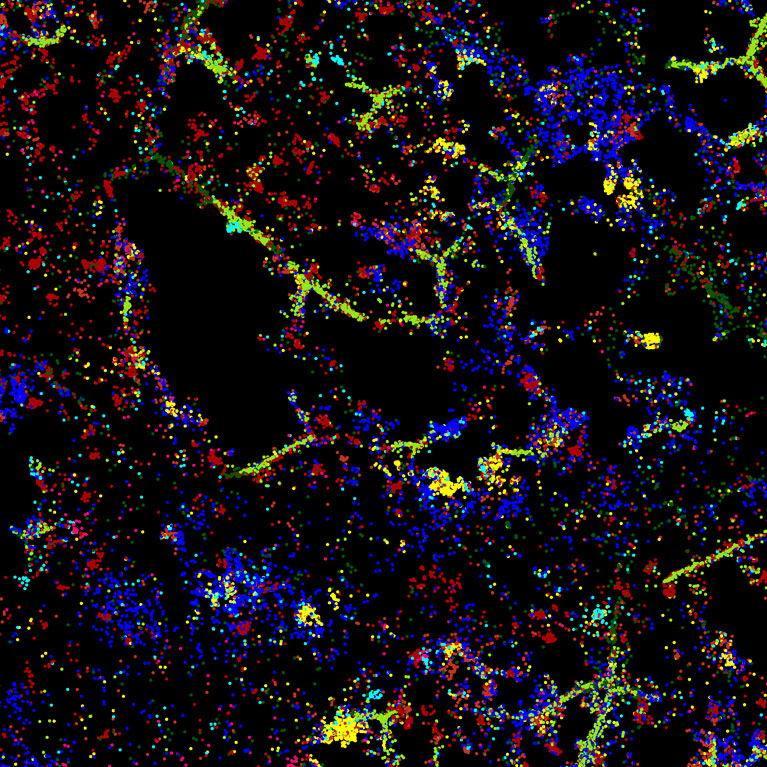
LA JOLLA—La vida celular en el interior de una planta es tan vibrante como su flor. En cada tejido vegetal —desde la punta de la raíz hasta la punta de la hoja— hay cientos de tipos de células que transmiten información sobre las necesidades funcionales y los cambios ambientales. Ahora, una nueva tecnología desarrollada por científicos del Instituto Salk permite capturar este mundo interno de las plantas con una resolución sin precedentes, lo que abre la puerta a comprender cómo responden las plantas a un clima cambiante y conduce al desarrollo de cultivos más resilientes.
LA JOLLA—The Salk Institute and Autobahn Labs, an early-stage drug discovery incubator, will work together to identify and advance promising initial scientific discoveries through the preliminary steps of drug discovery and development. Autobahn Labs will invest up to $5 million per project for Salk discoveries that require access to drug development expertise and state-of-the art capabilities.
LA JOLLA—Hess Corporation is donating $50 million to the Salk Institute’s Campaign for Discovery: The Power of Science, a seven-year, $750 million comprehensive fundraising campaign to attract the people and build the technology and space necessary to accelerate critical research. This gift will specifically advance Salk’s Iniciativa de Aprovechamiento de Plantas—an effort to mitigate climate change by optimizing plants and supporting wetlands to increase capture of excess atmospheric carbon—and provide vital infrastructure for this work by establishing the new Hess Center for Plant Science.
LA JOLLA—PlantACT! Plants for Climate Action, a European initiative founded to unite plant science experts in the effort to mitigate climate change, will welcome Salk Professors Joanne Chory y Wolfgang Busch to an upcoming two-day event in New York City. The event, called Growing a Resilient Society and hosted by the University of Cologne New York Office and partners, will feature a free public panel discussion with Chory and an invite-only experts’ workshop research presentation by Busch.
LA JOLLA—Plants lengthen and bend to secure access to sunlight. Despite observing this phenomenon for centuries, scientists do not fully understand it. Now, Salk scientists have discovered that two plant factors—the protein PIF7 and the growth hormone auxin—are the triggers that accelerate growth when plants are shaded by canopy and exposed to warm temperatures at the same time.
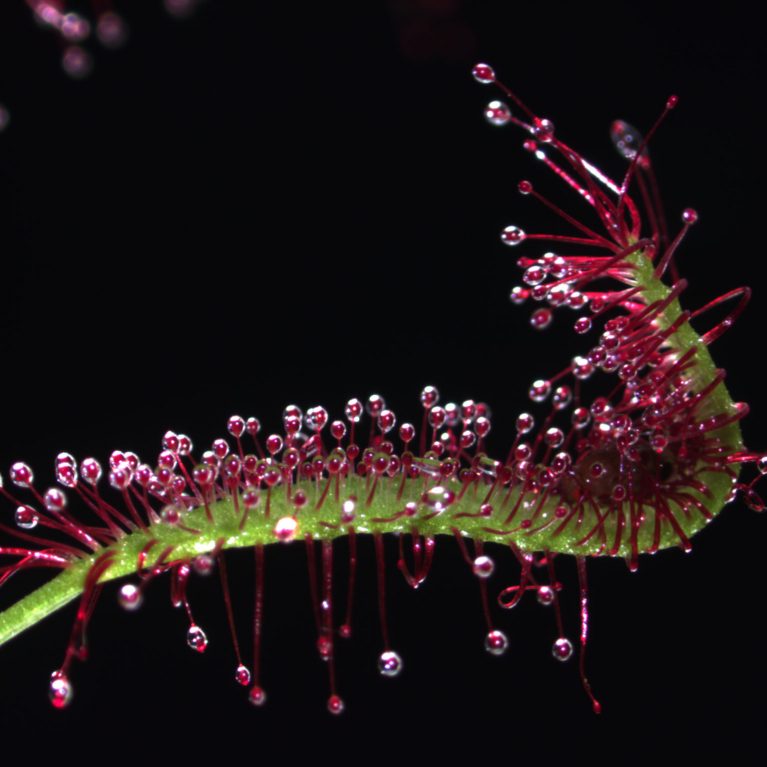
LA JOLLA–Insect-eating plants have fascinated biologists for more than a century, but how plants evolved the ability to capture and consume live prey has largely remained a mystery. Now, Salk scientists, along with collaborators from Washington University in St. Louis, have investigated the molecular basis of plant carnivory and found evidence that it evolved from mechanisms plants use to defend themselves.
LA JOLLA—The Salk Institute has named plant molecular geneticist Mary Lou Guerinot a Nonresident Fellow, a group of eminent scientific advisors that guide the Institute’s leadership. Guerinot holds the Ronald and Deborah Harris Professorship in the Sciences and is a professor of biological sciences at Dartmouth College, where she was the first woman to chair a science department.
LA JOLLA–Research Professor Todd Michael will receive nearly $2 million from the Bill & Melinda Gates Foundation to sequence the genomes of multiple lineages of the cassava plant, a large starchy root vegetable also known as yuca root consumed in more than 80 countries around the world. A better understanding of cassava genetics will help researchers and plant breeders develop more productive disease- and drought-resistant plants for the future.
LA JOLLA—El Salk Institute anunció hoy el nombramiento de David Lawrence como director ejecutivo de Iniciativa de Aprovechamiento de Plantas (IAP). En su nuevo cargo, Lawrence supervisará la gestión de programas y el apoyo administrativo para el proyecto, además de ayudar a entregar aplicaciones del mundo real basadas en los hallazgos de investigación de Salk. Por ejemplo, ayudará a escalar y desplegar las Salk Ideal Plants™ a nivel mundial, cultivos que pueden capturar el exceso de dióxido de carbono de la atmósfera y almacenarlo en las profundidades de sus sistemas radiculares.
LA JOLLA—What determines how a cell’s genome is regulated to ensure proper growth and development? Turns out, the parts of the genome that are turned on or off in each cell-type or tissue play a major role in this process. Now, a team at Salk has shown that the CLASSY gene family regulates which parts of the genome are turned off in a tissue-specific manner. The CLASSYs essentially control where the genome is marked by DNA methylation—the addition of methyl chemical groups to the DNA that act like tags saying, “turn off.” Because DNA methylation exists across diverse organisms, including plants and animals, this research has broad implications for both agriculture and medicine. The work, published in Comunicaciones de la Naturaleza on January 11, 2022, identifies the CLSY genes as major factors underlying epigenetic diversity in plant tissues.
LA JOLLA—Salk Professors Joanne Chory, Joseph Ecker, Rusty Gage, Satchidananda Panda, Reuben Shaw y Kay Tye have been named to the Highly Cited Researchers list by Clarivate. The list identifies researchers who demonstrate “significant influence in their chosen field or fields through the publication of multiple highly cited papers.” Chory, Ecker and Gage have been named to this list every year since 2014, when the regular annual rankings began. This is Tye’s fifth, Shaw’s third and Panda’s first time receiving the designation. Additionally, Ecker appeared in two separate categories: “plant and animal science” and “molecular biology and genetics” and is one of 3.4 percent of researchers selected in two fields. Joseph Nery, a research assistant II in the Ecker lab, was also included on the list.
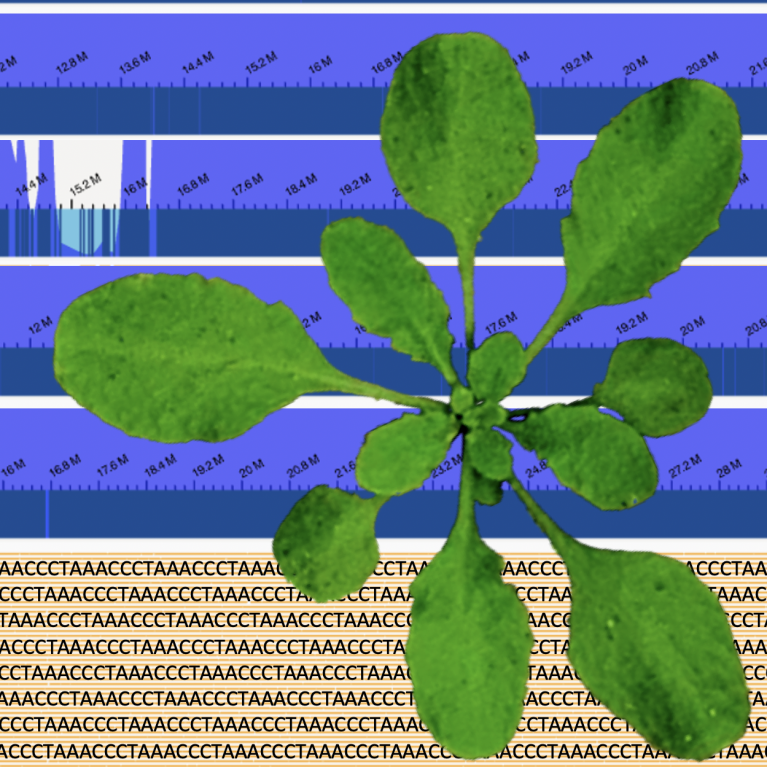
LA JOLLA—Científicos del Salk, en colaboración con investigadores de la Universidad de Cambridge y la Universidad Johns Hopkins, han secuenciado el genoma de la especie de planta modelo más utilizada en el mundo, Arabidopsis thaliana, con un nivel de detalle nunca antes alcanzado. El estudio, publicado en Ciencia el 12 de noviembre de 2021, revela los secretos de Arabidopsis regiones de los cromosomas llamadas centrómeros. Los hallazgos arrojan luz sobre la evolución de los centrómeros y brindan información sobre el equivalente genómico de los agujeros negros.
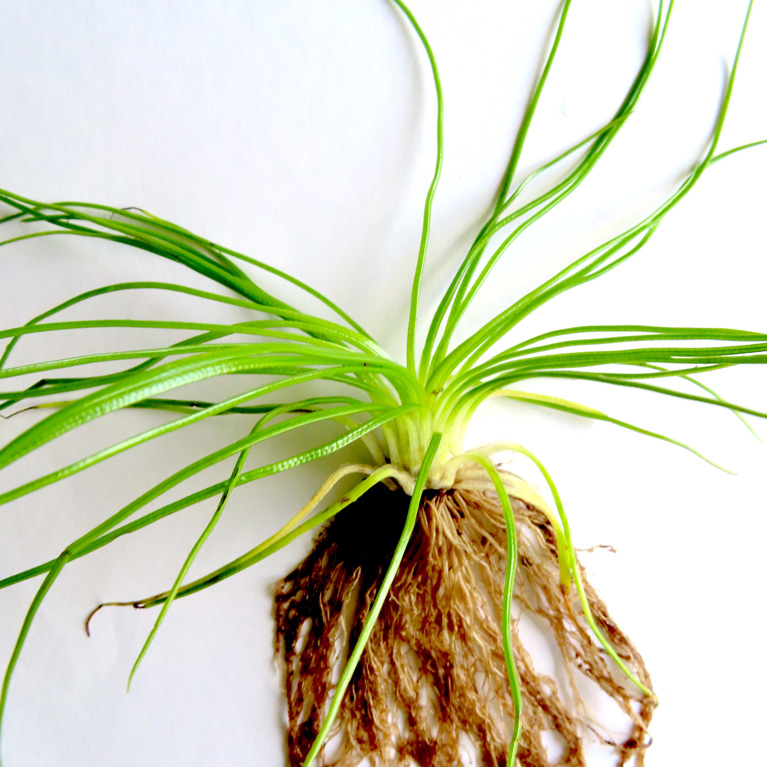
LA JOLLA—Los humildes quillworts son un antiguo grupo de aproximadamente 250 plantas acuáticas pequeñas que han sido en gran medida ignoradas por los botánicos modernos. Ahora, científicos del Salk, junto con investigadores del Boyce Thompson Institute, han secuenciado el primer genoma de quillwort y han descubierto algunos secretos del método único de fotosíntesis de la planta, secretos que eventualmente podrían conducir a la ingeniería de cultivos con un uso de agua y captura de carbono más eficientes para abordar el cambio climático. Los hallazgos se publicaron en Comunicaciones de la Naturaleza el 3 de noviembre de 2021.
LA JOLLA—Investigadores del Salk Institute's Iniciativa de Aprovechamiento de Plantas (HPI) han establecido una colaboración de cinco años y 6.2 millones de dólares, $, con Nadia Shakoor, investigadora principal y científica principal de investigación, y su equipo en el Centro de Ciencia Vegetal Donald Danforth identificar y desarrollar plantas de sorgo que puedan capturar y almacenar mejor el carbono atmosférico.
LA JOLLA—Scientists—and gardeners—have long known that plants grow taller and flower sooner when they are shaded by close-growing neighbors. Now, for the first time, researchers at the Salk Institute have shown the detailed inner workings of this process.
LA JOLLA—Plants are unparalleled in their ability to capture CO2 from the air, but this benefit is temporary, as leftover crops release carbon back into the atmosphere, mostly through decomposition. Researchers have proposed a more permanent, and even useful, fate for this captured carbon by turning plants into a valuable industrial material called silicon carbide (SiC)—offering a strategy to turn an atmospheric greenhouse gas into an economically and industrially valuable material.
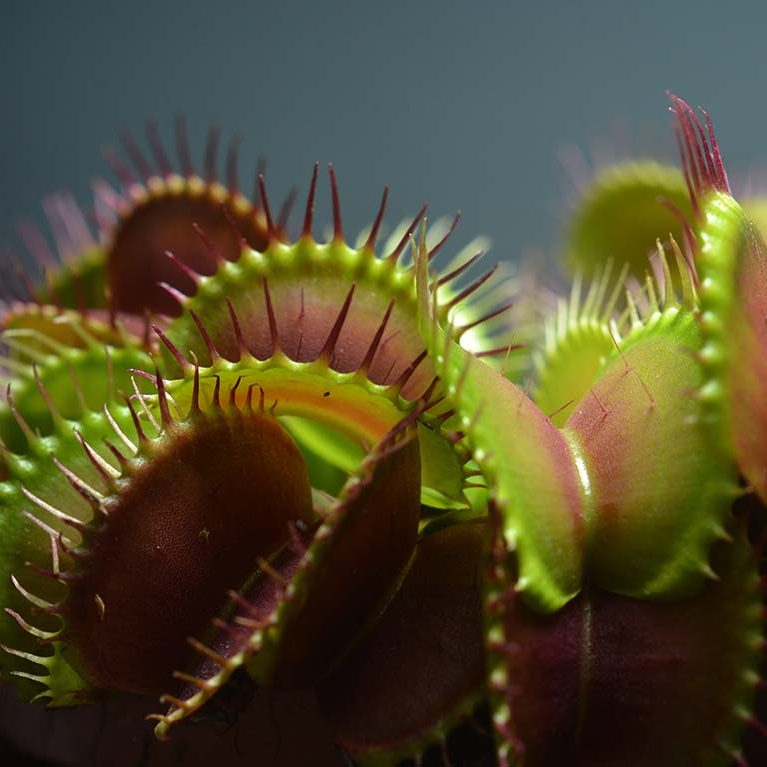
LA JOLLA—The brush of an insect’s wing is enough to trigger a Venus flytrap to snap shut, but the biology of how these plants sense and respond to touch is still poorly understood, especially at the molecular level. Now, a new study by Salk and Scripps Research scientists identifies what appears to be a key protein involved in touch sensitivity for flytraps and other carnivorous plants.
LA JOLLA—Profesor del Salk Wolfgang Busch has been recognized for his contributions and dedication to advancing science through research by being named the first holder of the Hess Chair in Plant Science, effective April 1, 2021.
Recently, donors completed a matching challenge, gifting $200,000 to Salk’s Coastal Plant Restoration (CPR) program to address increasingly urgent needs to preserve some of the world’s largest carbon reservoirs and restore global wetland ecosystems. This approach holds great promise for safeguarding these tremendous carbon sinks while stabilizing, and in many cases, rebuilding land lost to erosion and unprecedented sea level rise.
LA JOLLA—Wolffia, also known as duckweed, is the fastest-growing plant known, but the genetics underlying this strange little plant’s success have long been a mystery to scientists. Now, thanks to advances in genome sequencing, researchers are learning what makes this plant unique—and, in the process, discovering some fundamental principles of plant biology and growth.
LA JOLLA—Salk’s Harnessing Plants Initiative (HPI) will receive $30 million from the Bezos Earth Fund to advance efforts to increase the ability of crop plants, such as corn and soybeans, to capture and store atmospheric carbon via their roots in the soil. This work will explore carbon-sequestration mechanisms in six of the world’s most prevalent crop species with the goal of increasing the plants’ carbon-storage capacity. It complements an ongoing HPI project focused on identifying genes for increased carbon sequestration in model plants and then utilizing those genes to enhance carbon sequestration in crops.
SAN DIEGO and LA JOLLA—The Salk Institute and Sempra Energy (NYSE: SRE) today announced a new project to advance plant-based carbon capture and sequestration research, education and implementation to help address the climate crisis. Sempra Energy is donating $2 million to the Salk Institute to help fund the five-year project.
Joanne Chory, quien fue pionera en la aplicación de la genética molecular a la biología vegetal y transformó nuestra comprensión de la fotosíntesis, recibirá el Premio Pearl Meister Greengard 2020, el máximo galardón de Rockefeller que reconoce a mujeres científicas destacadas. Chory es titular de la Cátedra Howard H. and Maryam R. Newman en Biología Vegetal y directora del Laboratorio de Biología Molecular y Celular de Plantas del Instituto Salk. También es Investigadora del Instituto Médico Howard Hughes. Frances Beinecke, expresidenta del Natural Resources Defense Council, entregará el premio en una ceremonia virtual organizada por Rockefeller el 22 de octubre.
LA JOLLA—El Instituto Salk ha ascendido a Wolfgang Busch al rango de profesor por sus contribuciones pioneras a la biología vegetal. El ascenso se basó en recomendaciones de la facultad y becarios no residentes de Salk, y fue aprobado por el presidente Rusty Gage y la Junta Directiva del Instituto.
LA JOLLA—Todd Michael will return to Salk as a research professor in the Plant Molecular and Cellular Biology Laboratory, where he will oversee his own research group as well as provide key expertise in genomics to the Harnessing Plants Initiative (HPI). Michael completed his postdoctoral research at Salk in 2007 under the direction of Professor Joanne Chory, director of Salk’s Plant Molecular and Cellular Biology Laboratory and executive director of the Initiative. The non-tenured research professor track was created by Salk in 2018 to attract and retain top talent to the faculty.
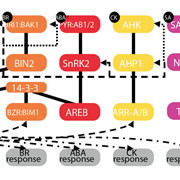
LA JOLLA—Just like humans and other animals, plants have hormones. One role of plant hormones is to perceive trouble—whether an insect attack, drought or intense heat or cold—and then signal to the rest of the plant to respond.
LA JOLLA—Salk’s Harnessing Plants Initiative (HPI) will receive a $12.5 million gift from Hess Corporation (NYSE: HES) to advance two projects to enhance plants’ natural ability to store carbon and mitigate the effects of climate change: the CRoPS (CO2 Removal on a Planetary Scale) program and the Coastal Plant Restoration (CPR) program. These projects build on the Salk discovery of a crucial gene that will help the team develop plants with larger root systems capable of absorbing and storing potentially billions of tons of carbon per year from the atmosphere.
LA JOLLA—Father of genetics Gregor Mendel spent years tediously observing and measuring pea plant traits by hand in the 1800s to uncover the basics of genetic inheritance. Today, botanists can track the traits, or phenotypes, of hundreds or thousands of plants much more quickly, with automated camera systems. Now, Salk researchers have helped speed up plant phenotyping even more, with machine-learning algorithms that teach a computer system to analyze three-dimensional shapes of the branches and leaves of a plant. The study, published in Fisiología vegetal on October 7, 2019, may help scientists better quantify how plants respond to climate change, genetic mutations or other factors.
LA JOLLA—Plants can do many amazing things. Among their talents, they can manufacture compounds that help them repel pests, attract pollinators, cure infections and protect themselves from excess temperatures, drought and other hazards in the environment.
LA JOLLA—Iron is essential for plant growth, but with heavy rainfall and poor aeration, many acidic soils become toxic with excess iron. In countries with dramatic flood seasons, such as in West Africa and tropical Asia, toxic iron levels can have dire consequences on the availability of staple foods, such as rice.
LA JOLLA—Hidden underground networks of plant roots snake through the earth foraging for nutrients and water, similar to a worm searching for food. Yet, the genetic and molecular mechanisms that govern which parts of the soil roots explore remain largely unknown. Now, Salk Institute researchers have discovered a gene that determines whether roots grow deep or shallow in the soil.
LA JOLLA—What will a three-degree-warmer world look like? How will plants fare in more extreme weather conditions? When experiencing stress or damage from various sources, plants use chloroplast-to-nucleus communication to regulate gene expression and help them cope.
LA JOLLA—The Salk Institute’s Harnessing Plants Initiative to combat climate change using plants, led by Professor Joanne Chory, executive director of the Iniciativa de Aprovechamiento de Plantas, will receive funding of more than $35 million from over 10 individuals and organizations through The Audacious Project, a highly competitive program housed at TED, the nonprofit devoted to ideas worth spreading. The collective commitments represent one of the largest gifts to a single project in the Institute’s history.
LA JOLLA—Salk researchers have mapped the genomes and epigenomes of genetically modified plant lines with the highest resolution ever to reveal exactly what happens at a molecular level when a piece of foreign DNA is inserted. Their findings, published in the journal PLOS Genetics on January 18, 2019, elucidate the routine methods used to modify plants, and offer new ways to more effectively minimize potential off-target effects.
LA JOLLA—When a building is damaged, a general contractor often oversees various subcontractors—framers, electricians, plumbers and drywall hangers—to ensure repairs are done in the correct order and on time.
LA JOLLA—Científicos del Instituto Salk y de la Universidad de Purdue han descubierto el interruptor en las plantas que detiene la producción de terpenoides, compuestos ricos en carbono que desempeñan funciones en la fisiología vegetal y que los humanos utilizan en todo, desde fragancias y saborizantes hasta biocombustibles y productos farmacéuticos.
LA JOLLA. No todo tu genoma necesita estar activo en un momento dado. Algunas regiones tienden a moverse por el genoma de maneras problemáticas si no se controlan; otras codifican genes que deben desactivarse en ciertas células o en ciertos momentos. Una forma en que las células mantienen estos elementos genéticos bajo control es con el equivalente químico de una señal de “no usar”. Se sabe que esta señal química, llamada metilación del ADN, varía en diferentes tipos de células o en diferentes etapas del desarrollo celular, pero los detalles de cómo las células regulan exactamente dónde colocar las marcas de metilación del ADN han permanecido poco claros.
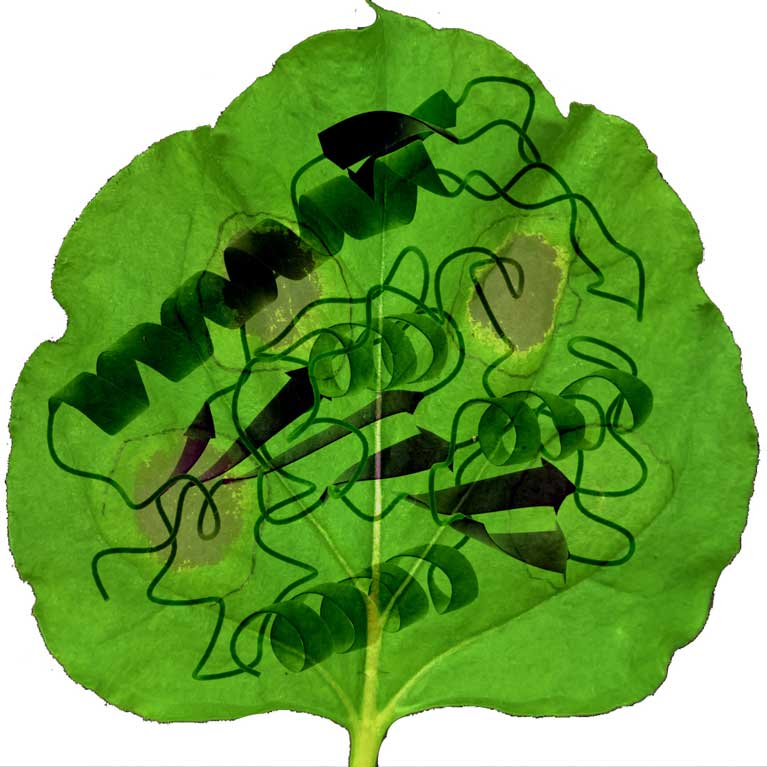
LA JOLLA—When you see brown spots on otherwise healthy green leaves, you may be witnessing a plant’s immune response as it tries to keep a bacterial infection from spreading. Some plants are more resistant to such infections than others, and plant biologists want to understand why. Salk Institute scientists studying a plant protein called SOBER1 recently discovered one mechanism by which, counterintuitively, plants seem to render themselves less resistant to infection.
LA JOLLA—Salk Institute Professors Joanne Chory y Terrence Sejnowski have been elected Fellows of the National Academy of Inventors (NAI). Chory is director of the Salk Institute’s Plant Molecular and Cellular Biology Laboratory, a Howard Hughes Medical Institute (HHMI) Investigator and holder of the Howard H. and Maryam R. Newman Chair in Plant Biology. Sejnowski is head of the Institute’s Computational Neurobiology Laboratory, an HHMI Investigator and holder of the Francis Crick Chair.
Científico del Instituto Salk en La Jolla Joanne Chory, uno de los biólogos de plantas más importantes del mundo, que ahora lidera la lucha contra el calentamiento global con soluciones basadas en plantas, ha sido galardonado con un Premio Breakthrough 2018 por su trabajo pionero al descifrar cómo las plantas optimizan su crecimiento, desarrollo y estructura celular para transformar la luz solar en energía química.
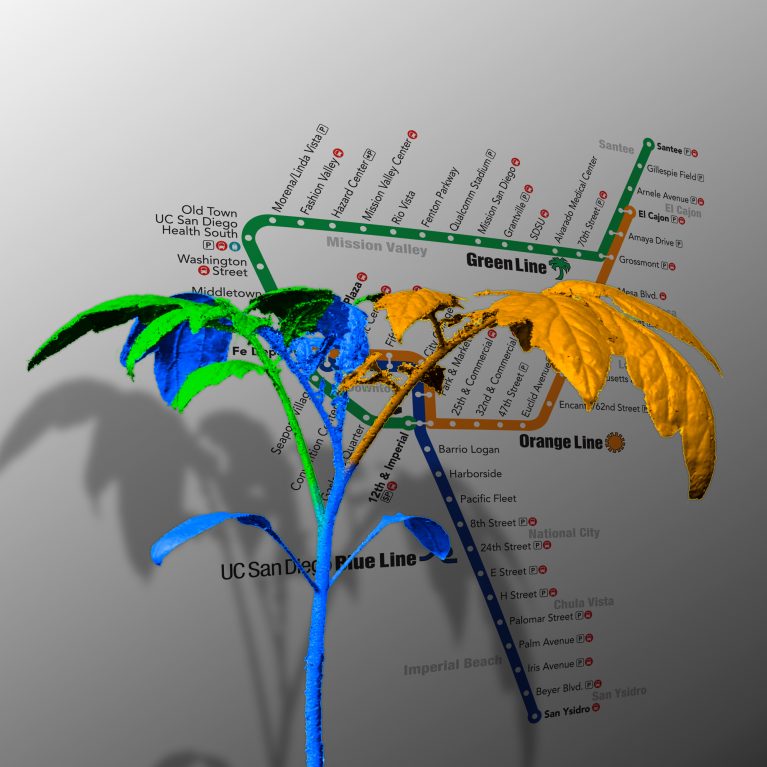
LA JOLLA—It might seem like a tomato plant and a subway system don’t have much in common, but both, it turns out, are networks that strive to make similar tradeoffs between cost and performance.
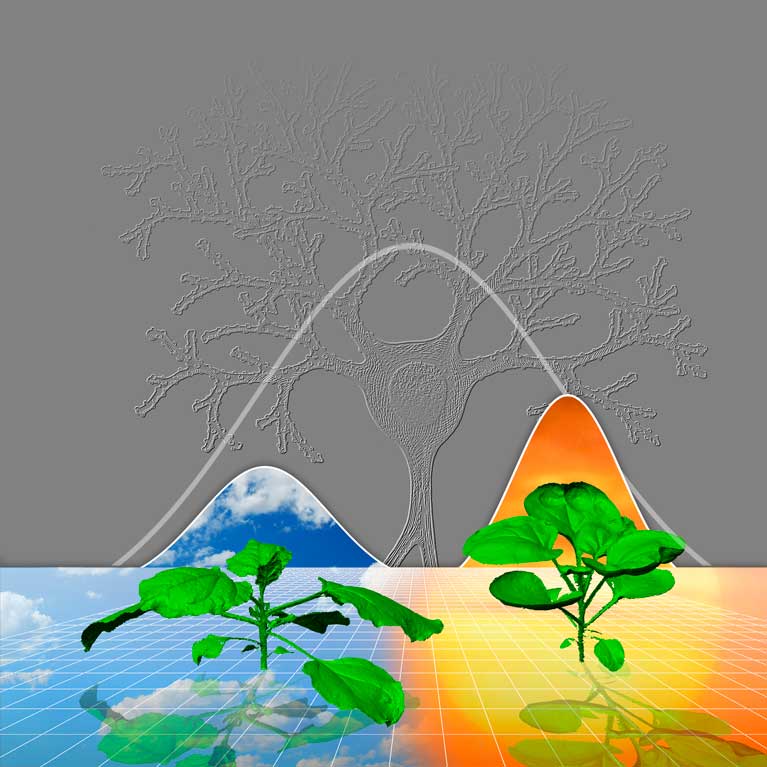
LA JOLLA—Plants and brains are more alike than you might think: Salk scientists discovered that the mathematical rules governing how plants grow are similar to how brain cells sprout connections. The new work, published in Biología Actual on July 6, 2017, and based on data from 3D laser scanning of plants, suggests there may be universal rules of logic governing branching growth across many biological systems.
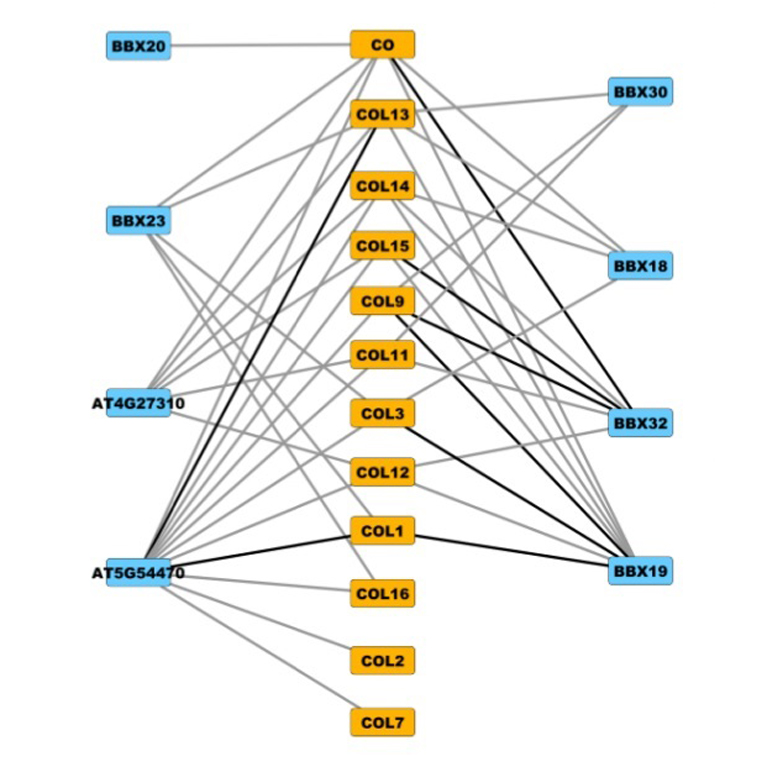
LA JOLLA—Salk scientists have developed a new high-throughput technique to determine which proteins in a cell interact with each other. Mapping this network of interactions, or “interactome,” has been slow going in the past because the number of interactions that could be tested at once was limited. The new approach, published June 26 in Naturaleza Métodos, lets researchers test millions of relationships between thousands of proteins in a single experiment.
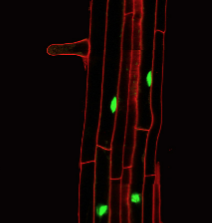
LA JOLLA—(June 1, 2017) Once we start coloring our hair, we may be surprised to learn that we begin to have a problem in common with plant biologists: finding the right dye for our roots. In the case of the biologists, just the right chemical is needed to measure exactly how plant roots grow. Now, a researcher at the Salk Institute has discovered a fluorescent dye that, paired with other imaging techniques, reveals root growth to be influenced by a major plant hormone more than previously thought.
LA JOLLA—Just like people, plants need iron to grow and stay healthy. But some plants are better at getting this essential nutrient from the soil than others. Now, a study led by a researcher at the Salk Institute has found that variants of a single gene can largely determine a plant’s ability to thrive in environments where iron is scarce.
LA JOLLA—We can tell when plants need water: their leaves droop and they start to look dry. But what’s happening on a molecular level?
LA JOLLA—The best natural chemists out there are not scientists—they’re plants. Plants have continued to evolve a rich palette of small natural chemicals and receptors since they began to inhabit land roughly 450 million years ago.
LA JOLLA—A new technique developed by Salk Institute scientists for rapidly mapping regions of DNA targeted by regulatory proteins could give scientists insight into what makes some plants drought tolerant or disease resistant, among other traits.
LA JOLLA—Agricultural grafting dates back nearly 3,000 years. By trial and error, people from ancient China to ancient Greece realized that joining a cut branch from one plant onto the stalk of another could improve the quality of crops.
LA JOLLA—Despite seeming passive, plants wage wars with each other to outgrow and absorb sunlight. If a plant is shaded by another, it becomes cut off from essential sunlight it needs to survive.
LA JOLLA–As food demands rise to unprecedented levels, farmers are in a race against time to grow plants that can withstand environmental challenges–infestation, climate change and more. Now, new research at the Salk Institute, published in Ciencia on October 23, 2015, reveals details into a fundamental mechanism of how plants manage their energy intake, which could potentially be harnessed to improve yield.
LA JOLLA—Salk Institute plant biologist Julie Law ha sido nombrado Rita Allen Foundation Scholar, a distinction given to biomedical scientists whose research holds exceptional promise for advancing the frontiers of knowledge about how biological systems function in health and disease.
Científico de Salk Joanne Chory, a professor in the Laboratorio de Biología Molecular y Celular Vegetal, has received the prestigious honor of being elected to the American Philosophical Society (APS). The APS is an eminent scholarly organization of international reputation, which promotes useful knowledge in the sciences and humanities. This country’s first learned society, the APS has played an important role in American cultural and intellectual life for over 250 years.
LA JOLLA–Salk Institute Professors Joseph Ecker y Dennis O’Leary have received the prestigious honor of being elected to the American Academy of Arts and Sciences (AAAS) class of 2015. One of the nation’s most prominent honorary societies, AAAS are among the 197 accomplished leaders from academia, business, public affairs, the humanities and the arts accepted to this year’s class. Its members include winners of the Nobel Prize and Pulitzer Prize; MacArthur and Guggenheim Fellowships; and Grammy, Emmy, Oscar and Tony Awards.
LA JOLLA—For hundreds of years, healers in São Tomé e Príncipe—an island off the western coast of Africa—have prescribed cata-manginga leaves and bark to their patients. These pickings from the Voacanga africana tree are said to decrease inflammation and ease the symptoms of mental disorders.
LA JOLLA—A chemical that’s found in fruits and vegetables from strawberries to cucumbers appears to stop memory loss that accompanies Enfermedad de Alzheimer in mice, scientists at the Instituto Salk de Estudios Biológicos have discovered. In experiments on mice that normally develop Alzheimer’s symptoms less than a year after birth, a daily dose of the compound—a flavonol called fisetin—prevented the progressive memory and learning impairments. The drug, however, did not alter the formation of amyloid plaques in the brain, accumulations of proteins which are commonly blamed for Alzheimer’s disease. The new finding suggests a way to treat Alzheimer’s symptoms independently of targeting amyloid plaques.
LA JOLLA, CA—It’s common wisdom that one rotten apple in a barrel spoils all the other apples, and that an apple ripens a green banana if they are put together in a paper bag. Ways to ripen, or spoil, fruit have been known for thousands of years-as the Bible can attest-but now the genes underlying these phenomena of nature have been revealed.
LA JOLLA, CA—In the spring following a forest fire, trees that survived the blaze explode in new growth and plants sprout in abundance from the scorched earth. For centuries, it was a mystery how seeds, some long dormant in the soil, knew to push through the ashes to regenerate the burned forest.
LA JOLLA, CA—Scientists at the Salk Institute for Biological Studies have identified patterns of epigenomic diversity that not only allow plants to adapt to various environments, but could also benefit crop production and the study of human diseases.
LA JOLLA, CA—You might think you have nothing in common with mustard except hotdogs. Yet based on research in a plant from the mustard family, Salk scientists have discovered a possible explanation for how organisms, including humans, directly regulate chemical reactions that quickly adjust the growth of organs. These findings overturn conventional views of how different body parts coordinate their growth, shedding light on the development of more productive plants and new therapies for metabolic diseases.
LA JOLLA,CA—Salk faculty members Joseph Ecker and Joseph Noel have been named as 2012 Fellows by the American Association for the Advancement of Science (AAAS), the world’s largest general scientific society and the publisher of the journal Science. Election as an AAAS Fellow is among the highest honors in American science and scholars are selected by their peers for “scientifically or socially distinguished efforts to advance science or its applications,” according to election administrators.
LA JOLLA,CA—The Salk Institute announced today that professors Edward M. Callaway y José Noel have been appointed to endowed chairs in acknowledgment of their outstanding contributions and dedication to scientific research.
LA JOLLA, CA—Scientists at the Salk Institute for Biological Studies have discovered a key genetic switch by which plants control their response to ethylene gas, a natural plant hormone best known for its ability to ripen fruit, but which, under stress conditions, can cause wilted leaves, premature aging and spoilage from over-ripening. The findings, published August 30 in Science magazine, may hold the key to manipulating plants’ ethylene on/off switch, allowing them to balance between drought resistance and growth and, therefore, decrease crop losses from drought conditions.
LA JOLLA, CA—It was long thought that methylation, a crucial part of normal organism development, was a static modification of DNA that could not be altered by environmental conditions. New findings by researchers at the Salk Institute for Biological Studies, however, suggest that the DNA of organisms exposed to stress undergo changes in DNA methylation patterns that alter how genes are regulated.
LA JOLLA, CA—Scientists at the Salk Institute for Biological Studies and Iowa State University discovered a family of plant proteins that play a role in the production of seed oils, substances important for animal and human nutrition, biorenewable chemicals and biofuels.
LA JOLLA, CA—Mild mannered though they seem, plants are extremely competitive, especially when it comes to getting their fair share of sunlight. Whether a forest or a farm, where plants grow a battle rages for the sun’s rays.
LA JOLLA, CA—The Genetics Society of America(GSA) has honored Joanne Chory, Salk Institute professor and director of the Plant Molecular and Cellular Biology Laboratory and Howard H. and Maryam R. Newman Chair in Plant Biology, as the recipient of the prestigious 2012 Genetics Society of America Medal.
LA JOLLA, CA—El Instituto Salk se complace en anunciar el nombramiento de cinco miembros del profesorado que recibirán cátedras dotadas establecidas por líderes filantrópicos en apoyo de la investigación científica.
La Jolla—Birds do it, bees do it, and for most things biological, even plants do it. But not necessarily like their animal counterparts. A study led by Salk Institute scientists shows that a plant receptor does one of the most fundamental cellular “its”—the delivery of a hormonal signal from outside the cell to the nucleus—in a radically different way than its animal cousins. Knowing that could aid creation of techniques to speed plant growth and enhance agricultural production.
La Jolla, CA – A microscopic green alga helped scientists at the Salk Institute for Biological Studies identify a novel function for the retinoblastoma protein (RB), which is known for its role as a tumor suppressor in mammalian cells. By coupling cell size with cell division, RB ensures that cells stay within an optimal size range.
La Jolla, CA – Unlike the Three Musketeers who lived by the motto “All for one, one for all,” plant hormones prefer to do their own thing. For years, debate swirled around whether pathways activated by growth-regulating plant hormones converge on a central growth regulatory module. Now, the cooperation model is challenged by researchers at the Salk Institute for Biological Studies. They show that each hormone acts largely independently in the Aug. 11 issue of Móvil.