LA JOLLA–Researchers at the Salk Institute have healed injured hearts of living mice by reactivating long dormant molecular machinery found in the animals’ cells, a finding that could help pave the way to new therapies for heart disorders in humans.
LA JOLLA–Like a slumbering dragon, 艾滋病 can lay dormant in a person’s cells for years, evading medical treatments only to wake up and strike at a later time, quickly replicating itself and destroying the immune system.
LA JOLLA–Like a colony of bacteria or species of animals, 癌症 cells within a tumor must evolve to survive. A dose of chemotherapy may kill hundreds of thousands of cancer cells, for example, but a single cell with a unique mutation can survive and quickly generate a new batch of drug-resistant cells, making cancer hard to combat.
LA JOLLA–Scientists at the Salk Institute and Beth Israel Deaconess Medical Center (BIDMC) in Boston have discovered a new class of molecules–produced in human and mouse fat–that protects against 糖尿病.
LA JOLLA–Scientists at the Salk Institute have scored a rare hat trick with a third assistant professor from the 韦特先进生物光子学中心 being named a recipient of the prestigious National Institutes of Health (NIH) Director’s New Innovator Award.
拉霍亚约瑟夫·埃克尔, a Salk professor and Howard Hughes Medical Institute investigator, and 玛格丽塔·贝伦斯, Salk staff scientist, have been named recipients in the 2014 round of grants from the National Institutes of Health (NIH) through the BRAIN (Brain Research through Advancing Innovative Neurotechnologies) Initiative for leading-edge work in neuroscience. The grant, announced September 30, provides more than $3 million in funding to the Salk scientists over three years.
LA JOLLA–A synthetic derivative of vitamin D was found by Salk Institute researchers to collapse the barrier of cells shielding pancreatic tumors, making this seemingly impenetrable cancer much more susceptible to therapeutic drugs.
LA JOLLA–Scientists at the Salk Institute have discovered an on-and-off “switch” in cells that may hold the key to healthy aging. This switch points to a way to encourage healthy cells to keep dividing and generating, for example, new lung or liver tissue, even in old age.
LA JOLLA—For the first time, scientists have turned human skin cells into transplantable white blood cells, soldiers of the immune system that fight infections and invaders. The work, done at the Salk Institute, could let researchers create therapies that introduce into the body new white blood cells capable of attacking diseased or cancerous cells or augmenting immune responses against other disorders.
LA JOLLA–Charles Stevens, a professor in the Salk Institute’s 分子神经生物学实验室, will receive one of 36 Early Concept Grants for Exploratory Research (EAGER) from the 国家科学基金会 to further research on how complex behaviors emerge from the activity of the brain.
LA JOLLA—The Salk Institute for Biological Studies celebrates another successful year of fundraising with nearly $68 million raised in fiscal year 2014 to support The Campaign for Salk, the Institute’s first-ever capital fundraising campaign.
LA JOLLA–When faced with pathogens, the immune system summons a swarm of cells made up of soldiers and peacekeepers. The peacekeeping cells tell the soldier cells to halt fighting when invaders are cleared. Without this cease-fire signal, the soldiers, known as killer T cells, continue their frenzied attack and turn on the body, causing inflammation and autoimmune disorders such as allergies, asthma, rheumatoid arthritis, multiple sclerosis and type 1 糖尿病.
LA JOLLA–Scientists at the Salk Institute for Biological Studies have identified a gene that regulates sleep and wake rhythms.
Stephen F. Heinemann, whose pioneering research on neurotransmitter receptors in the brain helped lay the groundwork for understanding diseases of the brain, died August 6 of complications of kidney failure at Vibra Hospital in San Diego, California. He was 75.
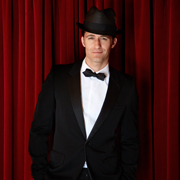
LA JOLLA–Tickets are on sale now for the Salk Institute’s 19th Annual Symphony at Salk, one of the summer’s premiere events, taking place on Saturday, August 23. The annual musical affair features the highly regarded San Diego Symphony along with Emmy, Tony and Golden Globe-nominated star Matthew Morrison.
LA JOLLA—Frogs, dogs, whales, snails can all do it, but humans and primates can’t. Regrow nerves after an injury, that is—while many animals have this ability, humans don’t. But new research from the Salk Institute suggests that a small molecule may be able to convince damaged nerves to grow and effectively rewire circuits. Such a feat could eventually lead to therapies for the thousands of Americans with severe spinal cord injuries and paralysis.
LA JOLLA–Salk Institute professor 托尼·亨特 has been awarded the 2014 Royal Medal for biological sciences by the Royal Society, a fellowship of some of the world’s most eminent scientists based in the United Kingdom.
LA JOLLA—For hundreds of years, healers in São Tomé e Príncipe—an island off the western coast of Africa—have prescribed cata-manginga leaves and bark to their patients. These pickings from the Voacanga africana tree are said to decrease inflammation and ease the symptoms of mental disorders.
LA JOLLA—When you’re expecting something—like the meal you’ve ordered at a restaurant—or when or when something captures your interest, unique electrical rhythms sweep through your brain.