2014 年 8 月 5 日
Award recognizes his pioneering discovery leading to cancer treatments.
Award recognizes his pioneering discovery leading to cancer treatments.
LA JOLLA–Salk Institute professor 托尼·亨特 has been awarded the 2014 Royal Medal for biological sciences by the Royal Society, a fellowship of some of the world’s most eminent scientists based in the United Kingdom.
The award recognizes Hunter, director of Salk’s NCI-designated Cancer Center, for his significant contributions to the understanding of the chemical signaling that tells cells when to multiply. Signaling networks inside cells are involved in almost every aspect of normal cell development, and mutations that perturb these networks often lead to 癌症. Hunter discovered a master “switch” for this growth signaling that ultimately led to the development of a number of new cancer drugs.
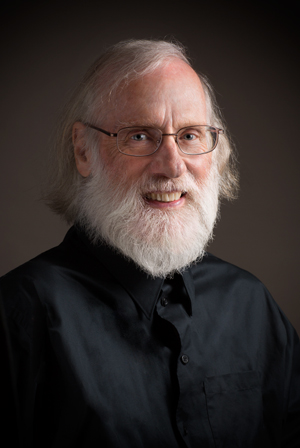
Tony Hunter, professor in the Molecular and Cell Biology Laboratory and director of the Salk Institute Cancer Center
点击此处 用于高分辨率图像。.
图片:由萨克生物研究所提供
“Tony Hunter’s discoveries have changed the landscape for the treatment of cancer and other related diseases and underscores the importance of basic science,” says William Brody, president of the Salk Institute. “All of us at the Salk Institute are thrilled that the Royal Society is recognizing Dr. Hunter’s groundbreaking discoveries with the award of the Royal Medal.”
Each year, the Royal Society, which was founded in 1660 and is the oldest scientific academy in continuous existence, awards three Royal Medals for the most important contributions in the physical, biological and applied sciences. The medal will be presented at the society’s Anniversary Day meeting on December 1.
“I am delighted to have been selected to receive the 2014 Royal Medal of the Royal Society of London, and I am extremely honored to join the scientific luminaries who make up the list of past biological sciences medal winners,” says Hunter, who is also an American Cancer Society professor and the holder of Salk’s Renato Dulbecco Chair. “It is a particular pleasure to join my friend and colleague Tim Hunt as a Royal Medal winner, since we worked together as graduate students under Asher Korner in the late 1960s.”
Hunter, a fellow of the Royal Society and a member of the National Academy of Sciences, studies how mutations in genes that control growth lead to the unchecked proliferation of cancer cells.
In 1979, his lab uncovered an entirely new mechanism of protein regulation in cells by discovering that the addition of a phosphate group to the amino acid tyrosine in proteins affects how cells multiply. This seminal discovery of a cellular “master switch” opened the door to the study of the dozens of proteins that act as enzymes to add the phosphate to tyrosine–known as tyrosine kinases–and their important role in cancer and other human diseases. This knowledge has resulted in the development of new cancer treatments, such as Gleevec for leukemia.
"(《世界人权宣言》) Royal Society is a self-governing fellowship of many of the world’s most distinguished scientists, drawn from all areas of science, engineering and medicine. Its fundamental purpose is to recognize, promote and support excellence in science and to encourage the development and use of science for the benefit of humanity. It has played a part in some of the most fundamental, significant and life-changing discoveries in scientific history, and Royal Society scientists continue to make outstanding contributions to science in many research areas.
关于索尔克生物研究所:
索尔克生物学研究所是世界顶尖的基础研究机构之一,其国际知名的教职员工在一个独特的、合作和富有创造力的环境中,探索生命科学的基本问题。索尔克科学家致力于科学发现和培养下一代研究人员,通过对神经科学、遗传学、细胞和植物生物学以及相关学科的研究,在癌症、衰老、阿尔茨海默病、糖尿病和传染病等领域取得了开创性的贡献,加深了我们对这些疾病的理解。.
教职员工的成就获得了无数荣誉,包括诺贝尔奖和美国国家科学院院士资格。该研究所由脊髓灰质炎疫苗先驱 Jonas Salk 医生于 1960 年创立,是一家独立的非营利组织和建筑地标。.
宣传办公室
电话:(858) 453-4100
press@salk.edu