LA JOLLA—Scientists at the Salk Institute have identified a gene responsible for stopping the movement of 癌症 from the lungs to other parts of the body, indicating a new way to fight one of the world’s deadliest cancers.
LA JOLLA—In mice with diet-induced diabetes—the equivalent of type 2 糖尿病 in humans—a single injection of the protein FGF1 is enough to restore blood sugar levels to a healthy range for more than two days. The discovery by Salk scientists, published today in the journal 自然, could lead to a new generation of safer, more effective diabetes drugs.
LA JOLLA—The ability to switch out one gene for another in a line of living stem cells has only crossed from science fiction to reality within this decade. As with any new technology, it brings with it both promise—the hope of fixing disease-causing genes in humans, for example—as well as questions and safety concerns. Now, Salk scientists have put one of those concerns to rest: using gene-editing techniques on stem cells doesn’t increase the overall occurrence of mutations in the cells. The new results were published July 3, 2014 in the journal Cell Stem Cell.
LA JOLLA—The Salk Institute is pleased to welcome a new full professor and three new assistant professors, all exceptional leaders in their respective fields. The new faculty will facilitate innovative and collaborative breakthroughs in understanding human health and disease.
LA JOLLA—Researchers around the world have turned to stem cells, which have the potential to develop into any cell type in the body, for potential regenerative and disease therapeutics.
LA JOLLA—The Salk has launched a new initiative called the 萨尔克研究员计划. The program brings scientists from broad disciplines to the Institute to trigger innovation and perpetuate the collaborative spirit of the Salk.
LA JOLLA—The Salk Institute for Biological Studies has received a $25 million gift from San Diego philanthropist and former Salk trustee Conrad T. Prebys to support cutting-edge biological research on a wide range of diseases.
LA JOLLA—Pedal the Cause, the region’s only multiday cycling fundraiser where 100 percent of the net proceeds goes to support cancer research in San Diego, today announced five research projects funded by the inaugural 2013 event. The Pedal the Cause grants offer enough support for initial experiments, which will ideally lead to grants from federal sources and to large-scale studies.
LA JOLLA—For most people, the urge to eat a meal or snack comes at a few, predictable times during the waking part of the day. But for those with a rare syndrome, hunger comes at unwanted hours, interrupts sleep and causes overeating.
LA JOLLA—The Salk Institute has received a $3 million gift from the 格伦医学研究基金会 to allow the Institute to continue conducting research to understand the biology of normal human aging and age-related diseases.
拉霍亚—索尔克研究所获奖的 教育外展 该项目最近因为获得了为期两年的试点资助而获得了国家认可 美国科学促进会(AAAS) 新国民 科学、技术、工程和数学 (科学、技术、工程和数学) 志愿者项目。该协会仅颁发了七项资助中的一项,将帮助圣地亚哥地区的高中科学教师与索尔克科学家合作,开发基于研究所尖端研究的课程。.
LA JOLLA—Using new stem cell technology, scientists at the Salk Institute have shown that neurons generated from the skin cells of people with schizophrenia behave strangely in early developmental stages, providing a hint as to ways to detect and potentially treat the disease early.
LA JOLLA—By carefully controlling the levels of two proteins, researchers at the Salk Institute have discovered how to keep mammary stem cells—those that can form breast tissue—alive and functioning in the lab. The new ability to propagate mammary stem cells is allowing them to study both breast development and the formation of breast cancers.
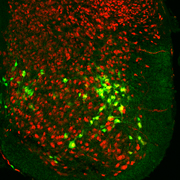
LA JOLLA—Scientists at the Salk Institute have discovered the developmental source for a key type of neuron that allows animals to walk, a finding that could help pave the way for new therapies for spinal cord injuries or other motor impairments related to disease.
LA JOLLA—Scientists at the Salk Institute for Biological Studies have identified a key genetic switch linked to the development, progression and outcome of 癌症, a finding that may lead to new targets for cancer therapies.
LA JOLLA—The American Academy of Arts and Sciences (AAAS) elected Salk Professor 杰弗里·M·瓦尔 to its society, whose ranks include Nobel laureates, Pulitzer Prize recipients and Oscar winners, as well intellectual luminaries such as George Washington, Benjamin Franklin and Albert Einstein. Wahl joins 13 other Salk professors as members into the prestigious AAAS.
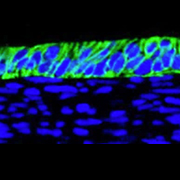
LA JOLLA—Using reprogrammed skin cells, researchers have for the first time used stem cell techniques to grow fully functional assemblies of the cells that line airways leading to the lungs. The lab-grown airway tissue can now be used to study the molecular basis for lung diseases—from rare genetic disorders to common afflictions like asthma and emphysema—and test new drugs to treat the diseases.
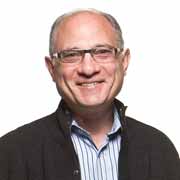
LA JOLLA—The Salk Institute is pleased to announce the appointment of longtime San Diego real estate developer and community builder, Donald Cohn, to its 理事会.
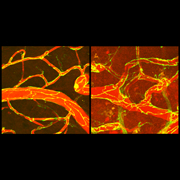
LA JOLLA—By discovering a new mechanism that allows blood to enter the brain immediately after stroke, researchers from the Salk Institute and University of California (UC) Irvine reveal a possible means to create new therapies that may reduce or prevent stroke-induced damage in the brain.