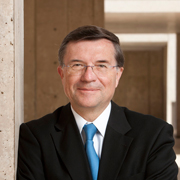
LA JOLLA–The Society for Neuroscience (SfN), an organization of nearly 40,000 scientists and clinicians, will award the Swartz Prize for Theoretical and Computational Neuroscience to 特伦斯·塞津诺维奇, Salk professor and head of the 计算神经生物学实验室.
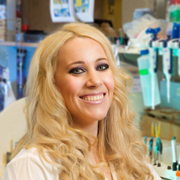
LA JOLLA–Salk Institute scientist 贾内尔·艾尔斯 has received an award of $500,000 over two years from the Defense Advanced Research Projects Agency (DARPA) to further her research on bolstering a person’s microbiome to help their body overcome an infection. The award comes with the possibility of an additional $500,000 for a third year.
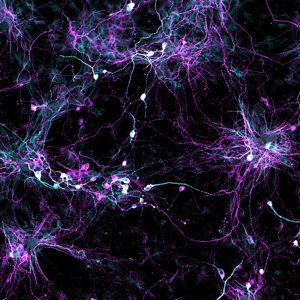
LA JOLLA–For the first time, scientists can use skin samples from older patients to create brain cells without rolling back the youthfulness clock in the cells first. The new technique, which yields cells resembling those found in older people’s brains, will be a boon to scientists studying age-related diseases like 阿尔茨海默病 and Parkinson’s.
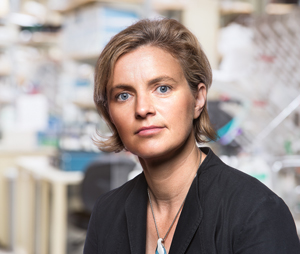
LA JOLLA–As part of a $120 million, 5-year initiative to understand the cell’s nucleus, the 美国国立卫生研究院 (NIH) has awarded more than $30 million to San Diego researchers, including the Salk Institute and the 加州大学圣地亚哥分校 (UC San Diego). Salk Associate Professor Clodagh O’Shea has been awarded a grant of $3 million over 5 years, along with the possibility of tapping into an additional opportunity pool of $3 million each year for the period.
LA JOLLA—The Salk Institute is pleased to announce the appointment of bioengineer Patrick Hsu in the innovative 萨尔克研究员计划. Hsu, who hails from Harvard University and MIT’s Broad Institute, aims to develop the next generation of medical therapeutics by harnessing the gene editing technology known as CRISPR. A gene editing technique originally derived from bacterial immune systems, CRISPR has recently made headlines for its use in modifying DNA with unprecedented ease and accuracy.
LA JOLLA–Breakfast, lunch and dinner? For too many of us, the three meals of the day go more like: morning meeting pastry, mid-afternoon energy drink and midnight pizza. In 细胞代谢 on September 24, Salk Institute scientists present daily food and beverage intake data collected from over 150 participants of a mobile research app over three weeks. They show that a majority of people eat for 15 hours or longer, with less than a quarter of the day’s calories being consumed before noon and over a third consumed after 6 p.m.
LA JOLLA-The National Institutes of Health has awarded a $13 million grant over five years to develop and disseminate new stem cell-based technologies and assays for studying 自闭症谱系障碍 (ASD) and other mental health diseases to a consortium of researchers at the 加州大学圣地亚哥分校 and the Salk Institute for Biological Studies, working in tandem with leaders in the biotechnology sector.
LA JOLLA–Since the early 19th century, scientists have worked to unravel the mystery of olfaction, our sense of smell.
LA JOLLA–By measuring how worms move toward an appealing, food-like scent, researchers at the Salk Institute were able to predict whether the worms would be long-lived. The finding, published September 22, 2015 in the journal eLife, shows how nematodes (Caenorhabditis elegans) process information about the environment and how circuits in the brain change as an animal ages.
Salk scientists 约翰·雷诺兹, Ursula Bellugi 和 艾伦·萨加特利安 have been honored with the dedication of three endowed chairs in acknowledgement of their outstanding contributions and dedication to scientific research. Bellugi and Reynolds were named inaugural holders of the Salk Founders’ Chair and Fiona and Sanjay Jha Chair in Neuroscience, respectively. Saghatalian was named holder of the Dr. Frederik Paulsen Chair in Neuroscience.
LA JOLLA–Aging is typically thought of as the gradual decline of the whole body, but new research shows that age affects organs in strikingly different ways. A study published September 17, 2015 in Cell Systems provides the first comprehensive view of how cellular proteins age in different organs, revealing major differences between the liver and brain in young and old rats. The findings suggest that how an organ ages may depend on its unique cellular properties and its physiological function in the body.
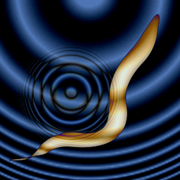
LA JOLLA–Salk scientists have developed a new way to selectively activate brain, heart, muscle and other cells using ultrasonic waves. The new technique, dubbed sonogenetics, has some similarities to the burgeoning use of light to activate cells in order to better understand the brain.
LA JOLLA–The Salk Institute is pleased to announce the election of Edwin K. Hunter, a longtime supporter of the Institute and president of Hunter, Hunter & Sonnier, LLC, to its Board of Trustees. The Board voted on the appointment August 28.
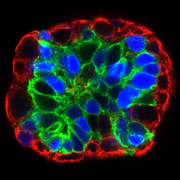
LA JOLLA–A single stem cell has the potential to generate an animal made of millions of different types of cells. Some cancers contain stem-like but abnormal cells that can act like mini factories to rapidly churn out not only more copies of themselves, but also variants that are able to better survive in the challenging and changing environments to which cancers are exposed. Worse still, these stem cell-like cancers can spread to other tissues in the body, causing metastasis.
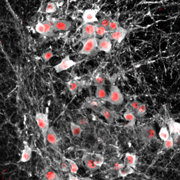
LA JOLLA–When you’re taking a walk around the block, your body is mostly on autopilot–you don’t have to consciously think about alternating which leg you step with or which muscles it takes to lift a foot and put it back down. That’s thanks to a set of cells in your spinal cord that help translate messages between your brain and your motor neurons, which control muscles.
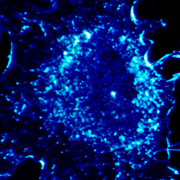
LA JOLLA–Every organism–from a seedling to a president–must protect its DNA at all costs, but precisely how a cell distinguishes between damage to its own DNA and the foreign DNA of an invading virus has remained a mystery.
LA JOLLA–Salk neuroscientist Thomas Albright has been appointed to the National Commission on Forensic Science by the Department of Justice and the Department of Commerce’s National Institute of Standards and Technology.
LA JOLLA–The loss of a critical receptor in a special class of inhibitory neurons in the
brain may be responsible for neurodevelopmental disorders including autism and schizophrenia, according to new research by Salk scientists.
拉霍亚—索尔克教授 杰弗里·沃尔 will receive the National Cancer Institute (NCI) Outstanding Investigator Award (OIA), which encourages cancer research with breakthrough potential. Wahl, a professor in Salk’s 基因表达实验室, will receive $7.9 million over a seven-year period to further his cancer research.
LA JOLLA–T cells are the guardians of our bodies: they constantly search for harmful invaders and diseased cells, ready to swarm and kill off any threats. A better understanding of these watchful sentries could allow scientists to boost the immune response against evasive dangers (e.g., cancer or infections), or to silence it when it mistakenly attacks the body itself (e.g., autoimmune disorders or allergies).