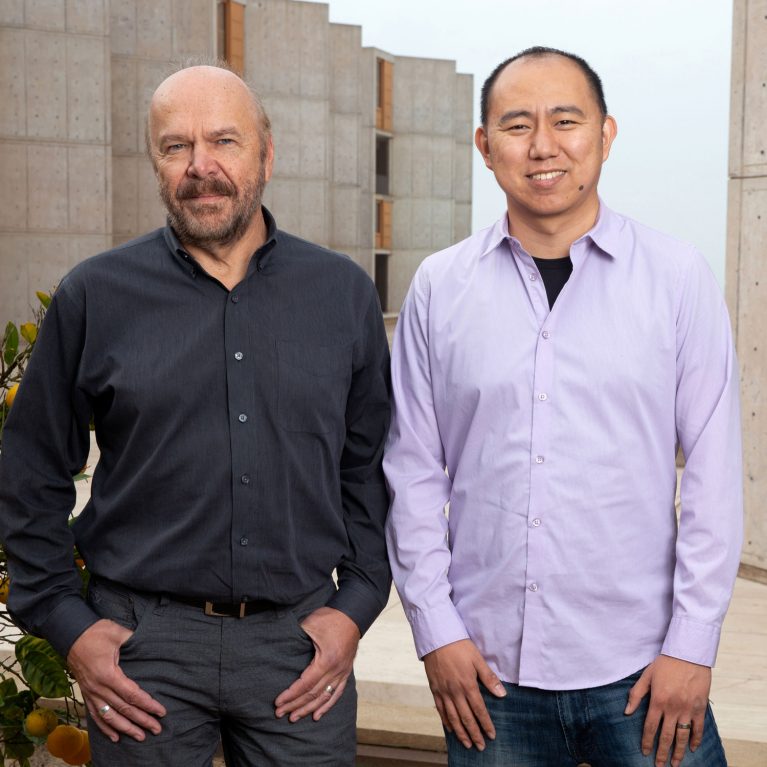
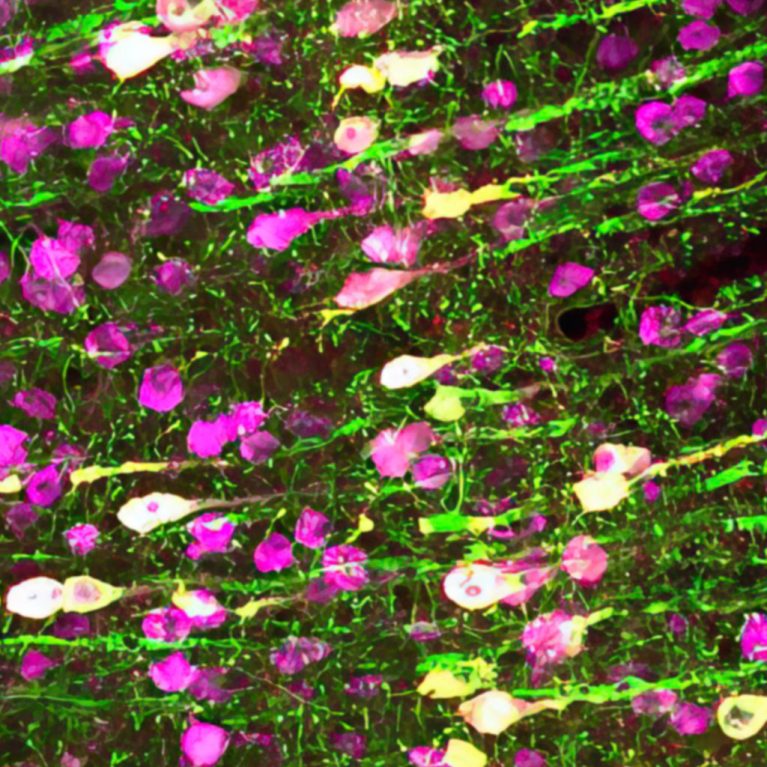
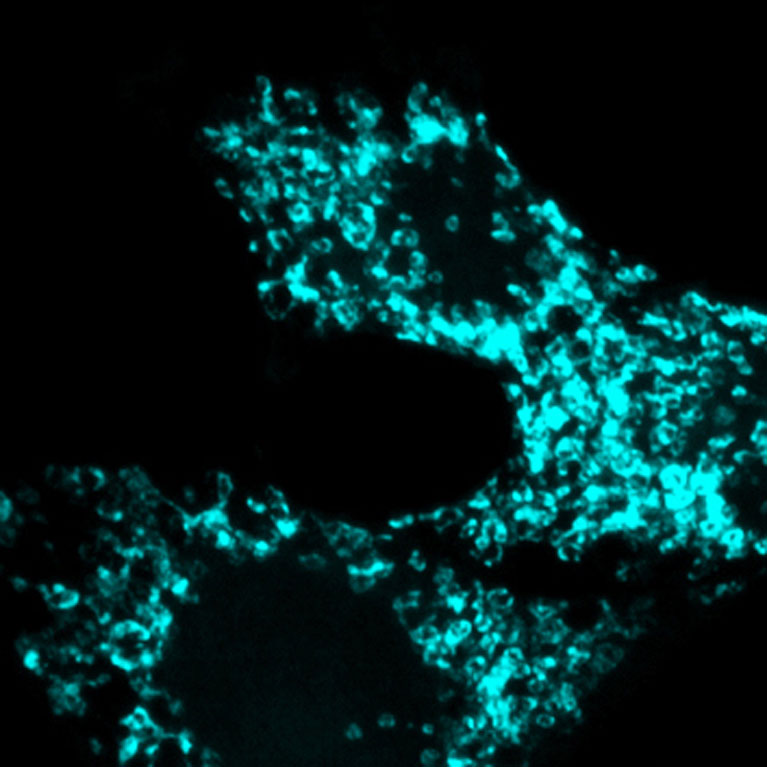
拉霍亚—索尔克研究所的研究人员开发了一种新的基因组学技术,可以同时分析来自单个细胞的 DNA、RNA 和染色质(DNA 和蛋白质的组合)。该方法耗时五年开发,是大型合作项目的重要一步,在这些项目中,多个团队同时努力对数千种新型细胞进行分类。这项新技术发表在 细胞基因组学 将于2022年3月9日,将有助于简化分析。.
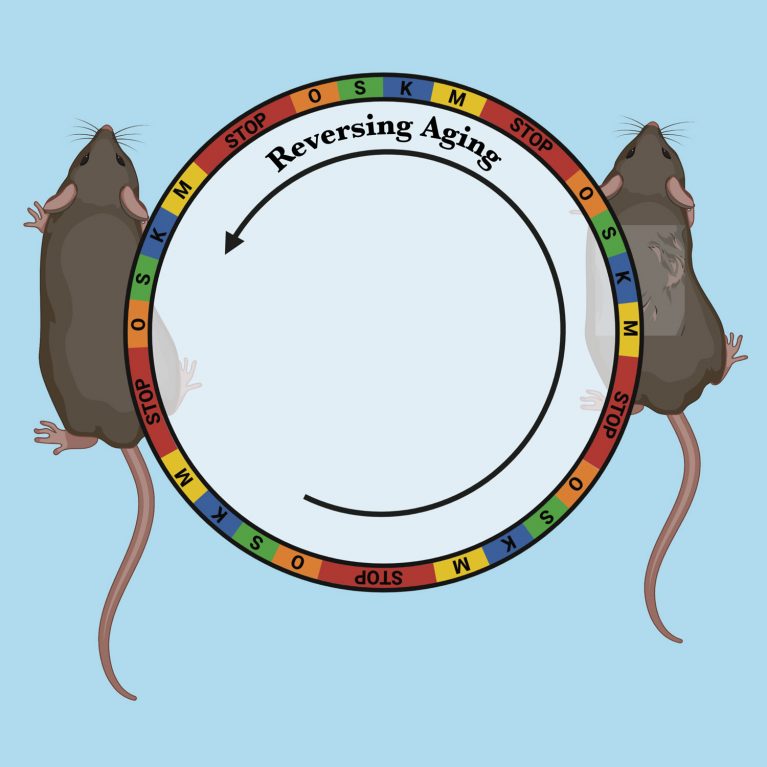
拉霍亚—年龄只是一个数字,但它常常会带来不受欢迎的副作用,从骨骼脆弱、肌肉无力到心血管疾病和癌症风险增加。现在,索尔克研究所的科学家们与罗氏集团成员基因泰克公司合作,已经证明他们可以在中年和老年小鼠身上安全有效地逆转衰老过程,方法是将它们的细胞部分重置到更年轻的状态。这项研究发表在 自然衰老 2022年3月7日.
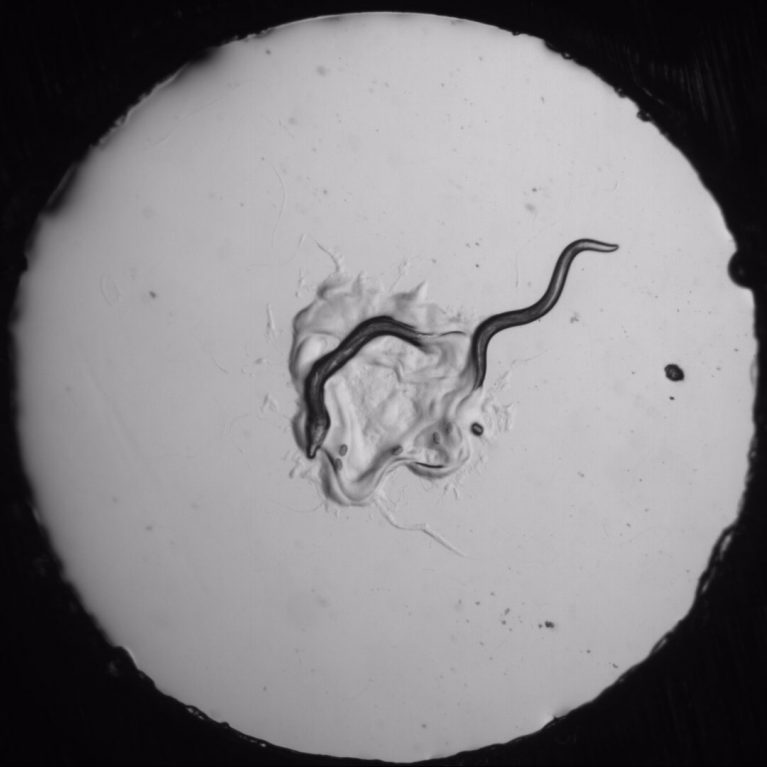
LA JOLLA—How does an animal make decisions? Scientists have spent decades trying to answer this question by focusing on the cells and connections of the brain that might be involved. Salk scientists are taking a different approach—analyzing behavior, not neurons. They were surprised to find that worms can take multiple factors into account and choose between two different actions, despite having only 302 neurons compared to approximately 86 billion in humans.
LA JOLLA—Salk Institute Professor Martyn Goulding will receive the 2022 Brain Prize for pioneering research on the neuronal circuits that control movement, the Lundbeck Foundation announced today.
LA JOLLA—The Salk Institute mourns the loss of Paul Farmer, MD, PhD, a champion of global health equity and recipient of the inaugural Salk Institute Medal for Health and Humanity in 2005 (now known as the Salk Medal for Public Service). Farmer died in his sleep in Rwanda on February 21. He was co-founder and chief strategist of Partners In Health, an international non-profit organization that provides health care, infrastructure and advocacy for the communities that need it most. He was also professor of medicine at Harvard Medical School and chief of the Division of Global Health Equity at Brigham and Women’s Hospital.
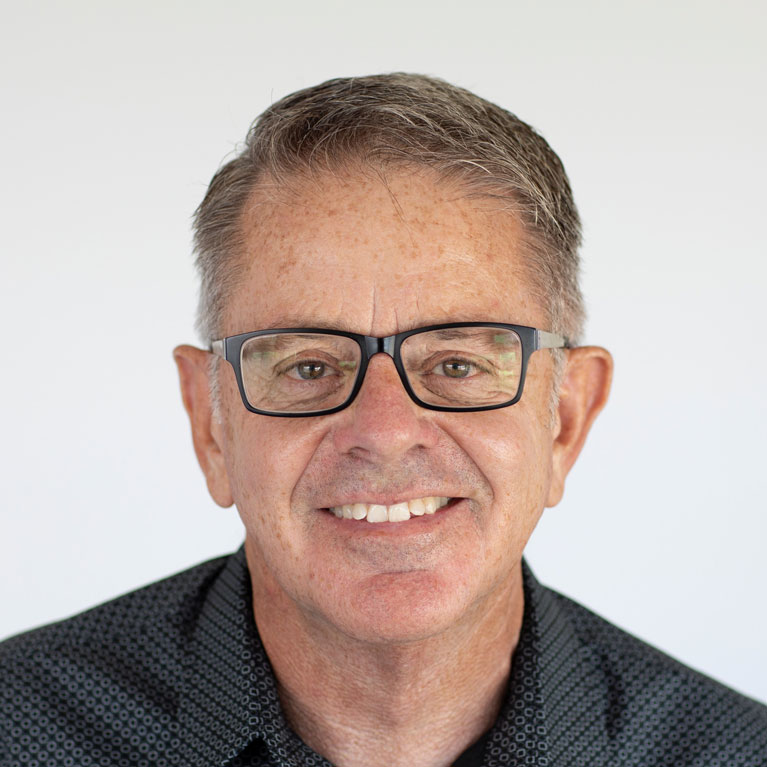
LA JOLLA—The Salk Institute announced today the appointment of David Lawrence to the position of executive director of the Harnessing Plants Initiative (HPI). In his new role, Lawrence will oversee program management and administrative support for the project, as well as help deliver real-world applications based on Salk research findings. For example, he will help scale and deploy Salk Ideal Plants™ worldwide—crops that can capture excess carbon dioxide from the atmosphere and store it deep in root systems.
LA JOLLA/NEW YORK—The Lustgarten Foundation and Salk Institute today announced a new strategic partnership supported by a $5 million grant and focused on identifying and validating potential targets for new pancreatic cancer drugs. The effort will be led by four co-principal investigators, all prominent cancer researchers in the Salk Dedicated Program in Pancreatic Cancer: Professors 鲁本-肖, 罗纳德·埃文斯, 托尼·亨特 助理教授 丹妮尔·恩格尔. The partnership is part of the Lustgarten Advancing Breakthrough Science (LABS) Program.
LA JOLLA—Salk scientists have engineered mammalian cells to be activated using ultrasound. The method, which the team used to activate human cells in a dish and brain cells inside living mice, paves the way toward non-invasive versions of deep brain stimulation, pacemakers and insulin pumps. The findings were published in Nature Communications on February 9, 2022.
LA JOLLA—Marna C. Whittington, the former CEO of Allianz Global Investors Capital, was elected as chair of the Salk Institute’s Board of Trustees on November 12, 2021. Whittington replaces Daniel C. Lewis, former president of the global commercial management-consulting firm Booz Allen Hamilton.
拉霍亚—索尔克教授 Samuel Pfaff has been named a 2021 Fellow of the American Association for the Advancement of Science (AAAS), the world’s largest general scientific society and publisher of the journal 科学. Pfaff is among 564 new AAAS Fellows spanning 24 scientific disciplines who were nominated by their peers for their distinguished efforts to advance science.
LA JOLLA—Decades of research on medical cannabis has focused on the compounds THC and CBD in clinical applications. But less is known about the therapeutic properties of cannabinol (CBN). Now, a new study by Salk scientists shows how CBN can protect nerve cells from oxidative damage, a major pathway to cell death. The findings, published online January 6, 2022, in the journal Free Radical Biology and Medicine, suggest CBN has the potential for treating age-related neurodegenerative diseases, like Alzheimer’s.
LA JOLLA—The Salk Institute announced today the appointment of Julie A. Auger to the position of executive director of Research Operations. Auger will oversee all shared scientific resources at the Institute in her new role, including the scientific technology cores, animal research and shared scientific resources. The position reports to the Chief Science Officer for the Institute.
LA JOLLA—The Salk Institute announced today that Professor 胡安·卡洛斯·伊兹皮苏亚·贝尔蒙特, a world-renowned researcher who has pioneered innovations in developmental biology, regenerative medicine and aging research at the Salk Institute, will be closing his Salk laboratory to join Altos Labs, a newly created life sciences company centered on human health research. Izpisua Belmonte, who has been at Salk for nearly thirty years, will depart to lead the San Diego division of Altos Institutes of Science to study cellular rejuvenation programming with the goal of improving human health.
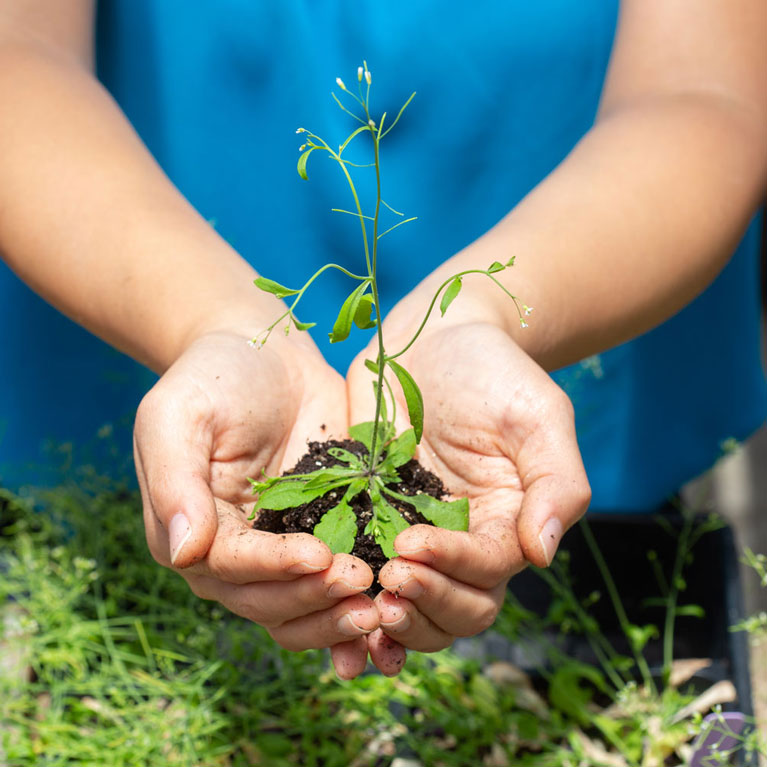
LA JOLLA—What determines how a cell’s genome is regulated to ensure proper growth and development? Turns out, the parts of the genome that are turned on or off in each cell-type or tissue play a major role in this process. Now, a team at Salk has shown that the CLASSY gene family regulates which parts of the genome are turned off in a tissue-specific manner. The CLASSYs essentially control where the genome is marked by DNA methylation—the addition of methyl chemical groups to the DNA that act like tags saying, “turn off.” Because DNA methylation exists across diverse organisms, including plants and animals, this research has broad implications for both agriculture and medicine. The work, published in Nature Communications on January 11, 2022, identifies the CLSY genes as major factors underlying epigenetic diversity in plant tissues.
拉霍亚—教授 罗纳德·埃文斯 will receive $1.2 million over four years as part of a Network Grant from the Larry L. Hillblom Foundation to examine a molecular pathway that regulates blood sugar and fat independent of insulin. The research will advance our understanding of type 2 diabetes and could lead to the development of new therapies for treating the disease. Other members of the team include Professors Jin Zhang and Alan Saltiel from the University of California San Diego.
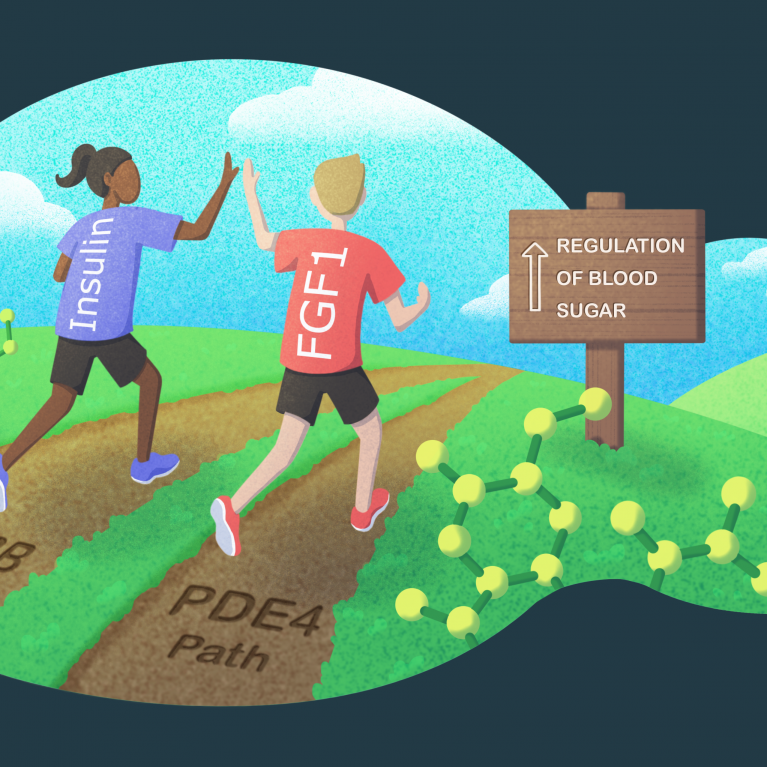
LA JOLLA—The discovery of insulin 100 years ago opened a door that would lead to life and hope for millions of people with diabetes. Ever since then, insulin, produced in the pancreas, has been considered the primary means of treating conditions characterized by high blood sugar (glucose), such as diabetes. Now, Salk scientists have discovered a second molecule, produced in fat tissue, that, like insulin, also potently and rapidly regulates blood glucose. Their finding could lead to the development of new therapies for treating diabetes, and also lays the foundation for promising new avenues in metabolism research.
LA JOLLA—The San Diego Nathan Shock Center (SD-NSC) of Excellence in the Basic Biology of Aging, a consortium between the Salk Institute for Biological Studies, Sanford Burnham Prebys (SBP) and the University of California San Diego, has announced its second-year class of pilot grant awardees. Recipients from six different institutions will receive up to $15,000 to pursue research that advances our understanding of how humans age, with the ultimate goal of extending health span, the number of years of healthy, disease-free life.
拉霍亚—教授 罗纳德·埃文斯 助理教授 丹妮尔·恩格尔 已获得2021年ASPIRE(加速科学平台与创新研究)奖,用于研究胰腺癌的细胞和分子驱动因素。胰腺癌是最致命的癌症之一,治疗选择很少。$250,000美元的奖金由Mark癌症研究所基金会资助,该基金会支持旨在解决癌症研究中影响深远问题的创新方法。入选2021年ASPIRE项目的23位科学家代表了世界顶尖学术机构癌症研究领域的各个学科。.
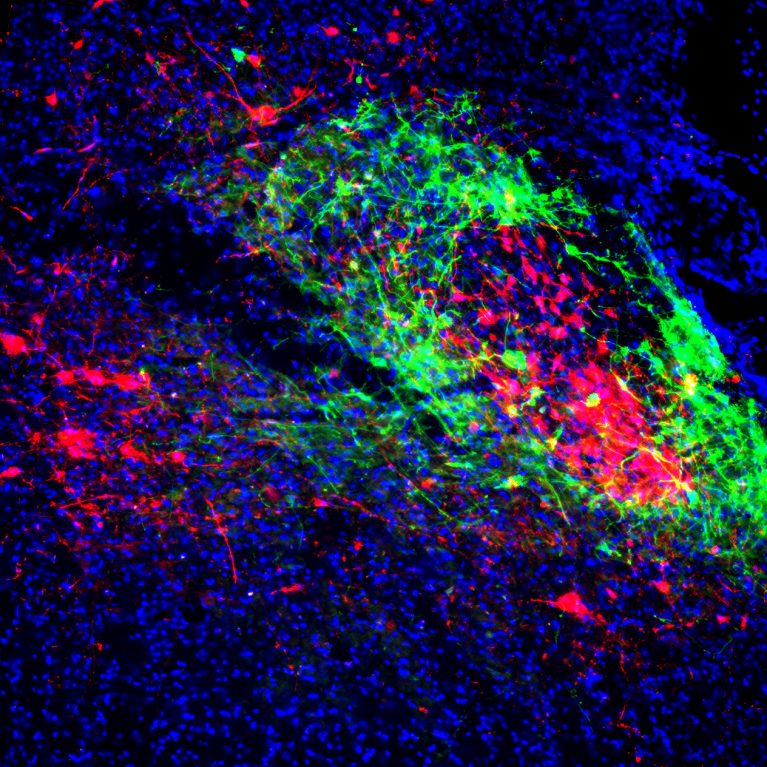
LA JOLLA—You’re startled by a threatening sound, and your breath quickens; you smash your elbow and pant in pain. Why a person’s breathing rate increases dramatically when they’re hurting or anxious was not previously understood. Now, a team of Salk scientists has uncovered a neural network in the brain that coordinates breathing rhythm with feelings of pain and fear. Along with contributions to the fields of pain management, psychological theories of anxiety, and philosophical investigations into the nature of pain, their findings could lead to development of an analgesic that would prevent opioid-induced respiratory depression (OIRD), the disrupted breathing that causes overdose deaths.
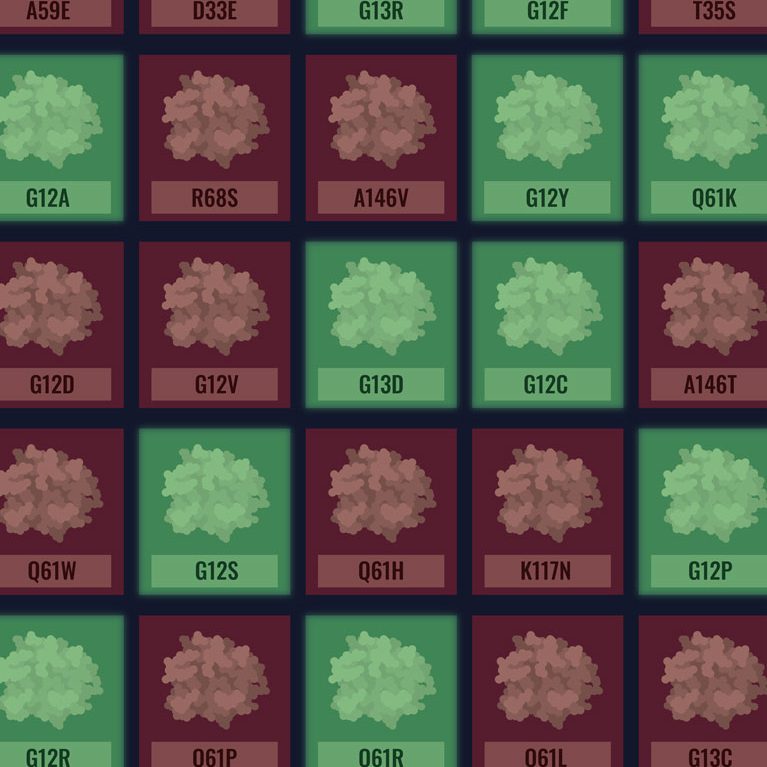
LA JOLLA—Patients with colorectal cancer were among the first to receive targeted therapies. These drugs aim to block the cancer-causing proteins that trigger out-of-control cell growth while sparing healthy tissues. But some patients are not eligible for these treatments because they have cancer-promoting mutations that are believed to cause resistance to these drugs.