Cáncer

Resumen

Salk Institute for Biological Studies - Cancer - Overview

Resumen


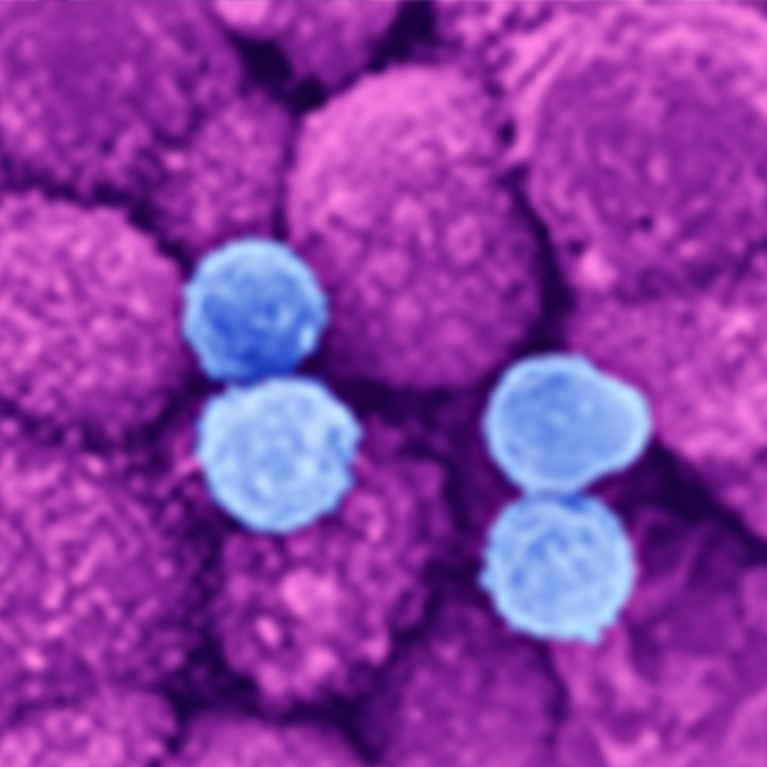
We are uncovering the molecular drivers of cancer and leading the search for the next generation of targeted therapies for different types of cancer. We see a future where transformational treatments destroy tumors before they develop drug resistance.

El Salk Cancer Center is a basic research National Cancer Institute (NCI)-designated Cancer Center.
Investigación


Brain Cancer

Brain cancer occurs when a mass of abnormal cells grows in the brain, which can impair a person’s ability to think, communicate, and move. Brain cancer kills roughly 18,000 Americans annually, and the five-year survival rate is around 30 percent. At Salk, we are searching for new cellular targets to treat brain cancer and identifying ways to prevent recurrence. We have developed innovative methods for studying brain cancer that will hopefully drive the development of new therapeutics.

Tony Hunter, PhD

Profesor de la American Cancer Society

Laboratorio de Biología Molecular y Celular

Susan Kaech, Doctora en Filosofía

Profesor

Centro NOMIS de Inmunobiología y Patogénesis Microbiana

Christian Metallo, doctor

Profesor

Laboratorio de Biología Molecular y Celular

Satchidananda Panda, doctor

Profesor

Laboratorio de Biología Reguladora

Ye Zheng, doctor

Profesor

Centro NOMIS de Inmunobiología y Patogénesis Microbiana

Breast Cancer

Breast cancer occurs when breast cells grow out of control. These cells then often spread to other parts of the body in a process called metastasis. At Salk, we are charting genetic missteps that can lead breast cells to become cancerous. We are also identifying weaknesses in various types of breast cancer, leading to new molecular targets for therapies.

Diana Hargreaves, PhD

Profesor

Laboratorio de Biología Molecular y Celular

Daniel Hollern, Doctor en Filosofía

Profesor adjunto

Centro NOMIS de Inmunobiología y Patogénesis Microbiana

Tony Hunter, PhD

Profesor de la American Cancer Society

Laboratorio de Biología Molecular y Celular

Pallav Kosuri, doctor

Profesor adjunto

Laboratorio de Biología Integrativa

Alan Saghatelian, Doctor en Filosofía

Profesor

Laboratorios de la Fundación Clayton para la Biología de los Péptidos

Gerald Shadel, doctor

Profesor

Laboratorio de Biología Molecular y Celular

Reuben Shaw, doctor

Profesor

Laboratorio de Biología Molecular y Celular

Geoffrey Wahl, doctorado

Profesor Emérito

Colorectal Cancer

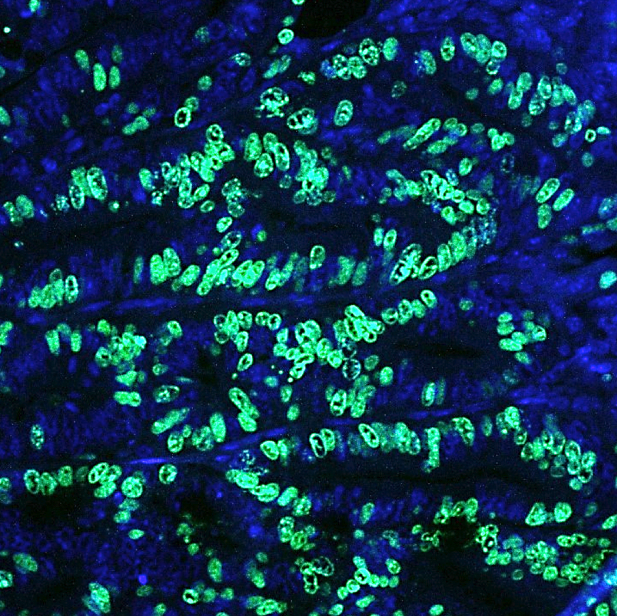
Nearly two million people are diagnosed with colorectal cancer globally each year—and for half, the disease is fatal. Despite being the third most common cancer and second deadliest cancer, colorectal cancer can be hard to diagnose since early symptoms are often not obvious. Colorectal cancer starts growing inside either the colon or the rectum, beginning as little growths called polyps that have cancerous potential. At Salk, we work to understand how diet and environment contribute to colorectal cancer, as well as how we can optimize drug regimens to improve patient outcomes.

Dannielle Engle, PhD

Profesor adjunto

Laboratorio de Biología Reguladora

Ronald Evans, doctor

Profesor y director

Laboratorio de Expresión Génica

Christian Metallo, doctor

Profesor

Laboratorio de Biología Molecular y Celular

Lung Cancer

Lung cancer, which affects nonsmokers as well as smokers, is the most common cause of cancer death worldwide. At Salk, we study the genetic programming that causes lung cancer, searching for ways to diagnose lung cancer earlier and kill tumors more effectively. We have developed unique research models to study lung cancer in the laboratory, which have led to important discoveries, including a method for countering a common genetic mutation that often leads to drug-resistant cancers.

Susan Kaech, Doctora en Filosofía

Profesor

Centro NOMIS de Inmunobiología y Patogénesis Microbiana

Christian Metallo, doctor

Profesor

Laboratorio de Biología Molecular y Celular

Marc Montminy, MD, PhD

Profesor emérito distinguido

Alan Saghatelian, Doctor en Filosofía

Profesor

Laboratorios de la Fundación Clayton para la Biología de los Péptidos

Reuben Shaw, doctor

Profesor

Laboratorio de Biología Molecular y Celular

Christina Towers, doctora

Profesor adjunto

Laboratorio de Biología Molecular y Celular

Pancreatic Cancer

Pancreatic cancer is one of the deadliest forms of cancer. It is notoriously resistant to therapy, partly because the tumors grow encased in a thick layer of protective tissue. At Salk, we are working on methods to penetrate the barrier of cells shielding pancreatic tumors. With this and other lines of research, we are making this seemingly impenetrable cancer much more susceptible to therapeutic drugs.

Dr. Sreekanth Chalasani

Profesor

Laboratorio de Neurobiología Molecular

Dannielle Engle, PhD

Profesor adjunto

Laboratorio de Biología Reguladora

Ronald Evans, doctor

Profesor y director

Laboratorio de Expresión Génica

Tony Hunter, PhD

Profesor de la American Cancer Society

Laboratorio de Biología Molecular y Celular

Christian Metallo, doctor

Profesor

Laboratorio de Biología Molecular y Celular

Reuben Shaw, doctor

Profesor

Laboratorio de Biología Molecular y Celular

Christina Towers, doctora

Profesor adjunto

Laboratorio de Biología Molecular y Celular

Geoffrey Wahl, doctorado

Profesor Emérito


Salk Cancer Center