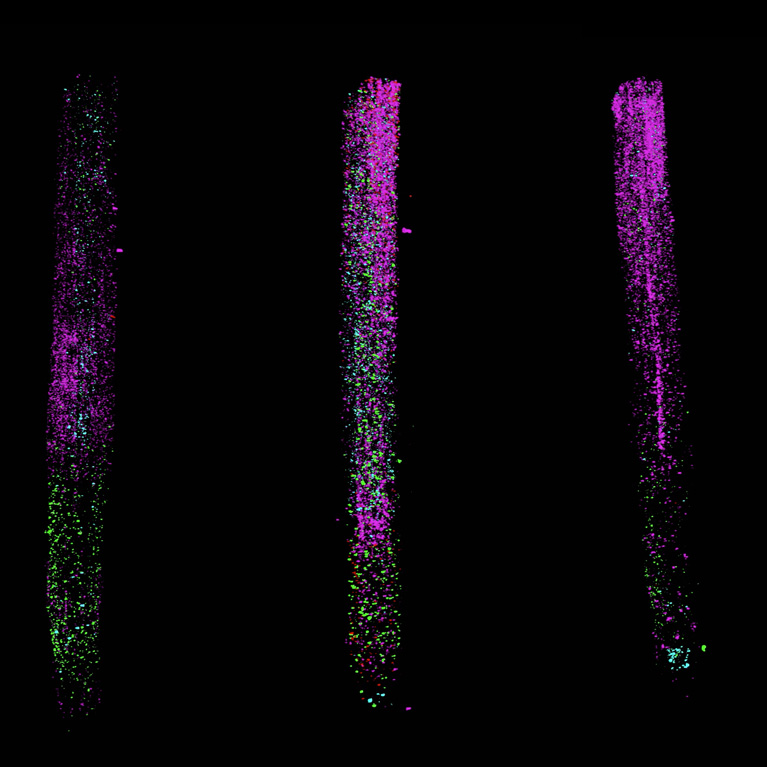
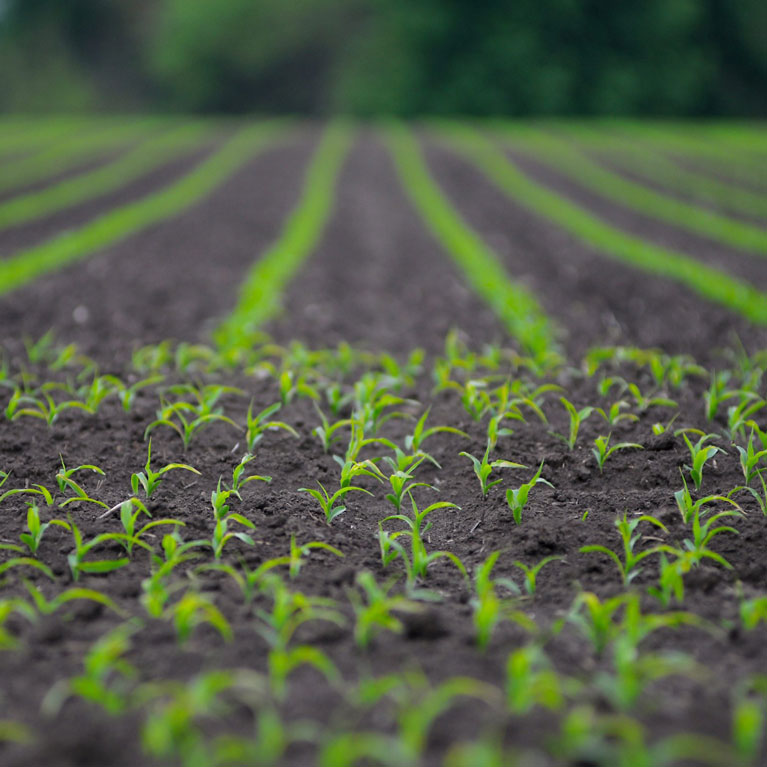
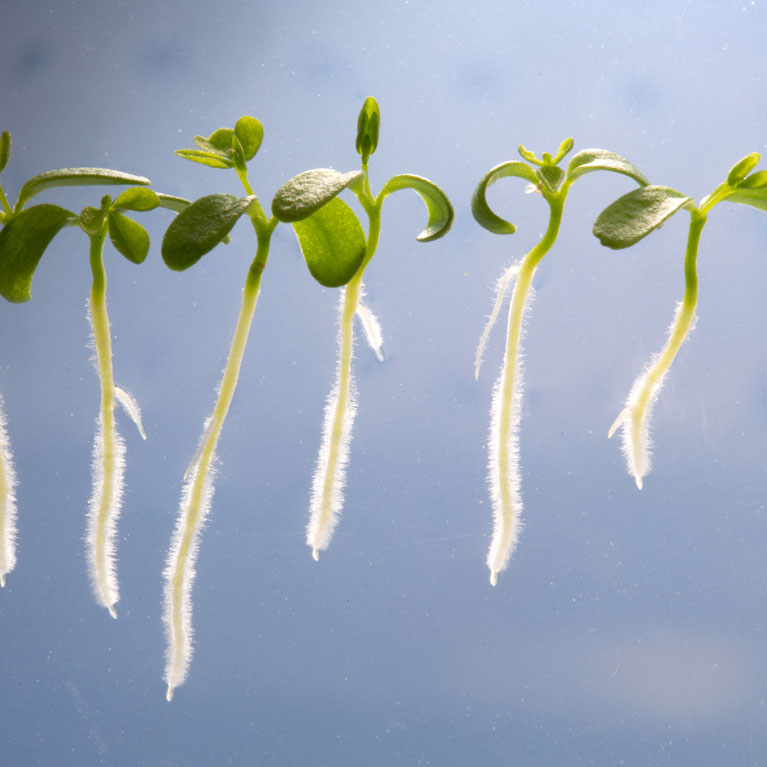
LA JOLLA—La vida celular en el interior de una planta es tan vibrante como su flor. En cada tejido vegetal —desde la punta de la raíz hasta la punta de la hoja— hay cientos de tipos de células que transmiten información sobre las necesidades funcionales y los cambios ambientales. Ahora, una nueva tecnología desarrollada por científicos del Instituto Salk permite capturar este mundo interno de las plantas con una resolución sin precedentes, lo que abre la puerta a comprender cómo responden las plantas a un clima cambiante y conduce al desarrollo de cultivos más resilientes.
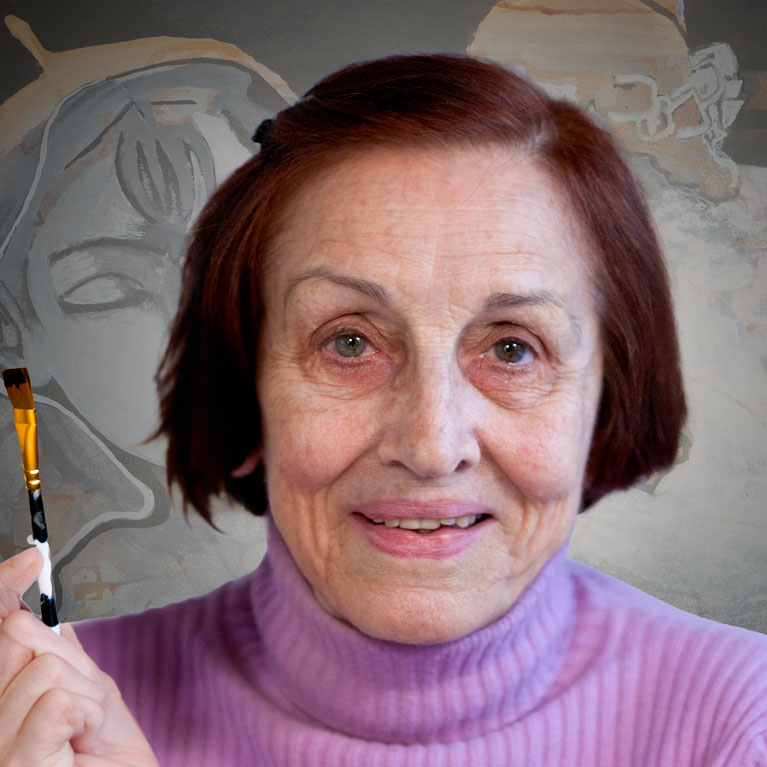
LA JOLLA—Françoise Gilot, artista, autora de bestsellers y esposa del fallecido fundador del Instituto Salk y pionero de las vacunas Jonas Salk, falleció el 6 de junio en un hospital de Manhattan a la edad de 101 años.
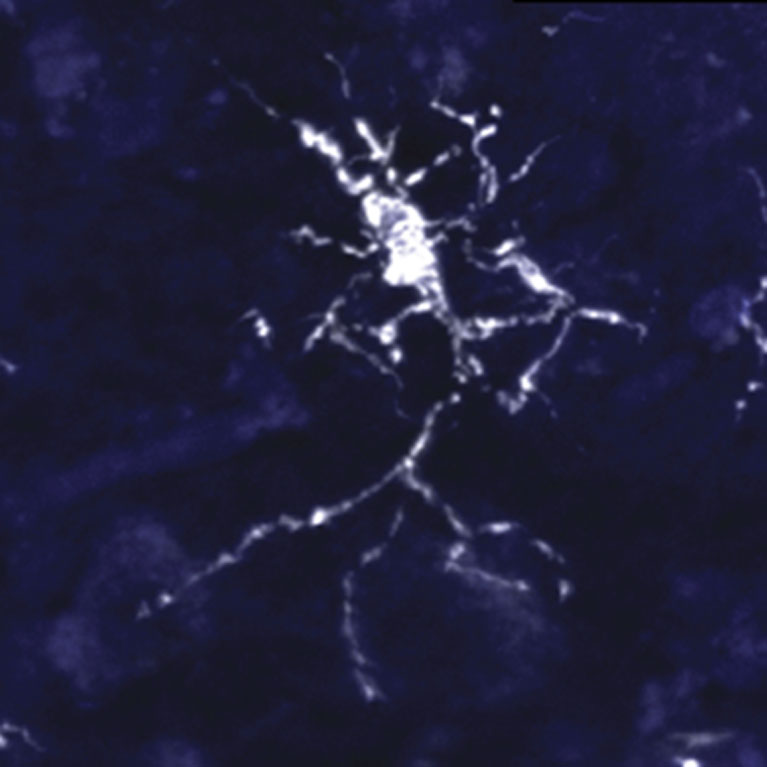
LA JOLLA—Situated at the intersection of the human immune system and the brain are microglia, specialized brain immune cells that play a crucial role in development and disease. Although the importance of microglia is undisputed, modeling and studying them has remained a difficult task.
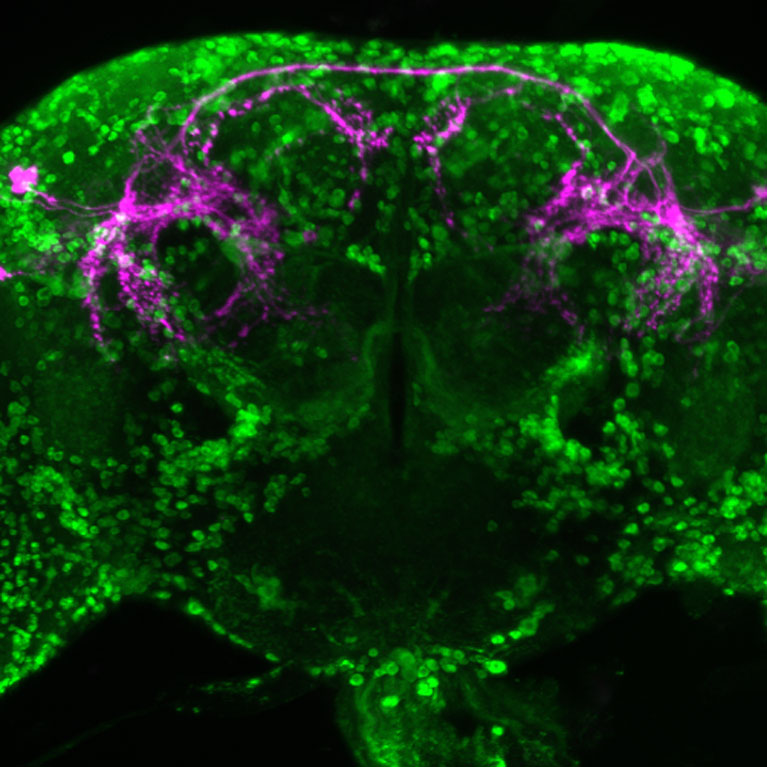
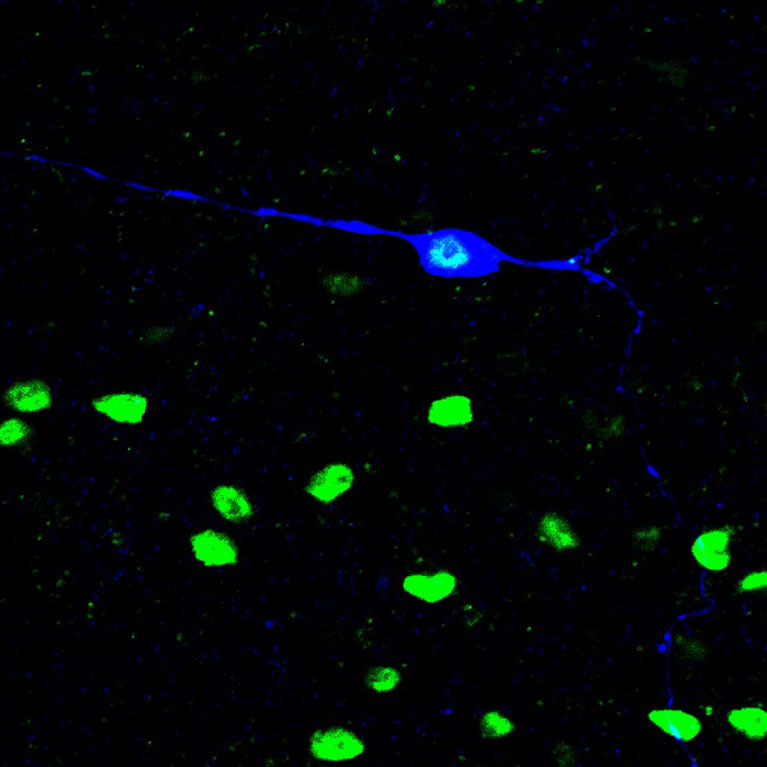
LA JOLLA—In addition to communicating with neurotransmitters, the brain also uses small proteins called neuropeptides. Neuropeptides send signals between neurons, working similarly to neurotransmitters but with key differences like a greater size and an ability to travel far away from the neuron that produces them. Though their importance is widely recognized, the way neuropeptides move around the brain and influence neurons has remained poorly understood—until now.
LA JOLLA—The Salk Institute and Autobahn Labs, an early-stage drug discovery incubator, will work together to identify and advance promising initial scientific discoveries through the preliminary steps of drug discovery and development. Autobahn Labs will invest up to $5 million per project for Salk discoveries that require access to drug development expertise and state-of-the art capabilities.
LA JOLLA—Five Salk Institute faculty members have been promoted for their notable, innovative contributions to science. These faculty members have demonstrated leadership in their disciplines, pushing the boundaries of basic scientific research. Assistant Professors Sung Han, Dmitry Lyumkis, and Graham McVicker were promoted to associate professors, and Associate Professors Sreekanth Chalasani y Ye Zheng were promoted to professors. The promotions were based on Salk faculty and nonresident fellow recommendations and approved by Salk’s president and Board of Trustees on April 21, 2023.
LA JOLLA—Salk Institute Professor Susan Kaech, director of the NOMIS Center for Immunobiology and Microbial Pathogenesis, has been elected to the American Academy of Arts and Sciences. She shares the honor with some of the world’s most accomplished leaders from science and technology, business, public affairs, education, the humanities, and the arts. Kaech and the new class of nearly 270 members will be inducted at a formal ceremony on September 30, 2023, at the Academy’s headquarters in Cambridge, Massachusetts.
LA JOLLA—Scientists often act as detectives, piecing together clues that alone may seem meaningless but together crack the case. Professor Reuben Shaw has spent nearly two decades piecing together such clues to understand the cellular response to metabolic stress, which occurs when cellular energy levels dip. Whether energy levels fall because the cell’s powerhouses (mitochondria) are failing or due to a lack of necessary energy-making supplies, the response is the same: get rid of the damaged mitochondria and create new ones.
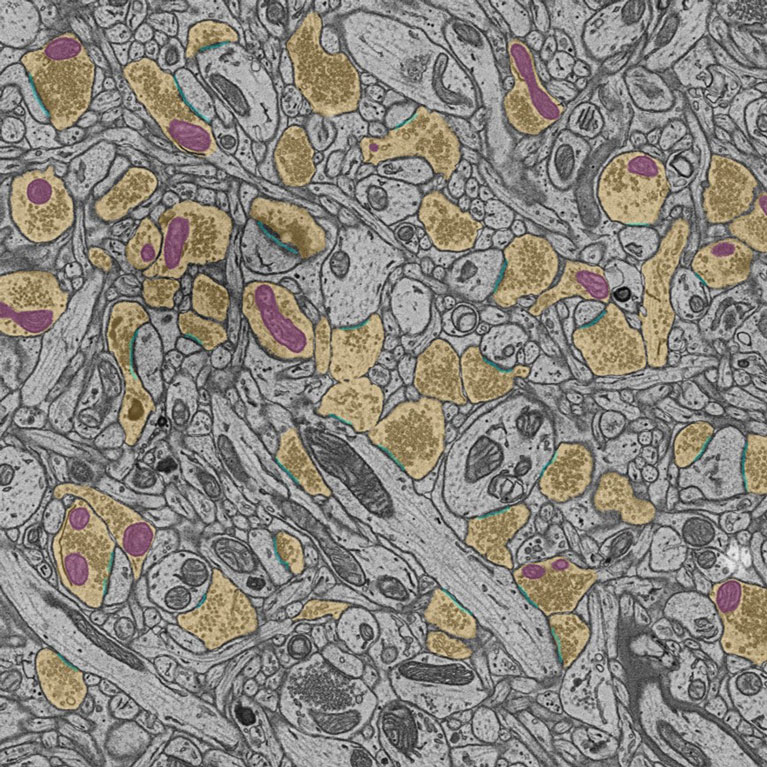
LA JOLLA—Brains are like puzzles, requiring many nested and codependent pieces to function well. The brain is divided into areas, each containing many millions of neurons connected across thousands of synapses. These synapses, which enable communication between neurons, depend on even smaller structures: message-sending boutons (swollen bulbs at the branch-like tips of neurons), message-receiving dendrites (complementary branch-like structures for receiving bouton messages), and power-generating mitochondria. To create a cohesive brain, all these pieces must be accounted for.
LA JOLLA—Itch is a protective signal that animals use to prevent parasites from introducing potentially hazardous pathogens into the body. If a mosquito lands on a person’s arm, they sense its presence on their skin and quickly scratch the spot to remove it. Itchiness due to something like a crawling insect is known as “mechanical” and is distinct from “chemical” itchiness generated by an irritant such as the mosquito’s saliva if it were to bite the person’s arm. While both scenarios cause the same response (scratching), recent research by Salk Institute scientists has revealed that, in mice, a dedicated brain pathway drives the mechanical sensation and is distinct from the neural pathway that encodes the chemical sensation.
LA JOLLA—Hess Corporation is donating $50 million to the Salk Institute’s Campaign for Discovery: The Power of Science, a seven-year, $750 million comprehensive fundraising campaign to attract the people and build the technology and space necessary to accelerate critical research. This gift will specifically advance Salk’s Iniciativa de Aprovechamiento de Plantas—an effort to mitigate climate change by optimizing plants and supporting wetlands to increase capture of excess atmospheric carbon—and provide vital infrastructure for this work by establishing the new Hess Center for Plant Science.
Congratulations to the awardees of the 2023 Kavli Small Equipment Grants! The program provides funds to buy or build small equipment designed to strengthen research capacity and capability.
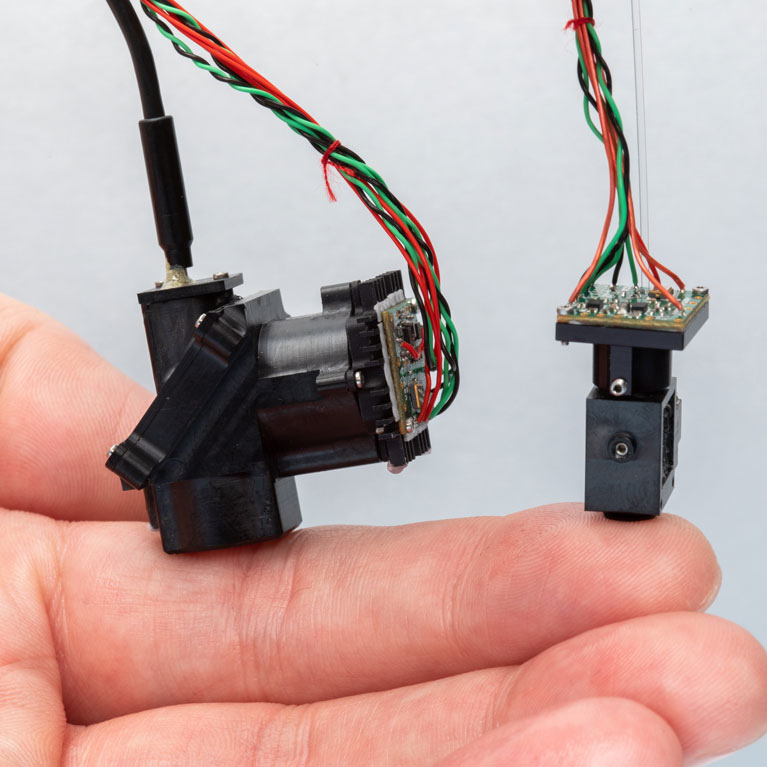
LA JOLLA—The spinal cord acts as a messenger, carrying signals between the brain and body to regulate everything from breathing to movement. While the spinal cord is known to play an essential role in relaying pain signals, technology has limited scientists’ understanding of how this process occurs on a cellular level. Now, Salk scientists have created wearable microscopes to enable unprecedented insight into the signaling patterns that occur within the spinal cords of mice.
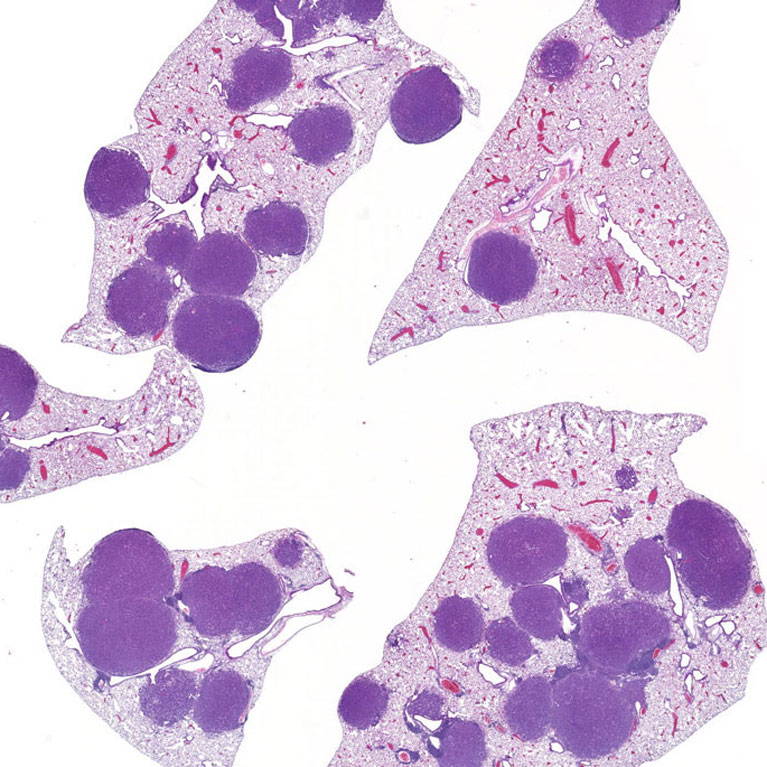
LA JOLLA—Cancer treatments have long been moving toward personalization—finding the right drugs that work for a patient’s unique tumor, based on specific genetic and molecular patterns. Many of these targeted therapies are highly effective, but aren’t available for all cancers, including non-small cell lung cancers (NSCLCs) that have an LKB1 genetic mutation. A new study led by Salk Institute Professor Reuben Shaw and former postdoctoral fellow Lillian Eichner, now an assistant professor at Northwestern University, revealed FDA-approved trametinib and entinostat (which is currently in clinical trials) can be given in tandem to produce fewer and smaller tumors in mice with LKB1-mutated NSCLC.
LA JOLLA—The artificial intelligence (AI) language model ChatGPT has captured the world’s attention in recent months. This trained computer chatbot can generate text, answer questions, provide translations, and learn based on the user’s feedback. Large language models like ChatGPT may have many applications in science and business, but how much do these tools understand what we say to them and how do they decide what to say back?
LA JOLLA—PlantACT! Plants for Climate Action, a European initiative founded to unite plant science experts in the effort to mitigate climate change, will welcome Salk Professors Joanne Chory y Wolfgang Busch to an upcoming two-day event in New York City. The event, called Growing a Resilient Society and hosted by the University of Cologne New York Office and partners, will feature a free public panel discussion with Chory and an invite-only experts’ workshop research presentation by Busch.
LA JOLLA—The Salk Institute has named Gerald Joyce as its next president, following an extensive, six-month search process. Having served as the Institute’s senior vice president and chief science officer since July, Joyce will succeed Rusty Gage, who will return to his lab full-time following a transformative leadership tenure that strengthened the Institute scientifically, culturally and organizationally.
LA JOLLA—Profesor del Salk Christian Metallo has been recognized for his outstanding contributions to advancing science by being named the next holder of the Daniel and Martina Lewis Chair, effective January 1, 2023. Professor Geoffrey Wahl previously held this chair position.
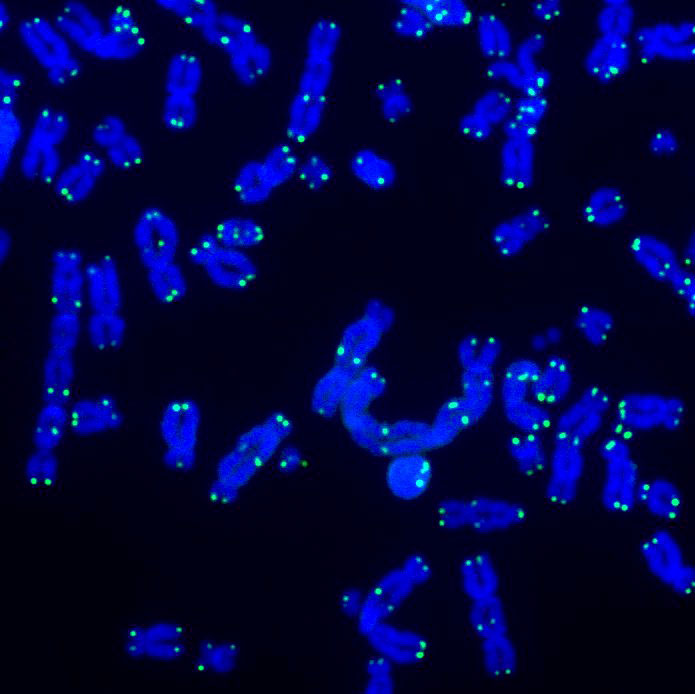
LA JOLLA—As we age, the end caps of our chromosomes, called telomeres, gradually shorten. Now, Salk scientists have discovered that when telomeres become very short, they communicate with mitochondria, the cell’s powerhouses. This communication triggers a complex set of signaling pathways and initiates an inflammatory response that destroys cells that could otherwise become cancerous.
LA JOLLA (January 31, 2023)— Salk Institute Professor Juan Reynolds has been named a 2022 Fellow of the American Association for the Advancement of Science (AAAS), the world’s largest general scientific society and publisher of the journal Ciencia. Reynolds is among 506 new AAAS Fellows spanning 24 scientific disciplines who were nominated by their peers for their distinguished efforts to advance science.