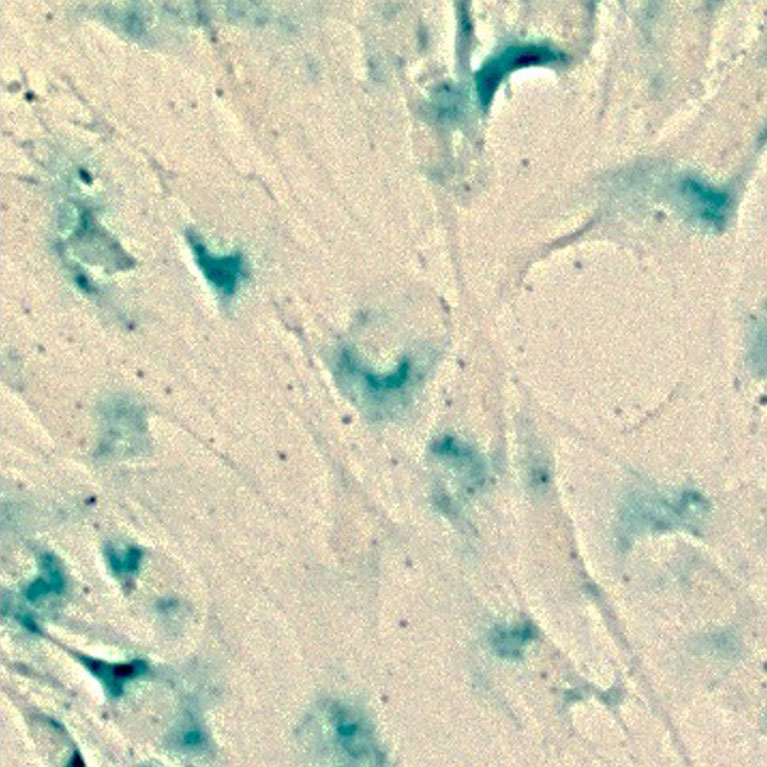
LA JOLLA—Our population is aging. The United Nations reports that by 2050, the number of people over the age of 85 on our planet is set to triple. But a longer life span isn’t the same as a longer healthspan (the number of years we spend healthy). Salk Institute scientists are working to change that through foundational research that explores the cellular mechanisms driving age-related dysfunction.
LA JOLLA—Every cell in the human body carries the same three billion letters of DNA, yet a neuron, a heart muscle cell, and a pancreatic beta cell each use that shared code to do entirely different jobs. How cells pull off this trick comes down to epigenetics—chemical tags and three-dimensional structures that govern which genes are active and which stay silent.
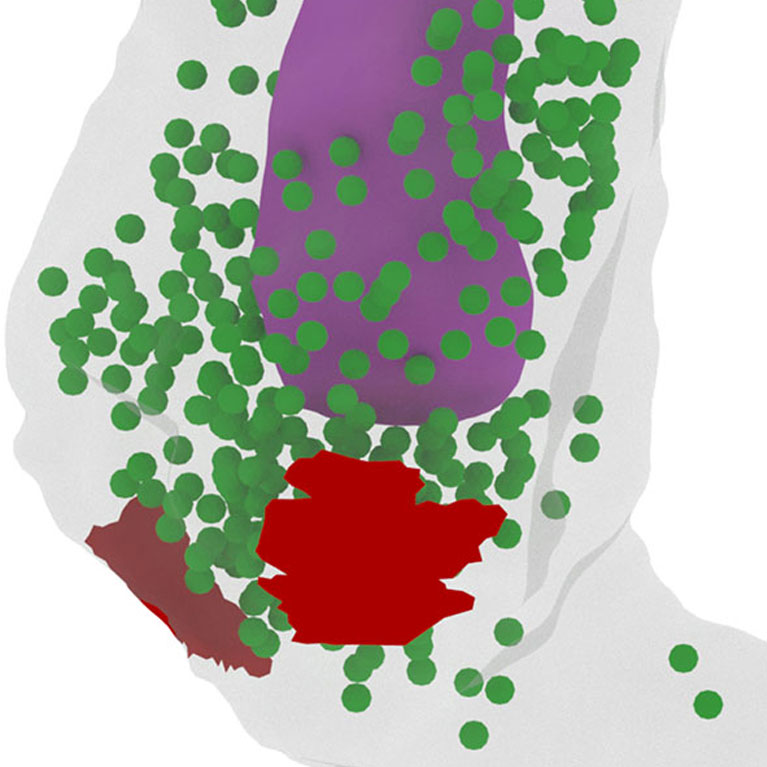
LA JOLLA—Your brain has something surprising in common with the ocean: waves! Electrical activity washes over the brain’s surface, creating what are called traveling brain waves or neural traveling waves. These waves cause real differences in your behavior and attention, and—again, like ocean waves—can have variable causes, from intrinsic to environmental inputs.
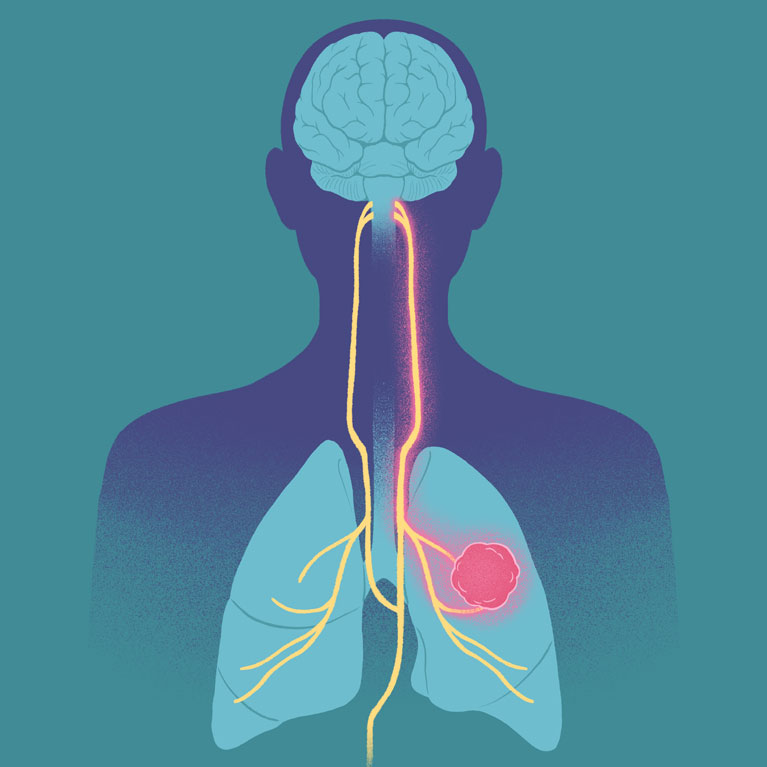
LA JOLLA—According to the Cleveland Clinic, a quarter of cancer deaths can be attributed to one source: cachexia. Cachexia is a syndrome that accompanies underlying chronic illness and causes unwanted muscle and fat loss, reducing quality of life and sometimes even limiting treatment options. A new study led by Thales Papagiannakopoulos, PhD, an incoming Salk professor, points to a potential new target for preventing cachexia.
LA JOLLA—Around three million people worldwide struggle with chronic pancreatitis, a condition wherein the pancreas becomes inflamed, scarred, and painful. There is no cure for chronic pancreatitis, and it is difficult to alter the disease trajectory after onset.
LA JOLLA—Pancreatic cancer is one of the deadliest cancers and is the third leading cause of cancer-related death in the United States. While scientists continue searching for new therapies, important advances can also come from understanding how existing drugs work. By uncovering the underlying biology, researchers can identify new ways to use existing drugs, improve their effectiveness, and overcome barriers that have limited their clinical impact.
LA JOLLA—Neurodegenerative diseases affect tens of millions of people worldwide. Among these, Alzheimer’s and Parkinson’s diseases are the most common; in the United States alone, the Alzheimer’s Disease Association and Parkinson’s Foundation report roughly 7 million people with Alzheimer’s and another million with Parkinson’s. An intriguing clue lies in the tangled mystery of neurodegeneration that scientists are working to solve: iron accumulation.
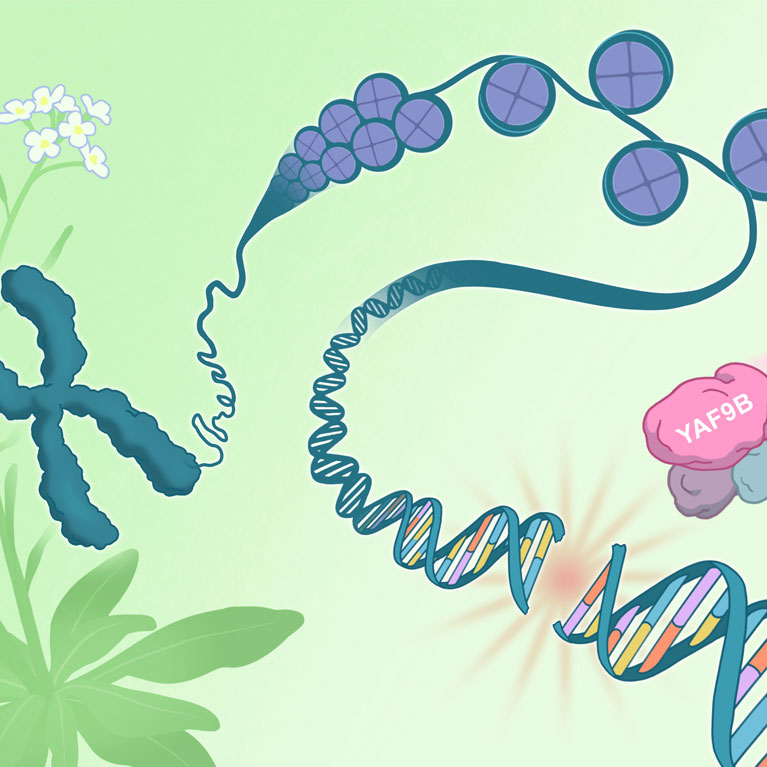
LA JOLLA—Similar to the way DNA damage can contribute to human diseases like cancer, it can also disrupt growth, development, and survival in plants. Every day, plants endure environmental stresses like sunlight, radiation, drought, and soil stress—all of which can damage their DNA. However, they cannot move away from danger. How do plants handle all that damage?
LA JOLLA—Inside the brain is a dense network of neurons that receive, process, and relay information. The synapse, where neurons meet, is the epicenter of this communication. Neurons that send information, called presynaptic neurons, hold tiny packages of neurotransmitters—waiting for a chemical signal from the brain to be released. How this system is regulated by the brain during periods of learning has, until now, been out of reach.
LA JOLLA—Three Salk faculty members, Sung Han, Doctor en Filosofía, Daniel Hollern, Doctor en Filosofía, and Graham McVicker, Doctor en Filosofía, have been chosen as Keck Scholars, alongside corresponding graduate students as Keck Fellows, in a special W. M. Keck Foundation Bridge Funding Initiative. The Initiative comes as the Keck Foundation seeks to support early-career scientists amid federal funding uncertainty.
LA JOLLA—El Instituto Salk ha ascendido a Julie Law, doctora, from associate professor to full professor, and Salk Fellow Talmo Pereira, PhD, has now joined Salk’s faculty as assistant professor. The recognition reflects both scientists’ excellence and innovation in their respective research areas.
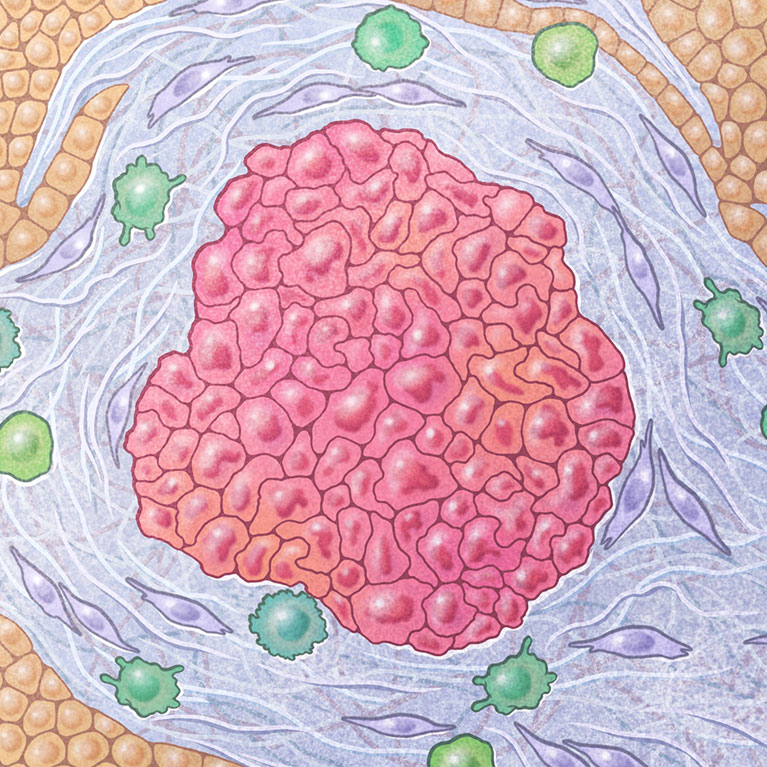
LA JOLLA—A small clinical trial led by Dana-Farber Cancer Institute researchers put a Salk Institute idea to the test in patients: that activating the vitamin D receptor can help reshape the protective environment surrounding pancreatic tumors in ways that could make the notoriously difficult-to-treat cancer more vulnerable to therapeutic treatments.
LA JOLLA—Suzanne Bourgeois, PhD, Salk professor emerita, founding member of the Salk Institute, and pioneer in gene regulation research, died at her home in Del Mar, California, on March 14, 2026. She was 94 years old.
LA JOLLA—The Salk Institute has recruited Ian Guldner, PhD, as a new assistant professor with foundational research expertise in brain aging and Alzheimer’s disease. Guldner’s goal is to identify cellular communication mechanisms that regulate brain aging and disease, and target those interactions to preserve brain health. He will launch his new lab at Salk in late 2026.
LA JOLLA—Sarah Wolf Hallac has been appointed to the Salk Institute’s Consejo de Administración. She brings broad experience spanning technology, finance, and philanthropy and will help guide the Institute as it advances foundational science that fuels future breakthroughs.
LA JOLLA—Salk Institute President Dr. Gerald Joyce, médico y doctor en Medicina, has been elected to the American Philosophical Society. Founded in 1743 by Benjamin Franklin, the American Philosophical Society is the oldest learned society in the United States. Through elected membership and a wide range of scholarly and public programs, the Society advances useful knowledge and the free exchange of ideas across disciplines.
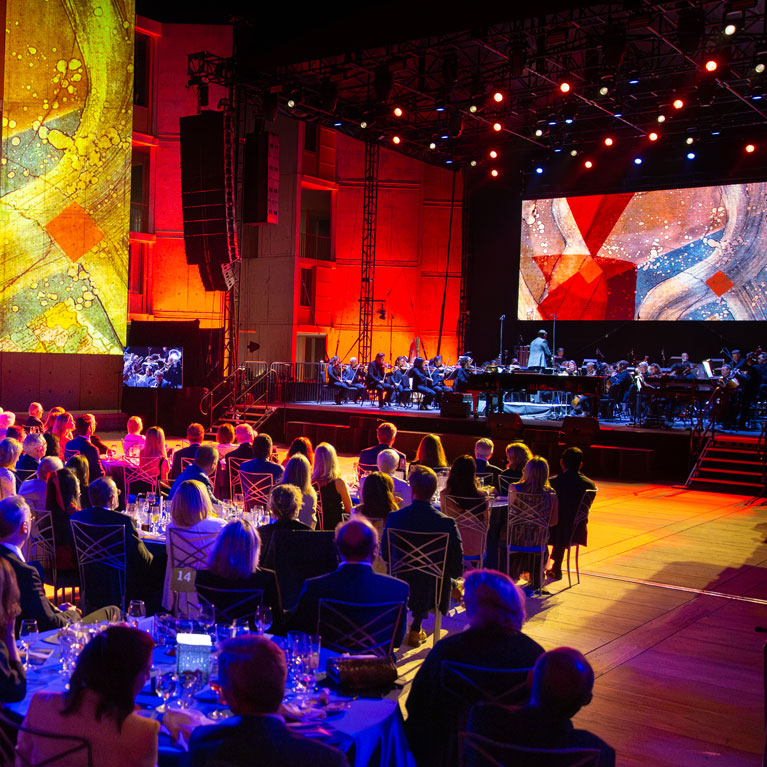
LA JOLLA— Tickets are now on sale for the 30th annual Symphony at Salk, the Salk Institute’s premier fundraiser, taking place Saturday, August 15, 2026, in the Institute’s iconic oceanfront courtyard in La Jolla. This milestone year marks three decades of unforgettable music in support of discovery. Proceeds from the evening will support Salk’s mission to advance foundational science—the bold, curiosity-driven research that makes future breakthroughs possible.
LA JOLLA—Fragile X syndrome (FXS) is an inherited genetic developmental condition that strongly impacts brain development. Despite the syndrome stemming from altered genetic code for the single protein fragile X messenger ribonucleoprotein (FMRP), its symptoms are broad and variable; people with FXS can have a range of behavioral and physical symptoms, and around 40 percent of people with FXS also have autism spectrum disorder. There is currently no cure for FXS; treatments are limited to medications and therapies to help manage symptoms.
LA JOLLA—Fluorescent proteins have revolutionized science, enabling researchers to tag and visualize individual molecules in living cells, tissues, and animals. Using these tools, researchers have watched viruses infect cells in real time, observed cellular trash collection, and tracked the signaling that spurs tumor growth.
LA JOLLA—Salk Institute scientist Terrence Sejnowski, PhD, and Nobel Laureate Geoffrey Hinton, PhD, have received the Scientific Breakthrough Award from the World Digital Technology Academy (WDTA)’s inaugural World Digital and Frontier Technologies (WDFT) Awards. Sejnowski and Hinton are recognized for their pioneering research bridging biological intelligence and computational models, punctuated by their foundational development of Boltzmann machines. Their work provided “the architectural bedrock for deep learning, generative AI, and the large-scale systems now driving digital civilization.”