April 21, 2026
LA JOLLA—Salk Institute scientist Terrence Sejnowski, PhD, and Nobel Laureate Geoffrey Hinton, PhD, have received the Scientific Breakthrough Award from the World Digital Technology Academy (WDTA)’s inaugural World Digital and Frontier Technologies (WDFT) Awards. Sejnowski and Hinton are recognized for their pioneering research bridging biological intelligence and computational models, punctuated by their foundational development of Boltzmann machines. Their work provided “the architectural bedrock for deep learning, generative AI, and the large-scale systems now driving digital civilization.”
The WDFT Awards were launched in 2025 at the United Nations World Summit for Social Development in Doha to celebrate “groundbreaking contributions across science, engineering, societal impact, and global collaboration in the era of digital technologies.”
“The increasing complexity of technology and our world means that scientists must be thoughtful not just about making breakthrough discoveries but also about their implications for society,” says Salk President Dr. Gerald Joyce, médico y doctor en Medicina. “Terry is a great example of the innovation and collaboration it takes to be an impactful scientist in today’s world, and this award truly honors that.”
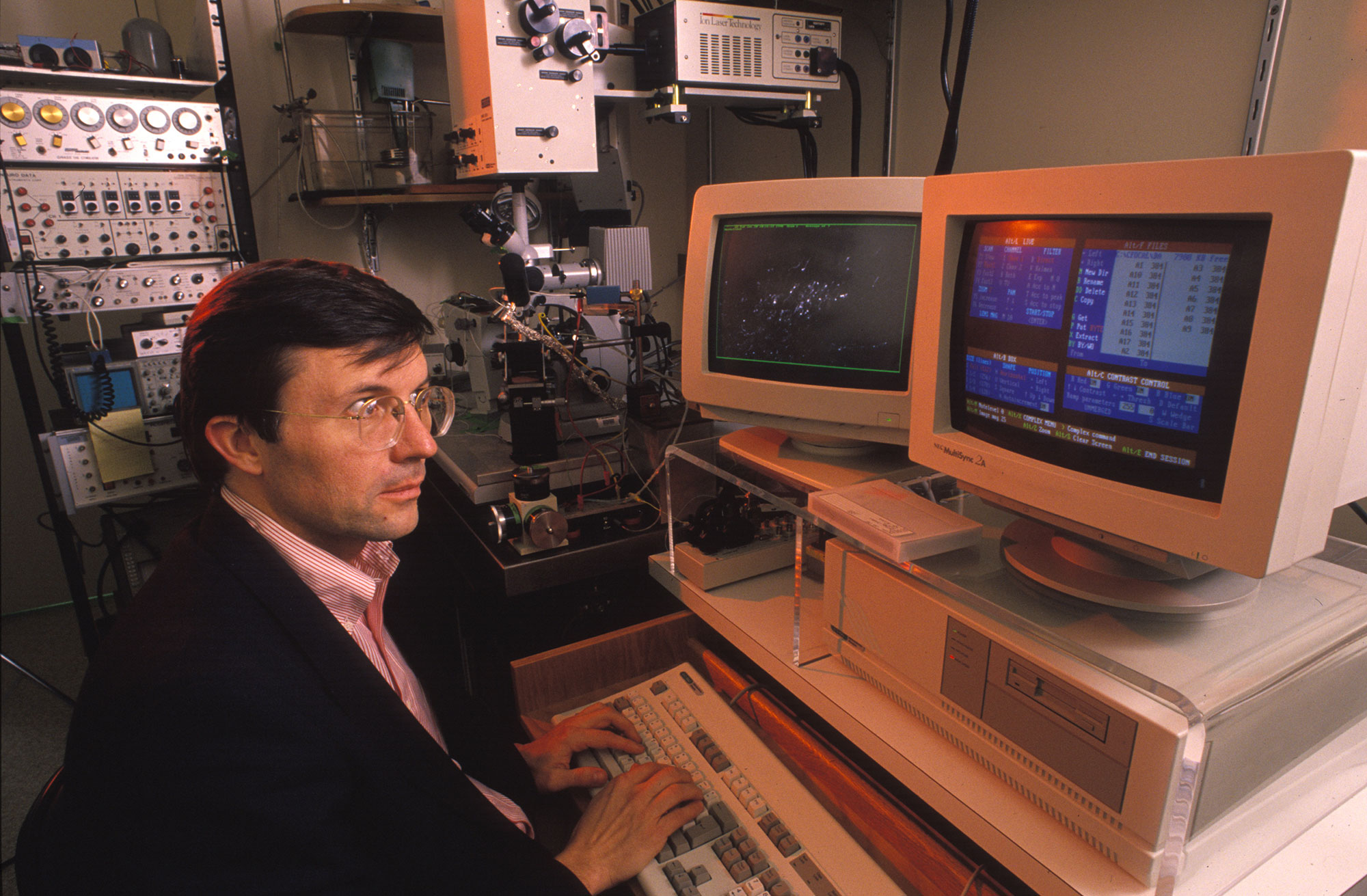
Sejnowski is a professor, head of the Computational Neurobiology Laboratory, and holder of the Francis Crick Chair at Salk. He is inextricably linked to the history of neuroeconomics, neuroanatomy, neurophysiology, psychology, computational neuroscience, and artificial intelligence. The present-day questions and progress in each of these fields have been shaped by Sejnowski’s work, including his 1985 invention of the Boltzmann machine with Hinton.
The Boltzmann machine is the first algorithm to solve the problem of learning in multilayered neural networks. Today, 40 years later, it remains the most biologically plausible algorithm for artificial neural networks. Sejnowski also pioneered a computer program called NETtalk, which could learn to convert written text into speech, as the human brain does. These accomplishments laid the groundwork for modern artificial intelligence and tools like ChatGPT.
The Scientific Breakthrough Award is one of many prestigious recognitions Sejnowski has received over the years, including the 2025 NIH Director’s Pioneer Award, 2024 Brain Prize, and 2022 Gruber Prize in Neuroscience. He is also a member of the United States National Academy of Sciences, National Academy of Medicine, National Academy of Engineering, National Academy of Inventors, and the American Philosophical Society, as well as a Fellow of the Royal Society in the United Kingdom.
Oficina de Comunicaciones
Tel.: (858) 453-4100
press@salk.edu
El Instituto Salk es un centro de investigación independiente y sin fines de lucro fundado en 1960 por Jonas Salk, creador de la primera vacuna segura y eficaz contra la poliomielitis. La misión del Instituto es impulsar una investigación fundamental, colaborativa y audaz que aborde los retos más acuciantes de la sociedad, entre ellos el cáncer, la enfermedad de Alzheimer y la vulnerabilidad agrícola. Esta ciencia fundamental sustenta todos los esfuerzos traslacionales, generando conocimientos que permiten el desarrollo de nuevos medicamentos e innovaciones en todo el mundo.