Professor
Computational Neurobiology Laboratory
Integrative Biology Laboratory
Edwin K. Hunter Chair
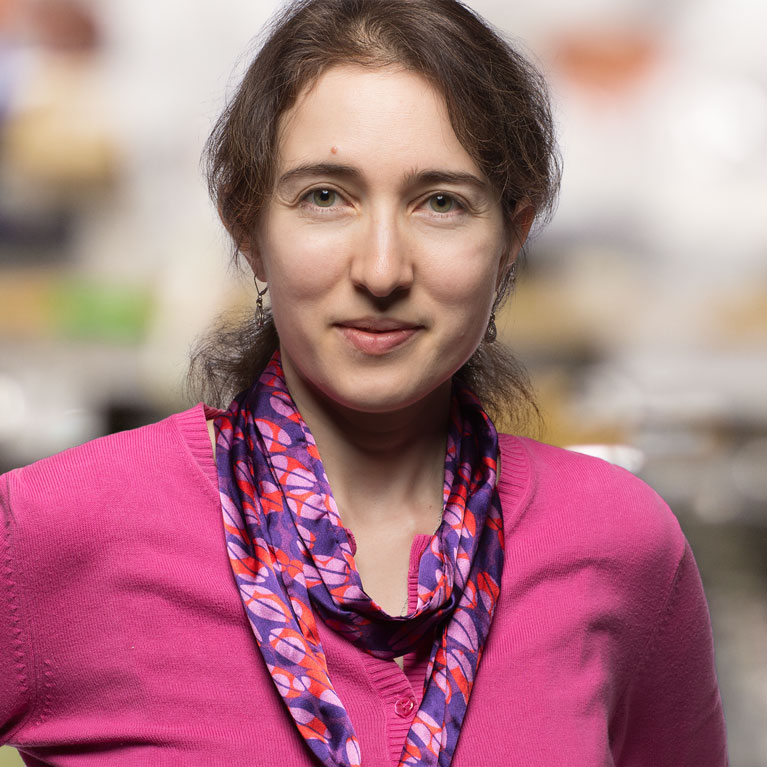

Tatyana Sharpee’s lab seeks to understand how the brain and other biological systems work while their components are constantly changing. For example, when a baby is growing, new neurons are added to circuits. During adulthood, connections between neurons are constantly added and removed as we learn new skills and information. Within individual neurons, proteins are constantly updated, yet the right balance is achieved to ensure appropriate signaling by them. Nevertheless, we maintain the same sense of “self” and can remember events for decades.
But as we age, we begin to lose connectivity between neurons and lose molecular balances—all while the environment within which the brain is operating is changing, too. Sharpee and colleagues are working to understand the optimal signals that the brain should pay attention to in its environment, and what we could prescribe to help the brain adapt to these lifelong changes.
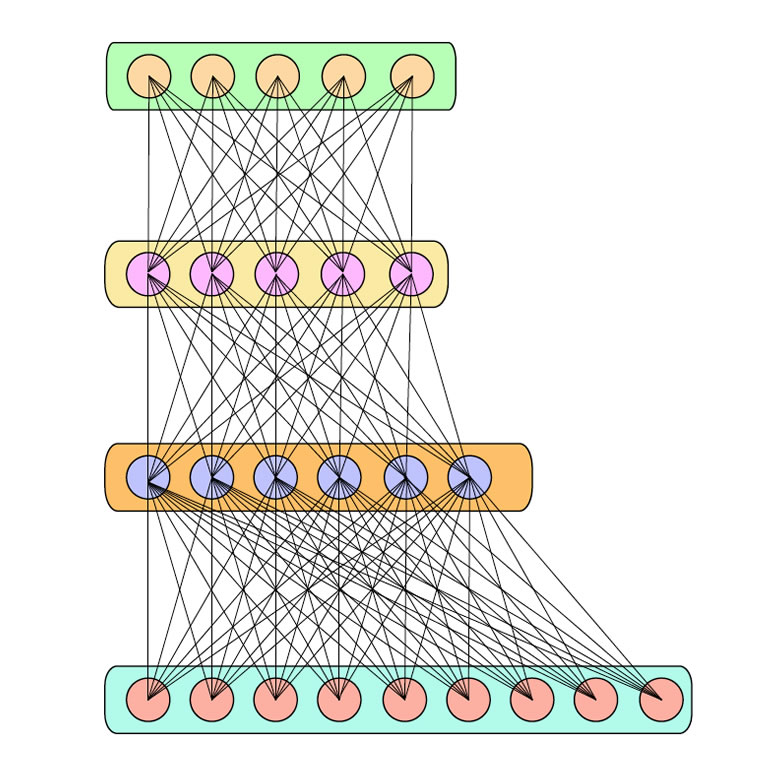
Tatyana Sharpee is using advanced methods from mathematics, statistics, and physics to chart the principles by which the brain’s billions of neurons exchange energy and information. In particular, she uses information theory (a set of mathematical concepts commonly employed in communications and finance systems) to quantify the activity of neurons and, in one area of research, works to determine how features are organized within parts of the brain that are responsible for conveying our senses, including vision, hearing, and smell. Revealing the workings of these core senses would help lead to new treatments and brain-machine interfaces for patients with disruptions to these systems that can happen as a result of stroke, dementia, or with schizophrenia. Furthermore, Sharpee and her group are using disruptions in sensory systems as diagnostic tools to find new treatments for a number of neurological disorders that affect the brain more broadly, including autism spectrum disorder, Alzheimer’s disease, schizophrenia, depression, and anxiety.
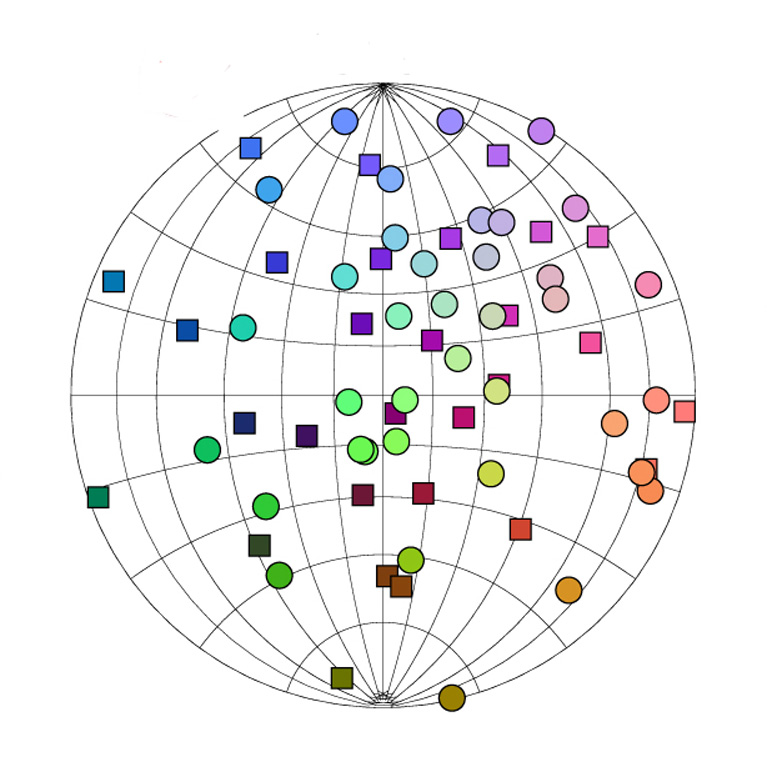
Sharpee’s group revealed a new way to organize odors and the sense of smell. They found that odors from the natural environments can be described by a curved surface, similar to a Pringle’s potato chip, and mathematically known to have a hyperbolic metric. They also found that our perception of smell is organized similarly, in ways that facilitate accurate estimation of fruit content based on odors.
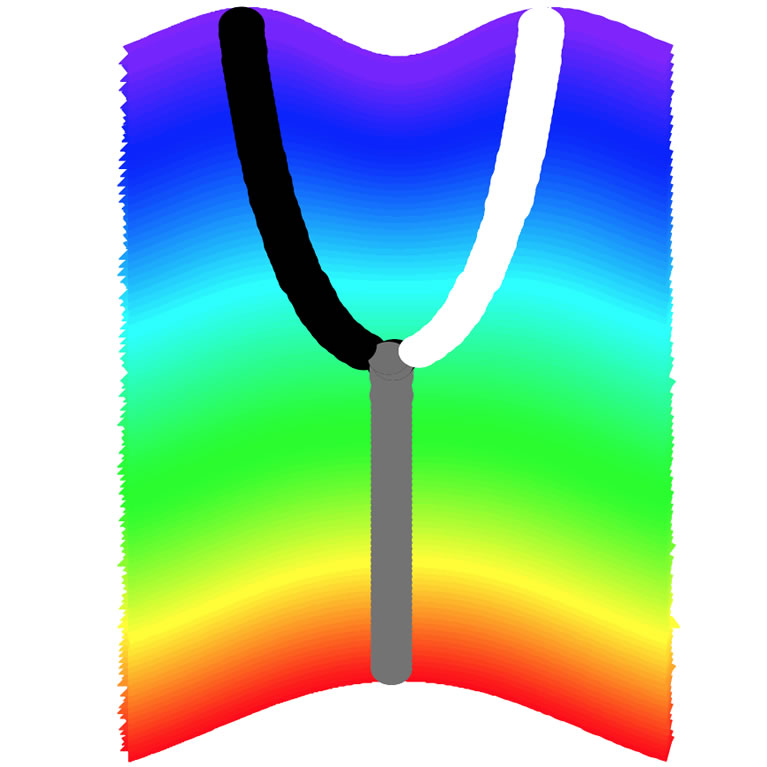
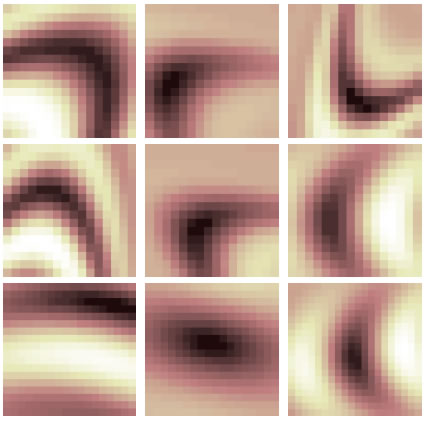
Sharpee developed a concise scheme for how visual neurons can combine selectivity to shapes and textures of visual objects.
Sharpee and collaborators have generated a theory that explains when it becomes advantageous for an organism to use new types of neurons. This theory could help catalogue and determine the number of separate neuronal types in the brain. Extensions of this theory make it possible to compute how much information large numbers of neurons jointly convey about incoming stimuli. Previously, this was only possible to do for a few neurons, and now the method can keep up with the capacity of experimental methods that record thousands of neurons simultaneously.
MS, Physics, Ukraine National University, Kiev, Ukraine
PhD, Physics, Michigan State University
Sloan-Swartz Postdoctoral Fellow, University of California, San Francisco
