LA JOLLA—Scientists at the Salk Institute for Biological Studies have demonstrated that sensory regions in the brain develop in a fundamentally different way than previously thought, a finding that may yield new insights into visual and neural disorders.
LA JOLLA, CA—On Aug. 24, 2013, multi-talented singer Katharine McPhee will step into the spotlight as the featured headliner for the 18th annual “Symphony at Salk-a concert under the stars” to perform with the San Diego Symphony and acclaimed guest conductor Maestro Thomas Wilkins.
LA JOLLA, CA—It’s common wisdom that one rotten apple in a barrel spoils all the other apples, and that an apple ripens a green banana if they are put together in a paper bag. Ways to ripen, or spoil, fruit have been known for thousands of years-as the Bible can attest-but now the genes underlying these phenomena of nature have been revealed.
LA JOLLA, CA—Salk scientists Beverly M. Emerson, Christopher R. Kintner, ,和 Paul E. Sawchenko were selected as inaugural holders of new endowed chairs created through the Joan Klein Jacobs and Irwin Mark Jacobs Senior Scientist Endowed Chair Challenge. In 2008, Dr. and Mrs. Jacobs created a challenge grant to establish endowed chairs for senior scientists. For every $2 million that a donor contributes toward an endowed chair at the Institute, the Jacobses will add $1 million to achieve the $3 million funding level required to fully endow a chair for a Salk senior scientist. To date, 17 out of 20 chairs have been established.
LA JOLLA, CA—Scientists have uncovered a survival mechanism that occurs in breast cells that have just turned premalignant-cells on the cusp between normalcy and cancers-which may lead to new methods of stopping tumors.
LA JOLLA, CA—Discovering that mouse hair has a circadian clock – a 24-hour cycle of growth followed by restorative repair – researchers suspect that hair loss in humans from toxic cancer radiotherapy and chemotherapy might be minimized if these treatments are given late in the day.
LA JOLLA, CA—A drug developed by scientists at the Salk Institute for Biological Studies, known as J147, reverses memory deficits and slows Alzheimer’s disease in aged mice following short-term treatment. The findings, published May 14 in the journal Alzheimer’s Research and Therapy, may pave the way to a new treatment for Alzheimer’s disease in humans.
LA JOLLA, CA—Scientists have long known that control mechanisms known collectively as “epigenetics” play a critical role in human development, but they did not know precisely how alterations in this extra layer of biochemical instructions in DNA contribute to development.
加利福尼亚州拉霍亚—索尔克生物研究所的科学家们发现了一种能够驱动库欣病中垂体瘤形成的蛋白质,这一发现可能为临床医生提供治疗这种危及生命的疾病的靶点。.
LA JOLLA, CA—In the spring following a forest fire, trees that survived the blaze explode in new growth and plants sprout in abundance from the scorched earth. For centuries, it was a mystery how seeds, some long dormant in the soil, knew to push through the ashes to regenerate the burned forest.
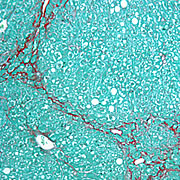
加州拉霍亚 — 肝纤维化是由过多的坚韧纤维疤痕组织堆积而成,发生在大多数慢性肝病中。在工业化国家,导致肝纤维化的肝损伤的主要原因包括慢性肝炎病毒感染、过量饮酒,以及日益严重的非酒精性脂肪性肝炎 (NASH)。.
LA JOLLA, CA—Salk researcher 特伦斯·J·塞吉诺斯基,
professor and head of the Computational Neurobiology Laboratory, has been elected a Fellow of the American Academy of Arts and Sciences, a distinction awarded annually to global leaders in business, government, public affairs, the arts and popular culture as well as biomedical research.
LA JOLLA, CA—On April 12, the Salk Institute unanimously approved the election of Sanjay Jha, former CEO of Motorola Mobility, to its Board of Trustees.
LA JOLLA, CA—On the eve of the anniversary of the first polio vaccine, the Salk Institute was honored with a generous gift from Michael Crick, the son of the late Nobel laureate and Salk faculty member, Francis Crick.
LA JOLLA, CA—The Salk Institute is pleased to announce the promotions of faculty members, John Reynolds to the rank of full professor and Clodagh O’Shea and Tatyana Sharpee to associate professors based on recommendations by the Salk faculty and nonresident fellows, and approved by President William R. Brody and the Institute’s Board of Trustees.
LA JOLLA, CA—The irony of getting away to a remote place is you usually have to fight traffic to get there. After hours of dodging dangerous drivers, you finally arrive at that quiet mountain retreat, stare at the gentle waters of a pristine lake, and congratulate your tired self on having “turned off your brain.”
LA JOLLA, CA—The Salk Institute is pleased to announce Step into Discovery, a day featuring the inaugural 5K Walk for Salk and Explore Salk, a free community open house offering behind-the-scenes tours of the world-renowned Institute.
LA JOLLA, CA—Salk neuroscientist 特伦斯·J·塞吉诺斯基 joined President Barack Obama in Washington, D.C., on April 2, 2013, at the launch of the Brain Research through Advancing Innovative Neurotechnologies (BRAIN) Initiative—a major Administration neuroscience effort that advances and builds upon collaborative scientific work by leading brain researchers such as Salk’s own Sejnowski.
LA JOLLA, CA—On the eve of the 60th anniversary of the discovery of DNA, James Watson, a legendary scientist who helped changed the history of molecular biology, spoke at the Salk Institute about his recent work in cancer research.
圣地亚哥,拉霍亚—美国癌症研究协会(AACR)是世界上历史最悠久、规模最大的致力于加速科学进步以预防和治愈癌症的专业组织,该协会已选出四名索尔克科学家和两名研究所的客座研究员,将他们纳入首届AACR学院院士。.