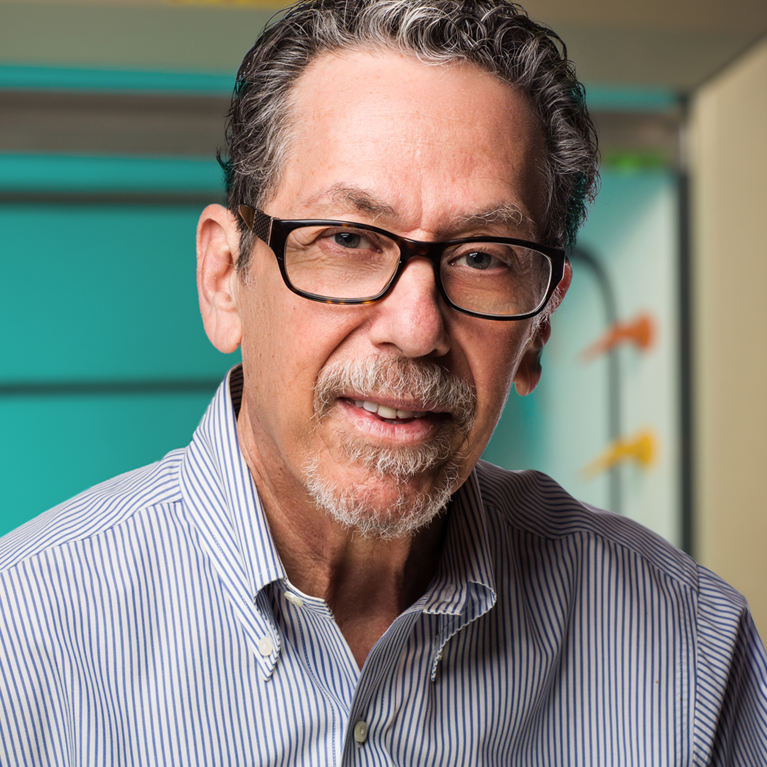
Ronald M. Evans
Professor and Director
Gene Expression Laboratory
Howard Hughes Medical Institute Investigator
March of Dimes Chair in Molecular and Developmental Biology
Research
Ronald M. Evans, a professor in the Gene Expression Laboratory, is the March of Dimes Chair in Developmental and Molecular Biology. Evans is an authority on hormones, both their normal activities and their roles in disease. A major achievement in Evans' lab was the discovery of a large family of molecules, named receptors, that respond to various steroid hormones, Vitamin A and thyroid hormones. These hormones help control sugar, salt, calcium and fat metabolism; thus, they impact on our daily health as well as treatment of disease. The receptors Evans discovered are primary targets in the treatment of breast cancer, prostate cancer and leukemia, as well as osteoporosis and asthma.
In addition, Evans' studies led to a new hormone that appears to be the molecular trigger controlling the formation of fat cells. This hormone and its chemical derivatives represent one of the newest and most important advances in understanding problems arising from excess weight and obesity and the potential treatment of adult onset diabetes (Type II diabetes).
"Because humans are good at storing fat during times of plenty, we are also excellent at surviving times of famine. The fat tissues of our body are like batteries, providing us with a steady source of energy when food is scarce. Understanding the storage and burning of fat, literally the ebb and flow of energy throughout our body, is crucial to normal physiology and ultimately the treatment of metabolic diseases such as obesity and diabetes."
Humans are built to hunger for fat, but when deluged by foods rich in fat and sugar, coupled with a sedentary lifestyle, the modern waistline often far exceeds the need to store energy for lean times. The result has been an epidemic of diabetes, heart disease and other obesity-related problems.
Although exercise and calorie restriction are known to be effective at preventing and treating diabetes, the obesity epidemic continues to grow, and new drugs to treat the problem are desperately needed.
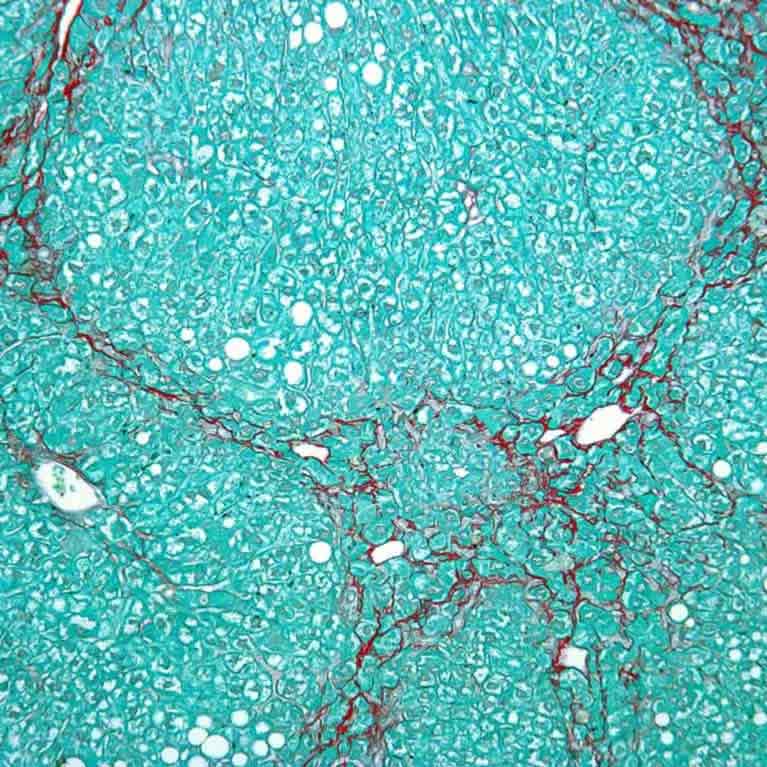
Against this backdrop, Evans's team identified the missing link in the regulation of metabolism. This linchpin is a protein known as fibroblast growth factor 1 (FGF1), which may open new avenues in the treatment of diabetes. The lab found that FGF1 activity is triggered by a high-fat diet and that mice lacking the protein swiftly develop diabetes. This suggests that FGF1 is crucial to maintaining the body's sensitivity to insulin and normal levels of sugar in the blood.
The scientists also found that the antidiabetic drug Actos, which is used to increase the body's sensitivity to insulin, regulates FGF1. But Actos and related drugs, though helpful, have side effects that limit their use. Thus, Evans plans to explore whether FGF1 itself might point to a new way to control diabetes by avoiding the drawbacks of Actos and providing a more natural means of increasing insulin sensitivity.
In addition to dietary regulation, mammalian metabolism is highly circadian, with major hormonal circuits corresponding to our sleep-wake cycles. Sleeping is a fasting period, while the remainder of the day involves periodic eating. Synchronizing rhythms of behavior and metabolic processes is important for cardiovascular health and for preventing metabolic disease. Two receptors found on the nuclei of mouse and human cells, known as REV-ERB-α and REV-ERB-β, are essential for synchronizing normal sleep and metabolic cycles. Evans's findings describe a powerful link between circadian rhythms and metabolism and suggest a new direction for treating disorders of both systems, including jet lag, sleep disorders, obesity and diabetes.
Back row, left to right: Henry Juguilon, Sungsoon Fang, Xuan Zhao, Tao Li, Ling-wa Chong, Li-jung Tai,
Maryam Ahmadian, Mara Sherman, Jamie Whyte, Christopher Wall, Grant Barish
Middle row, left to right: Yunqiang Yin, Michael Downes, Sagar Bapat, Liming Pei, Tiffany Tseng,
Han Cho, Weiwei Fan, Eiji Yoshihara, Benson Lu, Jae Myoung Suh, Elena Vitoshka-Tarasov,
Wanda Waizenegger, Robyn Meech
Front row, left to right: Sandra Jacinto, Jane Ly, Nanhai He, Ning Ding, Annette Atkins, Christi Brondos,
Ronald Evans, Lita Ong, Ester Banayo, Nasun Hah, Ruth Yu, Emi Embler, Yelizaveta Lukasheva, Kathy Taliman
Not pictured: Jacqueline Alvarez, Xiwen Cheng, Yang Dai, Sally Ganley, Mingxiao He, Suk Hyun Hong,
Samantha Kaufman, Ryan Lin, Elizabeth Yu, Zach Rotter
Salk News Releases
-
Salk scientists find potential therapeutic target for Cushing's disease
May 7, 2013 -
Sunshine hormone, vitamin D, may offer hope for treating liver fibrosis
April 25, 2013 -
Canker sore drug may aid in weight loss
March 18, 2013 -
From feast to famine: A metabolic switch that may help diabetes treatment
April 24, 2012 -
Salk scientists redraw the blueprint of the body's biological clock
April 5, 2012 -
Salk scientist Ronald M. Evans wins 2012 Wolf Prize in Medicine
January 18, 2012 -
Tweaking a gene makes muscles twice as strong
November 18, 2011 -
New anti-inflammatory drugs might help avoid side effects of steroids
October 24, 2011 -
Salk breathes new life into fight against primary killer of premature infants
October 17, 2011 -
Scientists discover genetic switch that increases muscle blood supply
March 1, 2011 -
The food-energy cellular connection revealed: Metabolic master switch sets the biological clock in body tissues
October 15, 2009 -
Exercise in a pill
July 31, 2008 -
New potential drug target for the treatment of atherosclerosis
March 4, 2008 -
Salk researchers uncover molecular connection between excessive nutrient levels and insulin resistance
February 21, 2008 -
Newborn brain cells modulate learning and memory
January 30, 2008 -
Regulator of lipid metabolism ensures high quality breast milk
August 13, 2007 -
Salk Scientist Ronald M. Evans Receives America's Top Prize in Medicine
April 26, 2007 -
Genetically modified mice are resistant to obesity despite a high fat diet
February 7, 2006 -
Ronald M. Evans to receive Harvey Prize for outstanding contributions to human health
September 11, 2006 -
Salk scientist Ron Evans wins 2006 Gairdner Award for his discovery of hormone sensors
April 5, 2006 -
France's highest scientific honor to be awarded this year to Salk Institute scientist Ronald M. Evans
July 11, 2005 -
Altering steroid receptor genes creates fat burning muscles, resistance to weight gain, and lowered inflammation.
April 4, 2005 -
Salk scientist awarded Glenn T. Seaborg Medal
November 4, 2005 -
Salk Institute's Ronald M. Evans Awarded 2004 Lasker Award For Basic Medical Research
September 26, 2004 -
Marathoning Mice Could Have Olympian Effects on Obesity
August 24, 2004 -
Stem Cell Regulator Could Hold Key to Staving Off Age-related Brain Changes
January 30, 2004 -
Salk Researcher named to Institute of Medicine
December 10, 2003 -
Cellular Fat Sensor Slows Heart Disease
October 15, 2003 -
Salk Researchers Ranked in Top 25 of Scientific Citations Worldwide
September 29, 2003 -
Salk Professor Ronald Evans Awarded Two Major Prizes
June 15, 2003 -
Salk Researchers Find Receptor That Controls Obesity
April 17, 2003 -
Vitamin A Deficiency Impairs Learning Functions In Reversible Manner
November 7, 2000 -
Humanized Mouse To Become Basic Tool To Test Drug-Drug Interactions
July 27, 2000 -
Link Between Vitamin A And Learning Abilities Established By Team Led By Salk Researchers
December 22, 1998 -
New Steroid Hormone has Allure Of Its Own
October 8, 1998 -
Salk Scientists Identify Molecular Link Between Dietary Fat And Colon Cancer
July 31, 1998 -
Salk Researchers Find Genetic Feedback Loop Implicated In The Early Events Of Atherosclerotic Plaque Formation
April 17, 1998
Awards and Honors
- Wolf Prize in Medicine, 2012
- Harvey Prize in Human Health, 2006
- Glenn T. Seaborg Medal, 2005
- Grande Médaille D'Or of France, 2005
- Albert Lasker Award for Basic Medical Research, 2004
- Institute for Scientific Information most cited researcher, 1997
- California Scientist of the Year, 1994
- National Academy of Sciences, 1989
- Howard Hughes Medical Institute Investigator, 1985