October 8, 2021
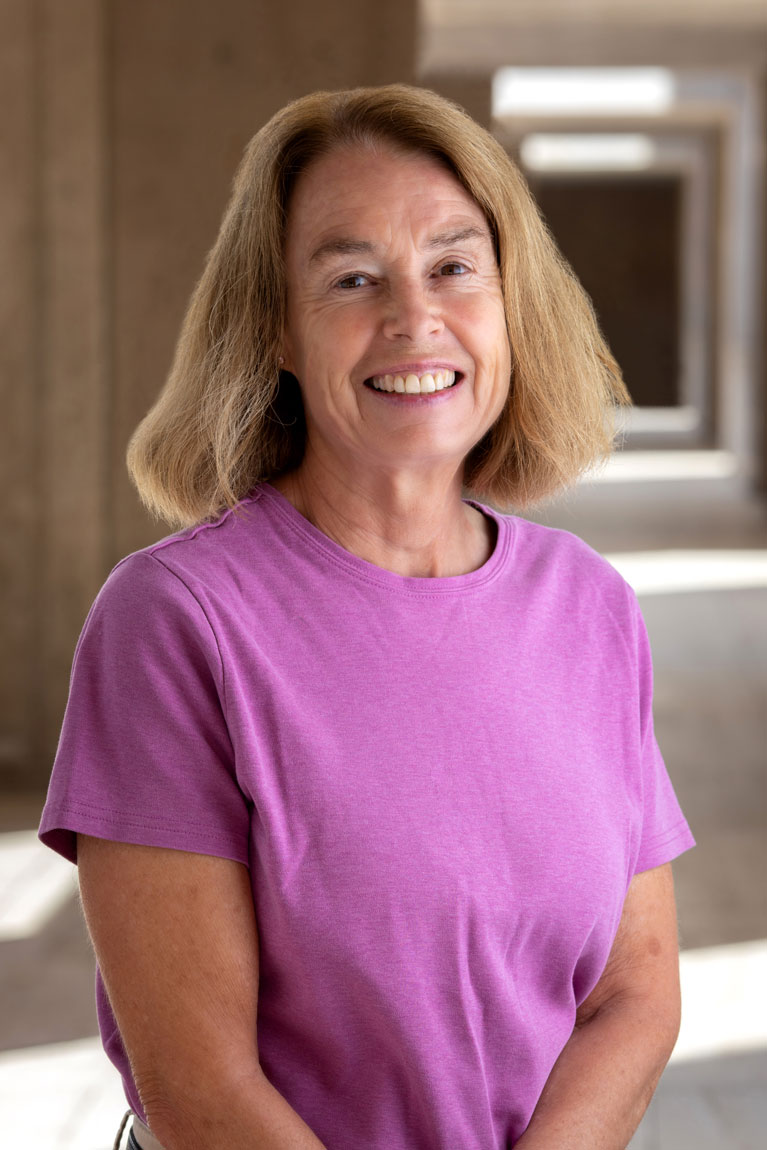
The compound being studied, CMS121, was first developed and studied at Salk
The compound being studied, CMS121, was first developed and studied at Salk
LA JOLLA—The investigational Alzheimer’s drug CMS121, developed and studied at Salk over the last fifteen years, has now moved into a phase 1 clinical trial to evaluate its safety in humans. Salk Research Professor 帕梅拉·马赫 and Bill Raschke of Virogenics, Inc., will receive $4.5 million over two years from the National Institute of Aging to support the trial, and they expect the first doses to be administered to healthy volunteers in early 2022. In mice, CMS121 reverses signs of aging in the brain and prevents the memory loss associated with Alzheimer’s disease.
“CMS121 is acting through a completely different pathway than most people have been looking at for Alzheimer’s disease,” says Maher, head of Salk’s Cellular Neurobiology Laboratory. “This drug could actually make a difference for someone with Alzheimer’s disease.”
In 2006, Maher and colleagues first discovered that fisetin—a natural chemical found in strawberries and other fruits and vegetables—helped prevent cultured neurons from dying and boosted the memory of healthy mice. The team chemically altered the structure of fisetin and screened the new, related compounds for their ability to reverse the signs of aging in isolated brain cells. One of the synthesized fisetin derivatives—CMS121—was even more effective than fisetin at slowing the degeneration of brain cells that occurs during aging.
Since then, Maher’s group has tested the ability of CMS121 to treat Alzheimer’s in a variety of mouse models of the disease. While many experimental Alzheimer’s drugs aim to directly target the amyloid-β protein that accumulates in the brains of people with the disease, CMS121 works by altering pathways related to inflammation and lipid synthesis.
To move CMS121 toward commercial use, Maher partnered with San Diego-based biotech startup Virogenics, founded by Raschke, to carry out the extensive preclinical and Investigational New Drug (IND) studies required before compounds can be tested in humans. While many studies at this phase are funded by large pharmaceutical companies or rely on venture capital backing, Maher and Virogenics won a Small Business Technology Transfer Grant from the National Institute of Allergy and Infectious Diseases (NIAID) in 2013 to support their studies on CMS121. Now the phase 1 trial of CMS121 is being funded by the National Institute on Aging.
“It’s pretty amazing that we’ve been able to see this drug from the lab all the way through to a phase 1 trial. It’s also fairly unusual to do all of this entirely with support from the National Institutes of Health,” says Maher. “We’re very proud that we’ve taken such a distinct approach.”
In the upcoming phase 1 trial, 56 healthy volunteers will take varying doses of CMS121 or a placebo in a randomized, double-blind study. Maher expects the data collection from the trial to be complete by fall 2022. “We hope that everything looks safe at that point and we can move on to a phase 2 trial,” she says.
The phase 1 clinical trial is being supported by the National Institute on Aging under Award Number R01AG074447.
宣传办公室
电话:(858) 453-4100
press@salk.edu
萨尔克研究所是一个独立的非营利性研究机构,由首个安全有效的脊髓灰质炎疫苗的研发者乔纳斯·索尔克于1960年创立。该研究所的使命是推动以合作、敢于冒险为特点的基础性研究,以应对癌症、阿尔茨海默病和农业脆弱性等社会最紧迫的挑战。这项基础科学支撑着所有的转化研究,产生有助于全球新药和创新的见解。.