2022 年 10 月 31 日
The molecules, called SGDGs, may lead to new ways to treat age-related neurological diseases
The molecules, called SGDGs, may lead to new ways to treat age-related neurological diseases
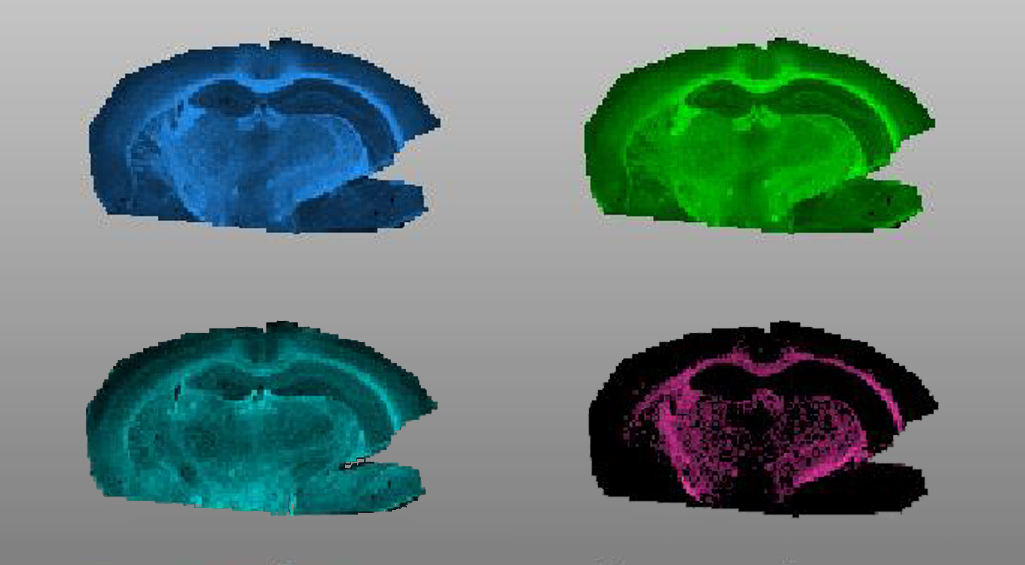
LA JOLLA—Aging involves complicated plot twists and a large cast of characters: inflammation, stress, metabolism changes, and many others. Now, a team of Salk Institute and UC San Diego scientists reveal another factor implicated in the aging process—a class of lipids called SGDGs (3-sulfogalactosyl diacylglycerols) that decline in the brain with age and may have anti-inflammatory effects.
The research, published in Nature Chemical Biology on October 20, 2022, helps unravel the molecular basis of brain aging, reveals new mechanisms underlying age-related neurological diseases, and offers future opportunities for therapeutic intervention.
“These SGDGs clearly play an important role in aging, and this finding opens up the possibility that there are other critical aging pathways we’ve been missing,” says co-corresponding author 艾伦·萨加特利安, professor in Salk’s Clayton Foundation Laboratories for Peptide Biology and holder of the Dr. Frederik Paulsen Chair. “This is a pretty clear case of something that should be dug into more in the future.”
SGDGs are a class of lipids, also called fats. Lipids contribute to the structure, development, and function of healthy brains, while badly regulated lipids are linked to aging and diseased brains. However, lipids, unlike genes and proteins, are not well understood and have often been overlooked in aging research. Saghatelian specializes in discovering new lipids and determining their structures.
His lab, in collaboration with Professor Dionicio Siegel at UC San Diego, made three discoveries involving SGDGs: In the brain, lipid levels are very different in older mice than in younger mice; all SGDG family members and related lipids change significantly with age; and SGDGs may be regulated by processes that are known to regulate aging.
To reach these findings, the team took an unusual, exploratory approach that combined the large-scale study of lipids (lipidomics) with structural chemistry and advanced data analytics. They first obtained lipid profiles of mouse brains at five ages, ranging from one to 18 months, using liquid chromatography-mass spectrometry. Technological advances in this instrumentation vastly expanded the number of data points available to the scientists, and advanced data analysis allowed them to determine age-related patterns in the enormous lipid profiles. The team then constructed SGDG molecules and tested them for biological activity.
“SGDGs were first identified in the 1970s, but there were few follow-up studies. These lipids were essentially forgotten and missing from the lipid databases. Nobody knew SGDGs would be changing or regulated in aging, let alone that they have bioactivity and, possibly, be therapeutically targetable,” says first author Dan Tan, a postdoctoral fellow in Saghatelian’s lab at Salk.
The analysis showed that SGDGs possess anti-inflammatory properties, which could have implications for neurodegenerative disorders and other neurological conditions that involve increased inflammation in the brain.
The team also discovered that SGDGs exist in human and primate brains, suggesting that SGDGs may play an important role in animals other than mice. Further research will be required to show if SGDGs contribute to human neuroinflammation.
In the future, the team will examine how SGDGs are regulated with aging and what proteins are responsible for making them and breaking them down, which may open the door to discovering novel genetic activity associated with aging.
“With the understanding of the structure of SGDGs and our ability to create them in the laboratory, the study of these important lipids is now wide open and ripe for discovery,” says Siegel, co-corresponding author of the study.
Additional authors included Meric Erikci Ertunc, Justin Wang, Tina Chang, Antonio F. M. Pinto, Andrea Rocha, Cynthia J. Donaldson, Joan M. Vaughan, Peter C. Gray, Pamela Maher, and Nicola J. Allen of Salk; Srihari Konduri of UC San Diego; Pan Zhang of UC Los Angeles; Raissa G. Ludwig and Marcelo A. Mori of the University of Campinas, Brazil; Elizabeth Willey and Andrew Dillin of UC Berkeley; Manasi Iyer and Bradley Zuchero of Stanford University; and Steven G. Kohama of Oregon Health and Science University.
This work was funded by Ferring Pharmaceuticals and Frederik Paulsen, the National Institutes of Health (P30 CA014195, R01DK106210, R01NS119823, R01AG069206 and RF1AG061296), the Oregon National Primate Research Center (P51 OD 010092), the Wu Tsai Human Performance Alliance and the Joe and Clara Tsai Foundation, the Anderson Foundation, the Bruce Ford and Anne Smith Bundy Foundation, the Pioneer Fellowship, the Howard Hughes Medical Institute, the CZI Neurodegeneration Network, and The Sãn Paulo Research Foundation (2017/01184-9).
DOI: 10.1038/s41589-022-01165-6
日记
Nature Chemical Biology
作者
Dan Tan, Srihari Konduri, Meric Erikci Ertunc, Pan Zhang, Justin Wang, Tina Chang, Antonio F. M. Pinto, Andrea Rocha, Cynthia J. Donaldson, Joan M. Vaughan, Raissa G Ludwig, Elizabeth Willey, Manasi Iyer, Peter C. Gray, Pamela Maher, Nicola J. Allen, J. Bradley Zuchero, Andrew Dillin, Marcelo A Mori, Steven G. Kohama, Dionicio Siegel and Alan Saghatelian
宣传办公室
电话:(858) 453-4100
press@salk.edu
萨尔克研究所是一个独立的非营利性研究机构,由首个安全有效的脊髓灰质炎疫苗的研发者乔纳斯·索尔克于1960年创立。该研究所的使命是推动以合作、敢于冒险为特点的基础性研究,以应对癌症、阿尔茨海默病和农业脆弱性等社会最紧迫的挑战。这项基础科学支撑着所有的转化研究,产生有助于全球新药和创新的见解。.