2025 年 11 月 13 日
The recognition highlights how Salk discoveries have laid critical foundations for future research, shaping the direction of scientific progress worldwide
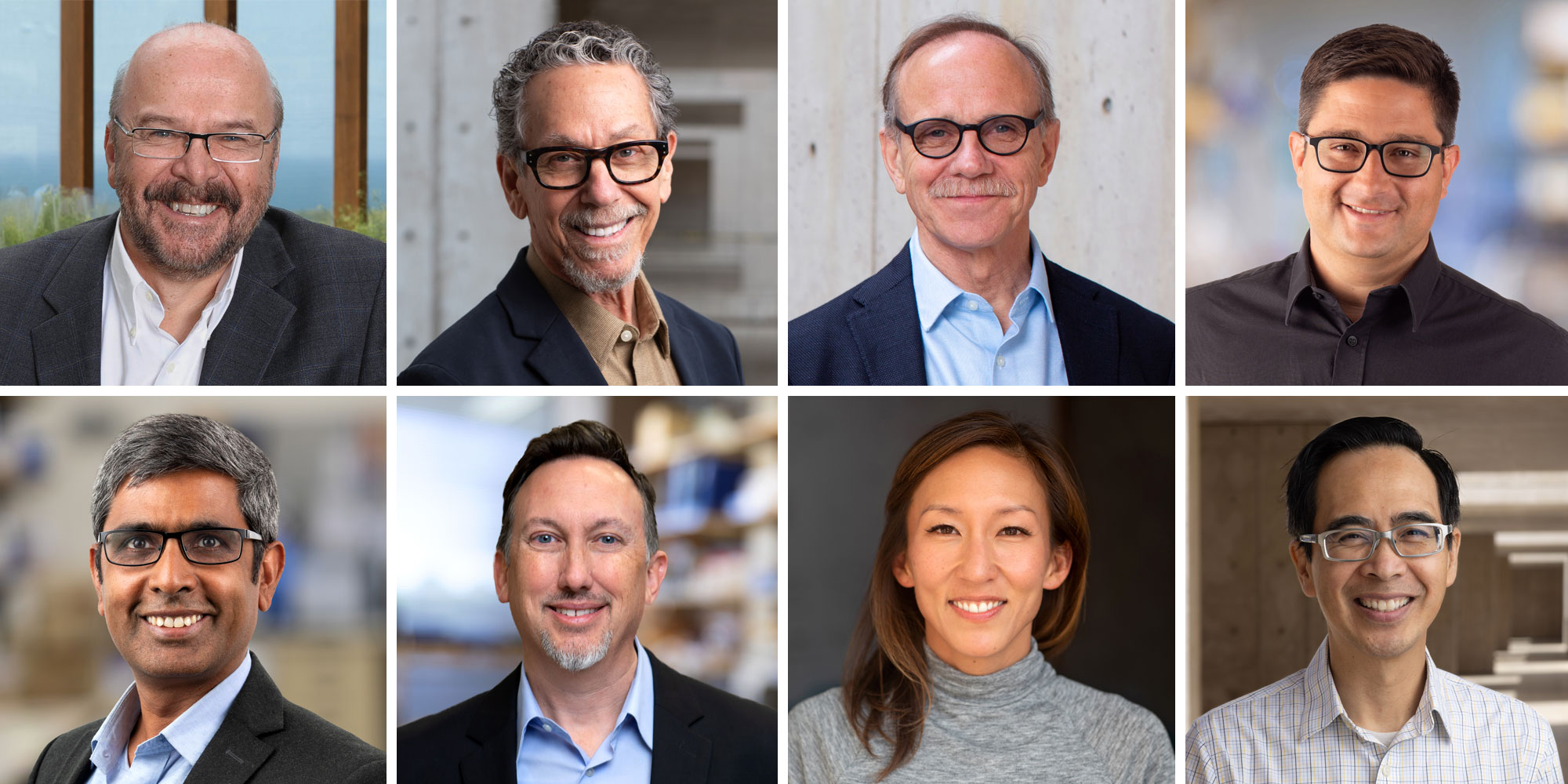
拉霍亚—索尔克学会教员 约瑟夫·埃克尔,博士, 罗纳德·埃文斯, 博士,, 鲁斯蒂·盖奇,博士, 克里斯蒂安·梅塔洛, 博士,, 萨奇达南达·潘达, 博士,, 鲁本-肖, 博士,以及 凯泰, ,博士,以及研究助理约瑟夫·内里,都被提名为今年的 科睿唯安高被引研究员名单. 2025年榜单共有来自60个国家的6,868名研究人员,他们在各自的研究领域表现出“显著而广泛的影响力”。”
Citations are one of several ways to measure a scientist’s broader impact in their field. When researchers publish their latest discoveries in peer-reviewed scientific journals, they cite the previous studies that informed their current work. A highly cited study is one that has informed numerous other studies and been widely discussed within the field.
Clarivate’s analysis identifies researchers who have authored multiple highly cited papers that rank in the top 1 percent in citation activity over the past decade. This list is then refined through qualitative analysis and expert judgment to ensure evidence of community-wide recognition from an international network of researchers. This ensures that all finalists have produced scientific insights that have made a tangible global impact in their field.
“Salk is proud to have so many of our scientists represented on this year’s Highly Cited Researchers list,” says President 杰拉尔德·乔伊斯, MD, PhD. “This recognition demonstrates just how influential our faculty have been in shaping the trajectory of science around the world. Their foundational research continues to spawn new fields of study and pave the way for new technologies and medical treatments our society needs.”
约瑟夫·埃克尔
Ecker is a molecular biologist who researches genomic and epigenomic regulation in plants and mammals.
He is a leader in the use of sequencing technologies for genome-wide analysis of DNA methylation, chromatin conformation, transcription, and gene function in single cells. His teams were the first to map the entire human epigenome and the first plant epigenome, and he is currently working to map the epigenetic differences between brain cell types to better understand neurological disorders such as schizophrenia and Alzheimer’s disease. Ecker is a professor in the Plant Molecular and Cellular Biology Laboratory, director of the Genomic Analysis Laboratory, holder of the Salk International Council Chair in Genetics at Salk, and a Howard Hughes Medical Institute investigator.
罗纳德·埃文斯
Evans is a molecular biologist and expert on the role of hormone receptors in reproduction, growth, and metabolism. He is widely recognized for his discovery of the nuclear receptor superfamily—work that led to the identification of numerous druggable pathways in cancer and metabolic diseases. Dozens of approved drugs have now been developed with Evans’ technology for the treatment of leukemia, prostate cancer, breast cancer, colon cancer, liver disease, diabetes, and hypertension. Evans is a professor, director of the Gene Expression Laboratory, and holder of the March of Dimes Chair in Molecular and Developmental Biology at Salk.
鲁斯蒂·盖奇
Gage is a neuroscientist who studies the plasticity, adaptability, and diversity of the brain. By reprogramming human skin cells from patients with neurologic and psychiatric diseases into induced pluripotent stem cells, induced neurons, and brain organoids, he deciphers the mechanisms that lead to diseases and disorders such as Alzheimer’s, Parkinson’s, bipolar disease, depression, and autism spectrum disorder. Gage is a professor in the Laboratory of Genetics and holder of the Vi and John Adler Chair for Research on Age-Related Neurodegenerative Disease at Salk.
克里斯蒂安·梅塔洛
Metallo is a bioengineer who studies how the body metabolizes molecules like glucose, fats, and amino acids to generate the building blocks and energy needed to perform life-sustaining tasks. He also investigates how changes in metabolism contribute to disease. Metallo has made key discoveries about the metabolic pathways that drive cancer progression, peripheral neuropathy, and macular disease, as well as how those pathways can be influenced through dietary manipulations or targeted therapies. Metallo is a professor in the Molecular and Cell Biology Laboratory and holder of the Daniel and Martina Lewis Chair at Salk.
萨奇达南达·潘达
Panda is a biologist and expert on the cellular and molecular basis of circadian rhythms. His research focuses on how the body’s internal circadian clocks, located in the brain and other organs, interact with environmental light and lifestyle factors to regulate daily rhythms in physiology and metabolism. His work reveals how nutrition, exercise, and sleep impact overall health and uses these insights to enhance human performance, reduce the risk of chronic diseases, and promote healthy aging. Panda is a professor in the Regulatory Biology Laboratory, holder of the Rita and Richard Atkinson Chair, and director of the 吴蔡人类表现联盟 at Salk.
鲁本-肖
Shaw is a cancer biologist who studies the connections between cancer and metabolism. Shaw’s research on the intersection of cellular growth control and metabolism fueled the re-emergence of the field of tumor metabolism. His discovery and decoding of the AMPK pathway have led to many insights and new therapeutic targets in cancer, metabolic disease, and neurodegenerative diseases currently being tested for clinical use. Shaw is a professor in the Molecular and Cell Biology Laboratory, holder of the William R. Brody Chair, and director of Salk’s National Cancer Institute-Designated Cancer Center.
凯泰
Tye is a neuroscientist who studies the neural circuit basis of emotion and how it shapes social interaction, reward-seeking, and avoidance behaviors. Her work uses optogenetic, electrophysiological, and cellular imaging techniques to identify how distinct circuits in the amygdala influence social and motivated behaviors. Her findings could inform new treatments for a multitude of neuropsychiatric conditions, including anxiety, depression, addiction, and social impairment. Tye is a professor in the Systems Neurobiology Laboratory, holder of the Wylie Vale Chair, co-founder of Salk’s DISCOVER Program, and a Howard Hughes Medical Institute investigator.
Joseph Nery
Nery is a research assistant in Ecker’s lab. He has been with the Salk Institute since 2006, where he lends his expertise in single-cell genetic and epigenetic sequencing techniques and computational analyses. His work has enabled numerous discoveries in plant biology and neuroscience.
宣传办公室
电话:(858) 453-4100
press@salk.edu
萨尔克研究所是一个独立的非营利性研究机构,由首个安全有效的脊髓灰质炎疫苗的研发者乔纳斯·索尔克于1960年创立。该研究所的使命是推动以合作、敢于冒险为特点的基础性研究,以应对癌症、阿尔茨海默病和农业脆弱性等社会最紧迫的挑战。这项基础科学支撑着所有的转化研究,产生有助于全球新药和创新的见解。.