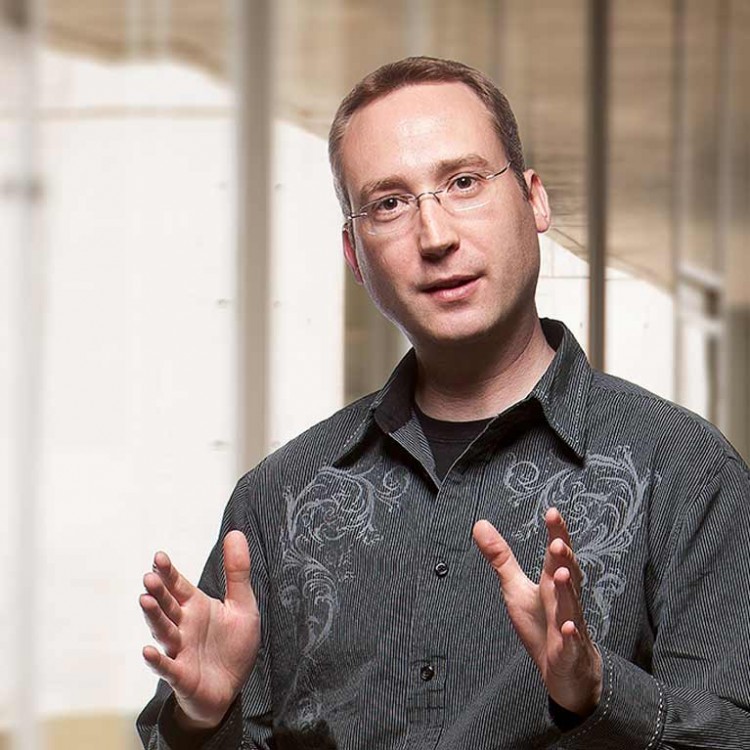
LA JOLLA—Profesor Asociado del Salk Axel Nimmerjahn lidera un equipo de investigación que ha recibido $11.2 millones de $ La Iniciativa de Investigación Cerebral a través del Avance de Neurotecnologías Innovadoras (BRAIN), un esfuerzo que tiene como objetivo investigar los principios generales de la función de los circuitos cerebrales, incluyendo la sensación, la percepción, la toma de decisiones y el control motor. Nimmerjahn liderará un proyecto interdisciplinario de cinco años que investigará cómo los astrocitos, células con forma de estrella en el cerebro, procesan y modulan las señales de las neuronas para comprender mejor la función cerebral general.
LA JOLLA—Profesor Janelle Ayres has been recognized for her contributions and dedication to advancing science through research by being named the inaugural recipient of the Salk Institute Legacy Chair, effective July 1, 2021.
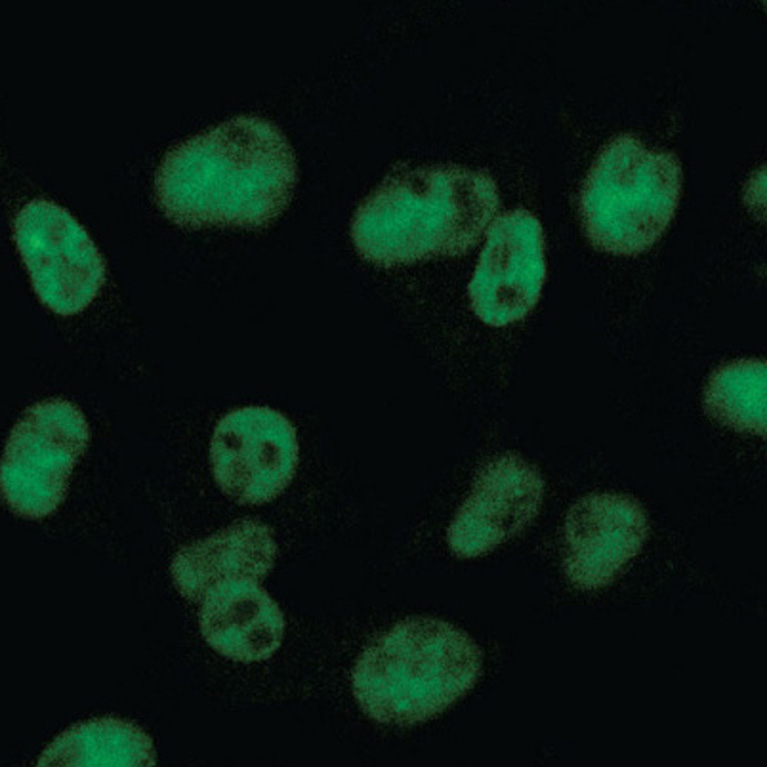
LA JOLLA—El Instituto Salk ha ascendido a Diana Hargreaves to the rank of associate professor for her notable contributions in epigenetic regulation, which make specific regions of our DNA accessible to the machinery of cells. The promotion was based on recommendations by Salk faculty and nonresident fellows, and approved by President Rusty Gage y la Junta Directiva del Instituto.
LA JOLLA—Time-restricted eating (TRE), a dietary regimen that restricts eating to specific hours, has garnered increased attention in weight-loss circles. A new study by Salk scientists further shows that TRE confers multiple health benefits besides weight loss. The study also shows that these benefits may depend on sex and age.
LA JOLLA—The Salk Institute’s Educación para la Comunidad program has received the 2021 Inspiring Programs in STEM Award from INSIGHT Into Diversity magazine, the largest and oldest diversity and inclusion publication in higher education. The Inspiring Programs in STEM Award honors colleges and universities that encourage and assist students from underrepresented groups to enter the fields of science, technology, engineering and mathematics (STEM). Salk will be featured, along with 78 other recipients, in the September 2021 issue of INSIGHT Into Diversity magazine.
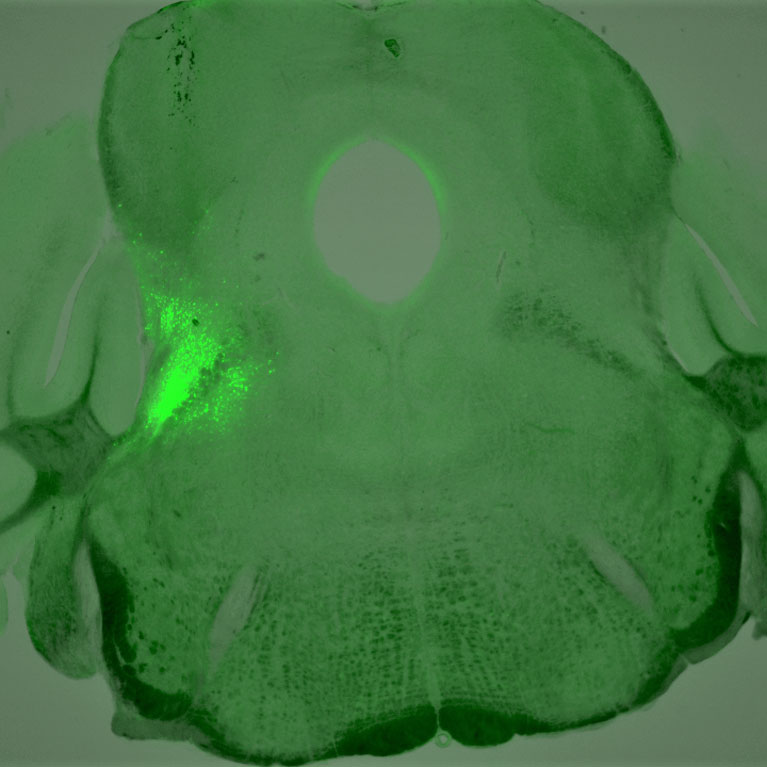
LA JOLLA—It’s long been known that opioid overdose deaths are caused by disrupted breathing, but the actual mechanism by which these drugs suppress respiration was not understood. Now, a new study by Salk scientists has identified a group of neurons in the brainstem that plays a key role in this process.
LA JOLLA—A Salk Institute team led by Professor Satchin Panda, along with teams from five other organizations, have been awarded a total of $220 million by the Joe and Clara Tsai Foundation’s Human Performance Alliance, whose philanthropic investment aims to transform human health on a global scale through the discovery and translation of the biological principles underlying human performance.
LA JOLLA—Profesor del Salk Kay Tye has been named one of three winners of the prestigious Blavatnik National Awards for Young Scientists, one of the world’s largest unrestricted prizes for early-career researchers. Tye, the laureate in the Life Sciences category, will receive $250,000 for her trailblazing work in studying the neural circuits and behaviors related to anxiety and social interaction.
LA JOLLA—Scientists—and gardeners—have long known that plants grow taller and flower sooner when they are shaded by close-growing neighbors. Now, for the first time, researchers at the Salk Institute have shown the detailed inner workings of this process.
It is with heartfelt sorrow that we inform you of the death of a member of the Salk community, Swati Tyagi, PhD. Swati, a postdoctoral researcher in the Hetzer lab, was tragically killed yesterday when a person in a car struck her from behind while she was riding her bike. We offer our deepest condolences to her family, friends and coworkers at this difficult time.
LA JOLLA—When looking at a complex landscape, the eye needs to focus in on important details without losing the big picture—a charging lion in a jungle, for example. Now, a new study by Salk scientists shows how inhibitory neurons play a critical role in this process.
LA JOLLA—For the tenth consecutive time, the Salk Institute has earned the highest ranking—4 out of 4 stars—from Charity Navigator, America’s largest independent charity and nonprofit evaluator. Only three percent of the roughly 10,000 nonprofits evaluated have achieved this recognition ten consecutive times. The coveted ranking indicates the Salk Institute has demonstrated strong financial health and commitment to accountability and transparency, outperforming most other charities in America in regard to executing best fiscal practices and carrying out its mission in a financially efficient way.
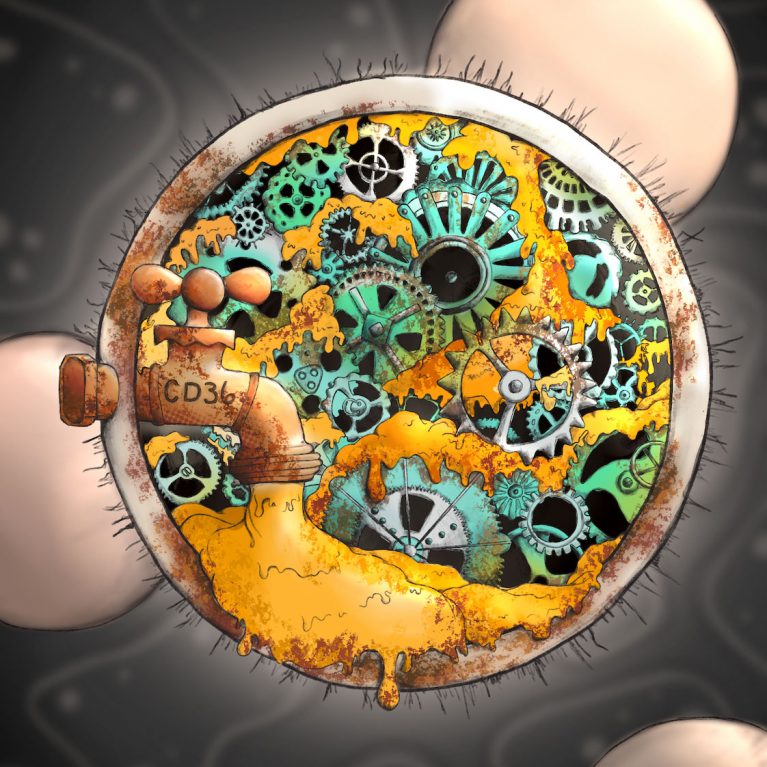
LA JOLLA—In order for cancer to grow and spread, it has to evade detection by our immune cells, particularly specialized “killer” T cells. Salk researchers led by Professor Susan Kaech have found that the environment inside tumors (the tumor microenvironment) contains an abundance of oxidized fat molecules, which, when ingested by the killer T cells, suppresses their ability to kill cancer cells. In a vicious cycle, those T cells, in need of energy, increase the level of a cellular fat transporter, CD36, that unfortunately saturates them with even more oxidized fat and further curtails their anti-tumor functions.
LA JOLLA—Type 1 diabetes, which arises when the pancreas doesn’t create enough insulin to control levels of glucose in the blood, is a disease that currently has no cure and is difficult for most patients to manage. Scientists at the Salk Institute are developing a promising approach for treating it: using stem cells to create insulin-producing cells (called beta cells) that could replace nonfunctional pancreatic cells.
LA JOLLA—The Salk Institute has appointed neuroscientist Talmo Pereira to the Programa de Becarios Salk, renewing the program’s commitment to supporting future intellectual leaders in the biological sciences.
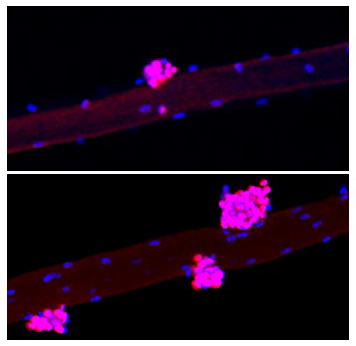
LA JOLLA—One of the many effects of aging is loss of muscle mass, which contributes to disability in older people. To counter this loss, scientists at the Salk Institute are studying ways to accelerate the regeneration of muscle tissue, using a combination of molecular compounds that are commonly used in stem-cell research.
LA JOLLA—Despite only accounting for about 1 percent of skin cancers, melanoma causes the majority of skin cancer-related deaths. While treatments for this serious disease do exist, these drugs can vary in effectiveness depending on the individual.
LA JOLLA—The Salk Institute welcomes bioengineer Christian Metallo, who will join the Salk faculty as a full professor in July 2021. He is currently an associate professor of bioengineering at the University of California San Diego.
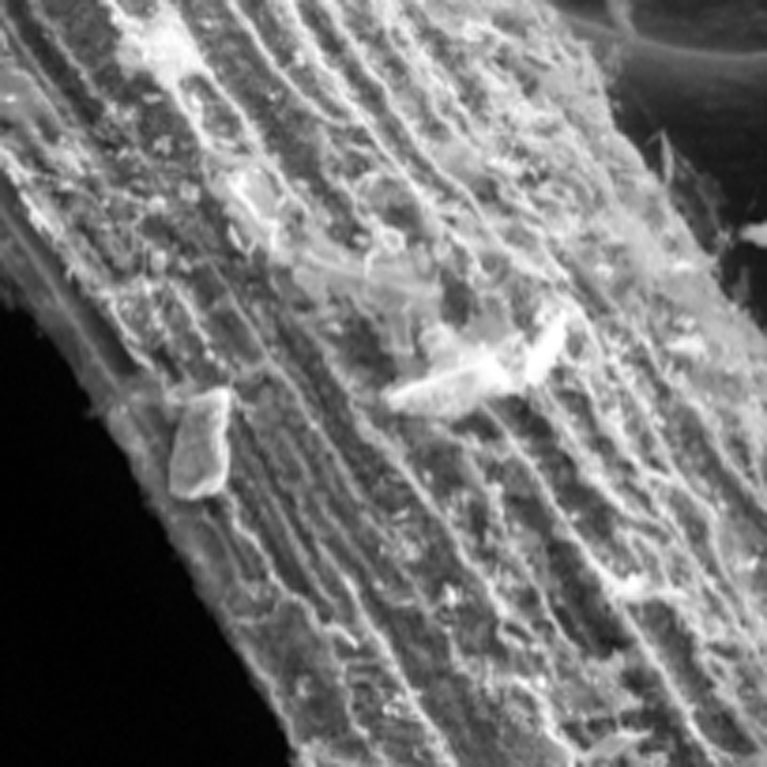
LA JOLLA—Plants are unparalleled in their ability to capture CO2 from the air, but this benefit is temporary, as leftover crops release carbon back into the atmosphere, mostly through decomposition. Researchers have proposed a more permanent, and even useful, fate for this captured carbon by turning plants into a valuable industrial material called silicon carbide (SiC)—offering a strategy to turn an atmospheric greenhouse gas into an economically and industrially valuable material.
The Kavli Foundation champions scientific research through its Small Equipment Grant program that provides scientists with unconstrained opportunities to drive greater discovery. The funding will support Salk faculty and research professors working in neuroscience and related fields to purchase or build equipment needed to further their research, ranging from $10,000 to $100,000.