September 20, 2017
Salk scientists discover that a microprotein helps cells choose best path to repair genes and avoid cancer
Salk scientists discover that a microprotein helps cells choose best path to repair genes and avoid cancer
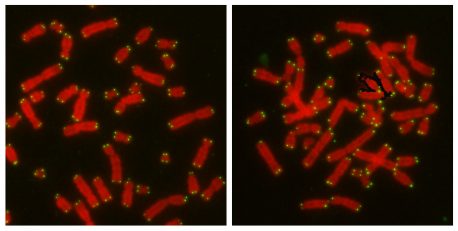
点击此处 用于高分辨率图像
版权:萨克研究所
LA JOLLA—Is it better to do a task quickly and make mistakes, or to do it slowly but perfectly? When it comes to deciding how to fix breaks in DNA, cells face the same choice between two major repair pathways. The decision matters, because the wrong choice could cause even more DNA damage and lead to cancer.
Salk Institute scientists found that a tiny protein called CYREN helps cells choose the right pathway at the right time, clarifying a longstanding mystery about DNA repair and offering researchers a powerful tool that could guide better treatments for cancer. The work appears in 自然 on September 20, 2017.
“Elucidating DNA repair pathways is critical to understanding how they can sometimes be toxic,” says 扬·卡尔塞德, a professor in Salk’s Molecular and Cell Biology Laboratory and the senior author of the new paper. “Our discovery of CYREN’s function not only adds to our body of knowledge, it gives us a new tool with which to potentially fight cancer.”

点击此处 用于高分辨率图像
版权:萨克研究所
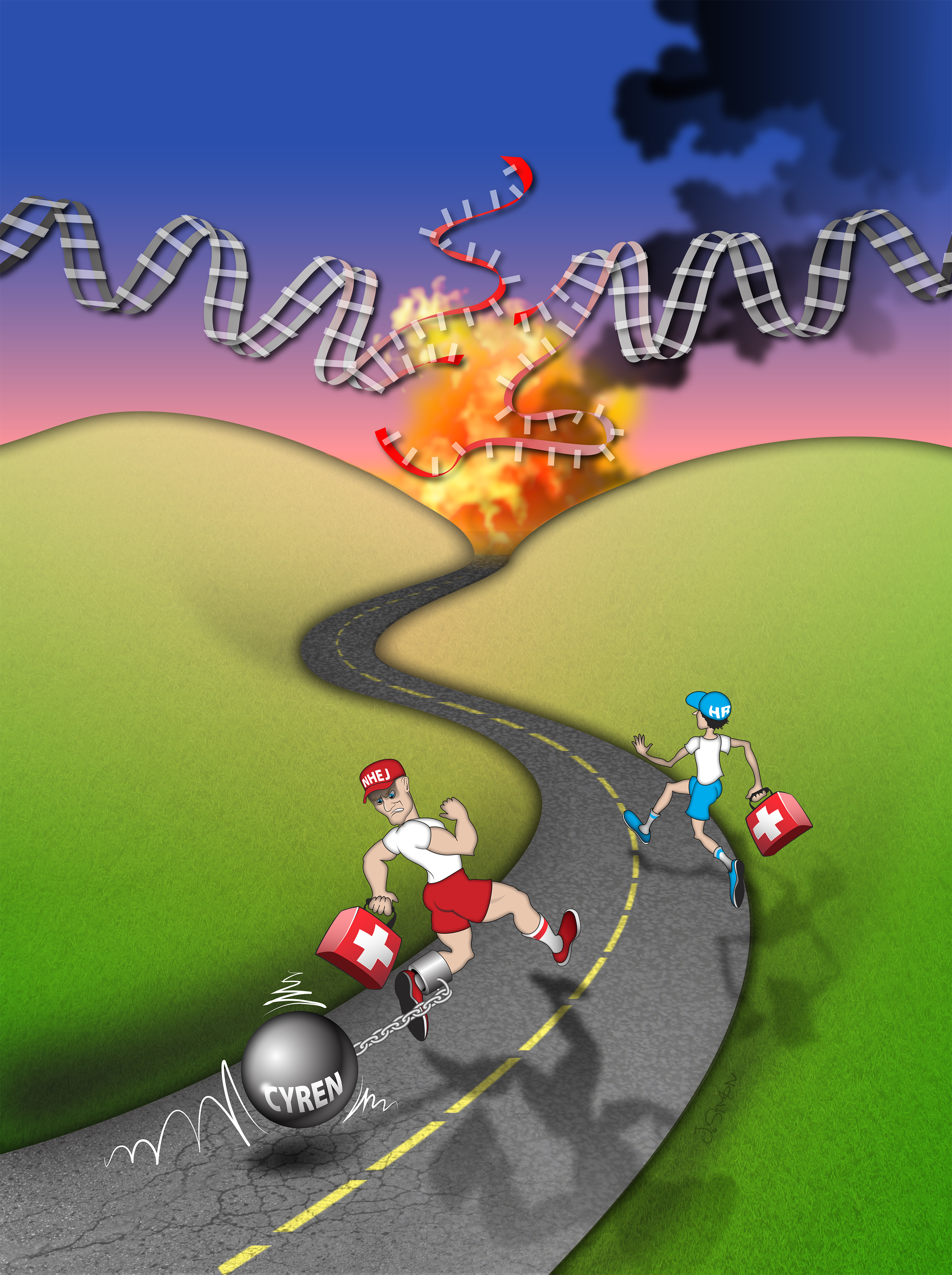
Double-strand breaks, the most serious injuries that happen to DNA, can be repaired by one of two pathways: a fast but error-prone process known as NHEJ (non-homologous end joining) and a slower, error-free pathway known as HR (homologous recombination). The faster pathway efficiently rejoins broken strands, but in the case of multiple breaks it can join the wrong two ends together, making things much worse for a cell. The slower pathway is error-free because it relies on having an undamaged DNA sequence to guide the repair, but this means it can only operate after a cell has copied its genetic information in order to divide. Given that, the fast pathway operates exclusively before DNA is copied, though its machinery is so efficient and prolific that scientists have wondered why it doesn’t outcompete the slower, more-exact pathway after copying, too. Scientists have long suspected that something must be holding the faster option back in those cases.
That something, the new work reveals, is a microprotein called CYREN, which inhibits the faster pathway when a DNA copy is available for the slower pathway to use. CYREN was discovered by another Salk scientist, 艾伦·萨加特利安, as part of a 2015 effort to identify small proteins called “short ORF-encoded peptides” or SEPs, which are increasingly being found to have critical biological roles.
“We found a lot of these peptides in our earlier study but we didn’t really know if any of them were important until the Karlseder lab got involved,” says Saghatelian, a professor in the Clayton Foundation Laboratories for Peptide Biology and one of the paper’s coauthors. “Thanks to this impressive new work, we now know there are some really important molecules among the hundreds we’re discovering.”
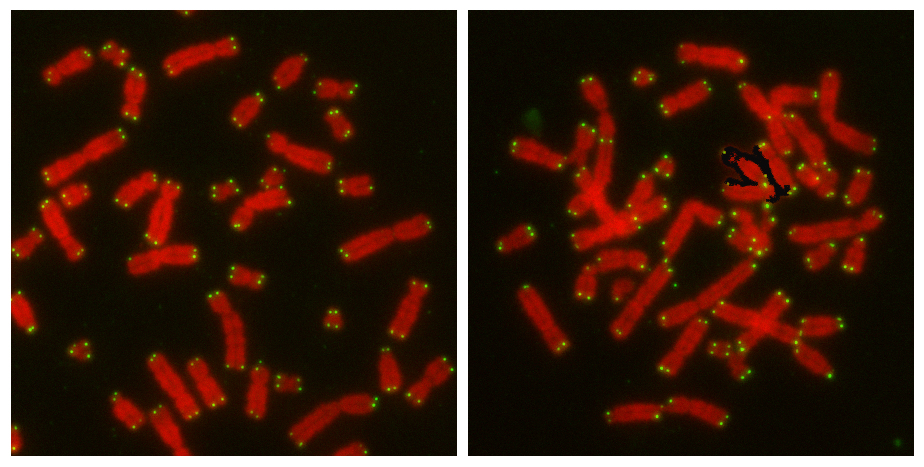
Saghatelian’s research had suggested that CYREN was interacting with the master switch of the faster pathway, a protein called Ku. To determine the exact nature of the interaction, Karlseder’s team worked with a region of the genome where repair is normally suppressed to prevent dangerous fusions: the ends of chromosomes, called telomeres. Researchers can artificially disturb telomeres to activate the fast pathway, making it a model system to test CYREN’s effects.
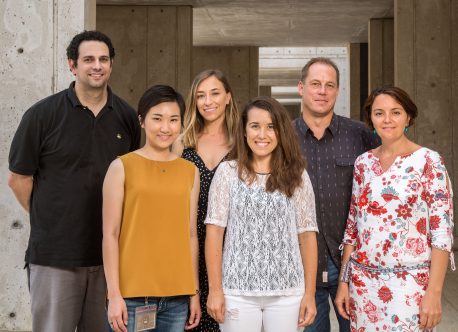
点击此处 用于高分辨率图像
版权:萨克研究所
“Telomeres offer a great research tool because they really need to repress repair, but there are ways to activate the repair machinery so that you can study it in a very controlled way,” says Nausica Arnoult, a Salk research associate and first author of the paper. The Salk team did so, and found that with CYREN present, no repairs occurred after the cell copies its DNA, suggesting that it does flip off the master switch, Ku. Without CYREN around, Ku’s fast pathway was active both before DNA was copied and after.
Because the telomere experiments did not tell the team much about the competition between the fast and slow pathways, Arnoult next used molecular tools to compare repair in living cells with and without CYREN. She combined the DNA scissors known as CRISPR with genes for fluorescent proteins that would be triggered by repair so that she could cut DNA in specific ways and see from the ensuing color which pathway had made the repair. She also analyzed all the protein interactions that took place.
These experiments revealed that CYREN directly attaches to Ku to inhibit the fast pathway both depending on timing (before or after DNA copying) and the type of DNA break (smooth versus jagged, for example). Its activity can even tune the ratio of fast to slow repairs.
“Our study shows that CYREN is an important regulator of DNA-repair-pathway choice,” says Karlseder, who holds the Donald and Darlene Shiley Chair at Salk. “The work also points to the exciting possibility of potentially introducing DNA damage in cancer cells and using CYREN to prevent them from making repairs.”
Other authors included: Adriana Correia, Jiao Ma and Anna Merlo of Salk; Sara Garcia-Gomez, Marija Maric and Simon J. Boulton of the Francis Crick Institute; Marco Tognetti of ETH Zurich; and Christopher W. Benner of 加州大学圣迭戈分校.
The work was funded by: the Human Frontiers Science Program, the Paul F. Glenn Center for Biology of Aging Research, a Larry Hillblom Foundation Fellowship Grant, a Wellcome Trust Senior Investigator Award, the Francis Crick Institute (Cancer Research UK), the UK Medical Research Council, the Wellcome Trust, the National Institutes of Health, the National Cancer Institute, The Leona M. and Harry B. Helmsley Charitable Trust, Dr. Frederick Paulsen Chair/Ferring Pharmaceuticals, a Salk Institute Cancer Center Core Grant, the Donald and Darlene Shiley Chair, the Highland Street Foundation, the Fritz B. Burns Foundation and the Emerald Foundation.
日记
自然
作者
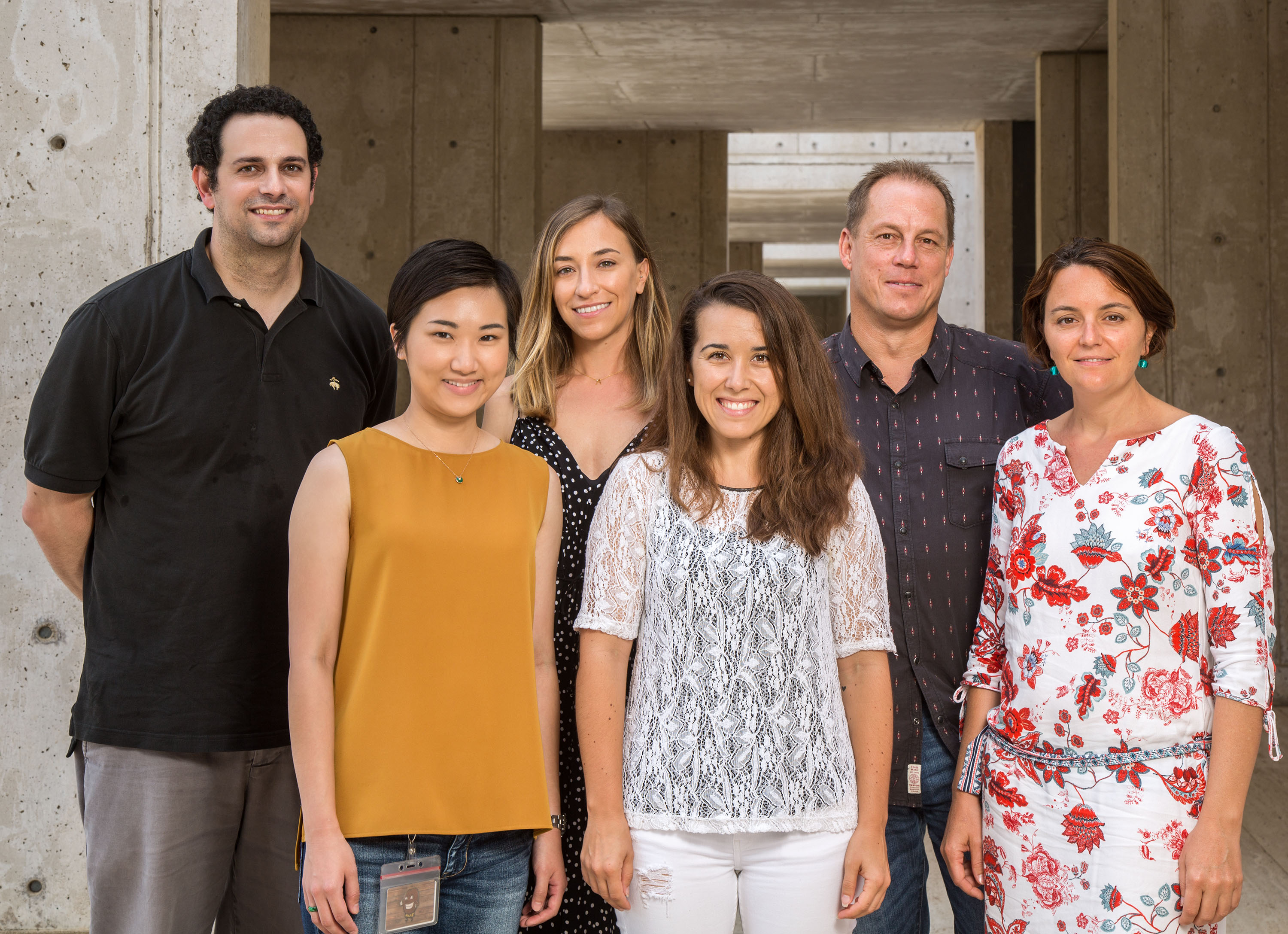
Nausica Arnoult, Adriana Correia, Jiao Ma, Anna Merlo, Sara Garcia-Gomez, Marija Maric, Marco Tognetti, Christopher W. Benner, Simon J. Boulton, Alan Saghatelian and Jan Karlseder.
宣传办公室
电话:(858) 453-4100
press@salk.edu
萨尔克研究所是一个独立的非营利性研究机构,由首个安全有效的脊髓灰质炎疫苗的研发者乔纳斯·索尔克于1960年创立。该研究所的使命是推动以合作、敢于冒险为特点的基础性研究,以应对癌症、阿尔茨海默病和农业脆弱性等社会最紧迫的挑战。这项基础科学支撑着所有的转化研究,产生有助于全球新药和创新的见解。.