October 18, 2018
Salk scientist recognized for scientific innovations in organ regeneration and transplant technologies
Salk scientist recognized for scientific innovations in organ regeneration and transplant technologies
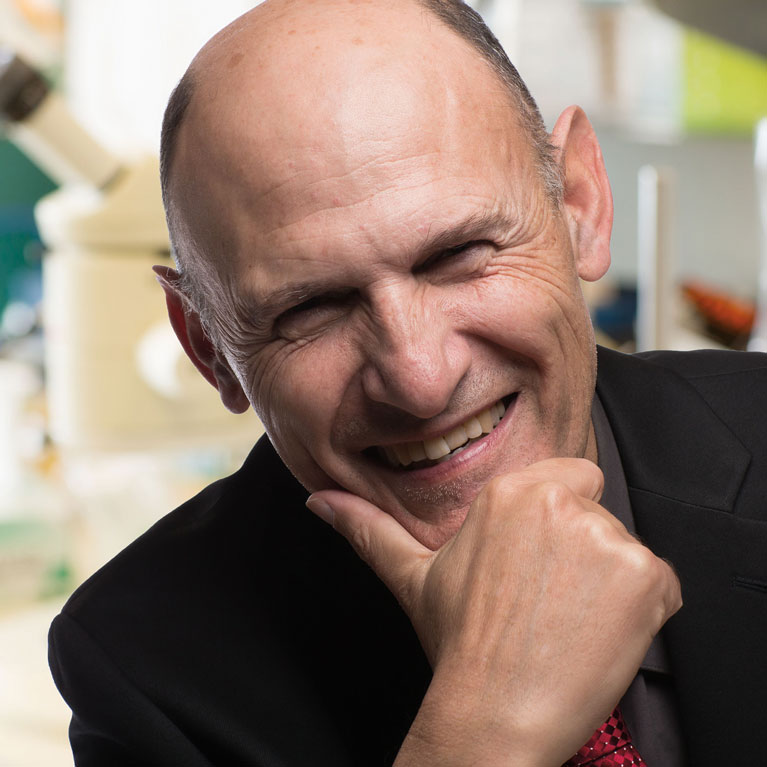
拉霍亚胡安·卡洛斯·伊兹皮苏亚·贝尔蒙特, a professor in Salk’s Gene Expression Laboratory, has been named one of TIME magazine’s 50 most influential people in healthcare for his scientific innovations in addressing the shortage of human organs for transplant. The list, which is curated by TIME’s health reporters and editors, recognizes people who changed the state of healthcare in America this year, and bear watching for what they do next.
“Juan Carlos’ work is at the absolute forefront of an astounding number of biomedical areas with game-changing potential for people’s health,” says Salk President 鲁斯蒂·盖奇. “He is very much a scientist and a humanitarian in the mold of all Salk faculty, and we are overjoyed to have his pioneering research acknowledged by a magazine as prominent as TIME.。”
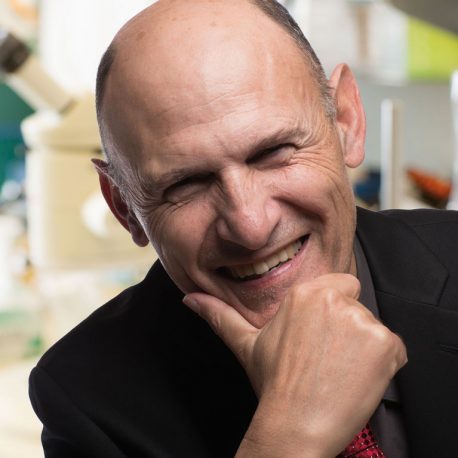
点击此处 for a high-resolution image Credit: Salk Institute
Izpisua Belmonte, who holds the Roger Guillemin Chair at Salk, is globally recognized for his expertise in stem cell biology. Notably, in 2017, Izpisua Belmonte published a proof-of-concept study showing that functional organs from one species can be grown in another, an important early step toward addressing the critical shortage of human donor organs available for transplant.
Combining gene-editing and stem-cell technologies, his lab was able to grow a rat pancreas, heart and eyes in a developing mouse. They were also able to generate human cells and tissues in early-stage pig and cattle embryos, marking the first step toward the generation of transplantable human organs using large animals whose organ size, physiology and anatomy are similar to humans’.
Izpisua Belmonte has also spearheaded the development of new techniques to switch cells from one type—such as skin cells—to another type, including blood, brain and kidney. Just this year, his lab developed a new proof-of-concept technique to heal large lesions in mice by reprogramming wound cells into skin cells, an advance that shows immense promise for healing diabetic ulcers and other wounds in humans. He has developed stem cell models of human aging and aging-associated diseases, and discovered new drivers of aging, which have potential to extend lifespan and promote healthy aging.
Over the past few years, Izpisua Belmonte has pioneered new techniques for both gene editing and epigenetic editing, which alters the chemical tags on DNA that affect how genes are expressed. Through these methods, his team has partially restored vision in blind animals, corrected a disease-causing cardiac defect in human embryos, ,和 treated diabetes, kidney disease and muscular dystrophy in mouse models.
Izpisua Belmonte, whose work spans stem cell biology, genome engineering and regenerative medicine, has been a member of the faculty of the Salk Institute since 1993.
宣传办公室
电话:(858) 453-4100
press@salk.edu
萨尔克研究所是一个独立的非营利性研究机构,由首个安全有效的脊髓灰质炎疫苗的研发者乔纳斯·索尔克于1960年创立。该研究所的使命是推动以合作、敢于冒险为特点的基础性研究,以应对癌症、阿尔茨海默病和农业脆弱性等社会最紧迫的挑战。这项基础科学支撑着所有的转化研究,产生有助于全球新药和创新的见解。.