November 16, 2016
Salk researchers have discovered, for the first time, how to place DNA in specific locations in non-dividing cells
Salk researchers have discovered, for the first time, how to place DNA in specific locations in non-dividing cells
LA JOLLA—Salk Institute researchers have discovered a holy grail of gene editing—the ability to, for the first time, insert DNA at a target location into the non-dividing cells that make up the majority of adult organs and tissues. The technique, which the team showed was able to partially restore visual responses in blind rodents, will open new avenues for basic research and a variety of treatments, such as for retinal, heart and neurological diseases.
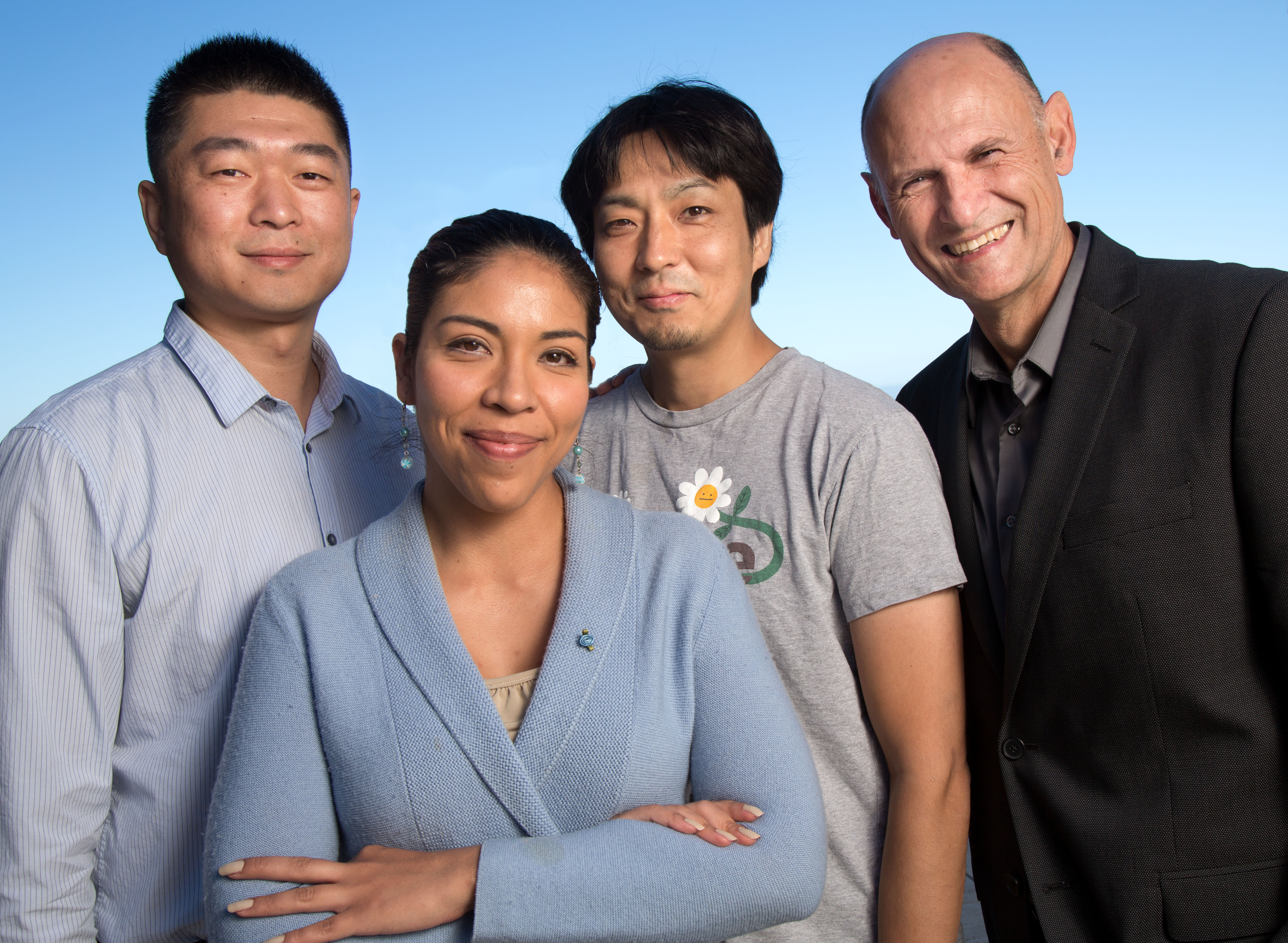
“We are very excited by the technology we discovered because it’s something that could not be done before,” says 胡安·卡洛斯·伊兹皮苏亚·贝尔蒙特, a professor in Salk’s Gene Expression Laboratory and senior author of the paper published on November 16, 2016 in 自然. “For the first time, we can enter into cells that do not divide and modify the DNA at will. The possible applications of this discovery are vast.”
Until now, techniques that modify DNA—such as the CRISPR-Cas9 system—have been most effective in dividing cells, such as those in skin or the gut, using the cells’ normal copying mechanisms. The new Salk technology is ten times more efficient than other methods at incorporating new DNA into cultures of dividing cells, making it a promising tool for both research and medicine. But, more importantly, the Salk technique represents the first time scientists have managed to insert a new gene into a precise DNA location in adult cells that no longer divide, such as those of the eye, brain, pancreas or heart, offering new possibilities for therapeutic applications in these cells.
To achieve this, the Salk researchers targeted a DNA-repair cellular pathway called NHEJ (for “non-homologous end-joining”), which repairs routine DNA breaks by rejoining the original strand ends. They paired this process with existing gene-editing technology to successfully place new DNA into a precise location in non-dividing cells.
点击此处 用于高分辨率图像
版权:萨克研究所
“Using this NHEJ pathway to insert entirely new DNA is revolutionary for editing the genome in live adult organisms,” says Keiichiro Suzuki, a senior research associate in the Izpisua Belmonte lab and one of the paper’s lead authors. “No one has done this before.”
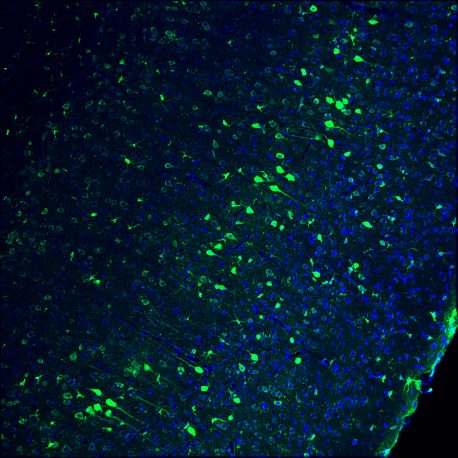
First, the Salk team worked on optimizing the NHEJ machinery for use with the CRISPR-Cas9 system, which allows DNA to be inserted at very precise locations within the genome. The team created a custom insertion package made up of a nucleic acid cocktail, which they call HITI, or homology-independent targeted integration. Then they used an inert virus to deliver HITI’s package of genetic instructions to neurons derived from human embryonic stem cells.
“That was the first indication that HITI might work in non-dividing cells,” says Jun Wu, staff scientist and co-lead author. With that feat under their belts, the team then successfully delivered the construct to the brains of adult mice. Finally, to explore the possibility of using HITI for gene-replacement therapy, the team tested the technique on a rat model for retinitis pigmentosa, an inherited retinal degeneration condition that causes blindness in humans. This time, the team used HITI to deliver to the eyes of 3-week-old rats a functional copy of Mertk, one of the genes that is damaged in retinitis pigmentosa. Analysis performed when the rats were 8 weeks old showed that the animals were able to respond to light, and passed several tests indicating healing in their retinal cells.
“We were able to improve the vision of these blind rats,” says co-lead author Reyna Hernandez-Benitez, a Salk research associate. “This early success suggests that this technology is very promising.”
The team’s next steps will be to improve the delivery efficiency of the HITI construct. As with all genome editing technologies, getting enough cells to incorporate the new DNA is a challenge. The beauty of HITI technology is that it is adaptable to any targeted genome engineering system, not just CRISPR-Cas9. Thus, as the safety and efficiency of these systems improve, so too will the usefulness of HITI.
点击此处 用于高分辨率图像。.
版权:萨克研究所
“We now have a technology that allows us to modify the DNA of non-dividing cells, to fix broken genes in the brain, heart and liver,” says Izpisua Belmonte. “It allows us for the first time to be able to dream of curing diseases that we couldn’t before, which is exciting.”
Other researchers on the study were Euiseok J. Kim, Fumiyuki Hatanaka, Mako Yamamoto, Toshikazu Araoka, Masakazu Kurita, Tomoaki Hishida, Mo Li, Emi Aizawa, April Goebl, Rupa Devi Soligalla, Concepcion Rodriguez Esteban, Travis Berggren and Edward M. Callaway of the Salk Institute; Yuji Tsunekawa and Fumio Matsuzaki of RIKEN Center for Developmental Biology; Pierre Magistretti of King Abdullah University of Science and Technology; Jie Zhu, Tingshuai Jiang, Xin Fu, Maryam Jafari and Kang Zhang of Shiley Eye Institute 和 Institute for Genomic Medicine, 加州大学圣迭戈分校; Zhe Li, Shicheng Guo, Song Chen and Kun Zhang of Institute of Engineering in Medicine, University of California San Diego; Jing Qu and Guang-Hui Liu of Chinese Academy of Sciences; Jeronimo Lajara, Estrella Nuñez and Pedro Guillen of Universidad Catolica San Antonio de Murcia; and Josep M. Campistol of the University of Barcelona.
The work and the researchers involved were supported in part by the 美国国立卫生研究院, 利昂娜·M·哈里·B·赫尔姆斯利慈善信托, , 那个 G.哈罗德和莱拉·Y·马瑟斯慈善基金会, The McKnight Foundation, The Moxie Foundation, , 那个 Dr. Pedro Guillen Foundation 和 Universidad Catolica San Antonio de Murcia, Spain.
日记
自然
作者
Keiichiro Suzuki, Yuji Tsunekawa, Reyna Hernandez-Benitez, Jun Wu, Jie Zhu, Euiseok J. Kim, Fumiyuki Hatanaka, Mako Yamamoto, Toshikazu Araoka, Zhe Li, Masakazu Kurita, Tomoaki Hishida, Mo Li, Emi Aizawa, Shicheng Guo, Song Chen, April Goebl, Rupa Devi Soligalla, Jing Qu, Tingshuai Jiang, Xin Fu, Maryam Jafari, Concepcion Rodriguez Esteban, Travis Berggren, Jeronimo Lajara, Estrella Nuñez, Pedro Guillen, Josep M. Campistol, Fumio Matsuzaki, Guang-Hui Liu, Pierre Magistretti, Kun Zhang, Edward M. Callaway, Kang Zhang and Juan Carlos Izpisua Belmonte
宣传办公室
电话:(858) 453-4100
press@salk.edu
萨尔克研究所是一个独立的非营利性研究机构,由首个安全有效的脊髓灰质炎疫苗的研发者乔纳斯·索尔克于1960年创立。该研究所的使命是推动以合作、敢于冒险为特点的基础性研究,以应对癌症、阿尔茨海默病和农业脆弱性等社会最紧迫的挑战。这项基础科学支撑着所有的转化研究,产生有助于全球新药和创新的见解。.