




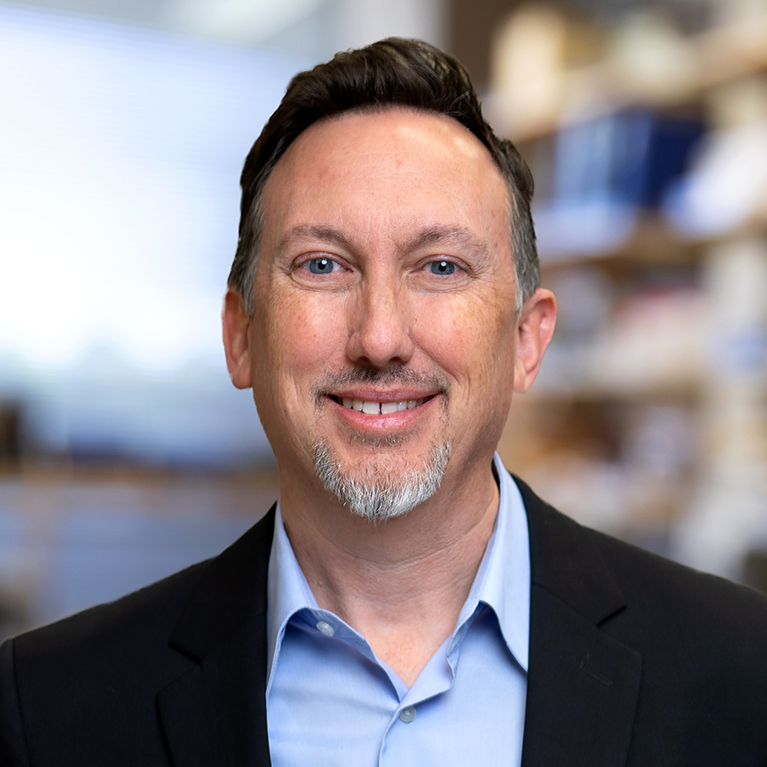
Reuben Shaw, doctor

Profesor

Laboratorio de Biología Molecular y Celular

Director del Centro de Cáncer del Salk designado por el NCI
Cátedra William R. Brody

Instituto Salk de Estudios Biológicos - Vídeos

Videos


Two therapeutic targets identified for deadly lung cancer

The vast majority of deadly lung cancer cases (85 percent) are termed non-small-cell lung carcinomas (NSCLCs), which often contain a mutated gene called LKB1. Salk Institute researchers have now discovered precisely why inactive LKB1 results in cancer development. The surprising results, published in the online version of Cancer Discovery on July 26, 2019, highlight how LBK1 communicates with two enzymes that suppress inflammation in addition to cell growth, to block tumor growth. The findings could lead to new therapies for NSCLC. Leer más »


Genetic “whodunnit” for cancer gene solved

LA JOLLA—Long thought to suppress cancer by slowing cellular metabolism, the protein complex AMPK also seemed to help some tumors grow, confounding researchers. Now, Salk Institute researchers have solved the long-standing mystery around why AMPK can both hinder and help cancer. Read more »


Targeting fat to treat cancer

Fat isn’t just something we eat: it may also lie at the heart of a new approach to treating cancer.

Cells create their own fat molecules to build their plasma membranes and other critical structures. Now, researchers at the Salk Institute, along with academic and industry collaborators, have found a way to obstruct this instrumental process to stifle cancer’s growth, detailed September 19, 2016 in Nature Medicine. Like halting the delivery of supplies to a construction site, the approach stalls the molecular building blocks cancer needs to grow.
Leer más »


Salk scientists discover how mitochondria recover after damage

Salk scientists discover how mitochondria recover after damage, offering clues to cancer, diabetes and brain disease.

Mitochondria, the power generators in our cells, are essential for life. When they are under attack—from poisons, environmental stress or genetic mutations—cells wrench these power stations apart, strip out the damaged pieces and reassemble them into usable mitochondria. Leer más »


Blocking Cellular “Recycling” Destroys Cancer

The Salk Institute and Sanford Burnham Prebys Medical Discovery Institute created a compound that stops a cellular recycling process. Leer más »


Gene Discovery May Stop the Spread of Lung Cancer

A new study by Professor Reuben Shaw of the Salk Institute has found a new gene which may combat the spread of certain types of lung cancers. Leer más »


Diabetes Drug Could Hold Promise for Lung Cancer Patients

Ever since discovering a decade ago that a gene altered in lung cancer regulated an enzyme used in therapies against diabetes, Reuben Shaw has wondered if drugs originally designed to treat metabolic diseases could also work against cancer. Leer más »


“Fasting pathway” points the way to new class of diabetes drugs


HDAC inhibitors may provide a novel way to cut excessive blood glucose levels at the source.

A uniquely collaborative study by researchers at the Salk Institute for Biological Studies uncovered a novel mechanism that turns up glucose production in the liver when blood sugar levels drop, pointing towards a new class of drugs for the treatment of metabolic disease.


Their findings, published in the May 13, 2011, issue of the journal Célula, revealed a crucial role for so called histone deacetylases (HDACs), a group of enzymes that is the target of the latest generation of cancer drugs. Leer más »


Cómo las células con poca energía activan el reciclaje de combustible

Researchers at the Salk Institute for Biological Studies have discovered how AMPK, a metabolic master switch that springs into gear when cells run low on energy, revs up a cellular recycling program to free up essential molecular building blocks in times of need. Leer más »


Educación

BS Biología, Universidad de Cornell
Doctorado en Biología, MIT
Investigador postdoctoral, Harvard Medical School


Premios y distinciones

  • Premio Endeavor de la Mark Foundation para la Investigación del Cáncer, 2022
  • Premio al Investigador Sobresaliente del Instituto Nacional del Cáncer, 2017
  • Investigador Emergente del Howard Hughes Medical Institute, 2009
  • Premio Junior Faculty de la American Diabetes Association, 2008
  • Premio a Investigador de la American Cancer Society, 2007