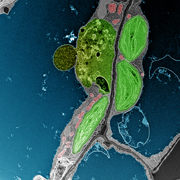
LA JOLLA—Despite seeming passive, plants wage wars with each other to outgrow and absorb sunlight. If a plant is shaded by another, it becomes cut off from essential sunlight it needs to survive.
LA JOLLA—A tiny sliver of a person’s DNA—several thousand times smaller than a typical gene—produces a molecule that has crucial influence over whether a person has any control over their muscles, according to a paper published December 18, 2015 in the journal Wissenschaft.
Salk scientist Reuben Shaw has been named recipient of the William R. Brody Chair in acknowledgement of his outstanding contributions and dedication to scientific research. The chair was dedicated to Salk President William Brody last month on behalf of the Salk Board of Trustees in appreciation of his six years of leadership of the Institute. Brody will retire at the end of this month.
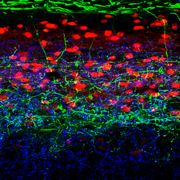
LA JOLLA—How the brain functions is still a black box: scientists aren’t even sure how many kinds of nerve cells exist in the brain. To know how the brain works, they need to know not only what types of nerve cells exist, but also how they work together. Researchers at the Salk Institute have gotten one step closer to unlocking this black box.
LA JOLLA—For the fifth consecutive year, the Salk Institute’s sound fiscal management practices and commitment to accountability and transparency has earned it a 4-star rating from Charity Navigator, America’s largest independent charity and nonprofit evaluator. Receiving four out of a possible four stars for five straight years puts Salk in an elite group of nonprofits.
LA JOLLA—Chronic damage to the liver eventually creates a wound that never heals. This condition, called fibrosis, gradually replaces normal liver cells—which detoxify the food and liquid we consume—with more and more scar tissue until the organ no longer works.
LA JOLLA – Salk-Professor Beverly Emerson has been named a 2015 Fellow of the American Association for the Advancement of Science (AAAS), the world’s largest general scientific society. She earned the recognition for her distinguished contributions to the understanding of the mechanisms by which genes are transcriptionally regulated and how these processes can malfunction to cause disease.
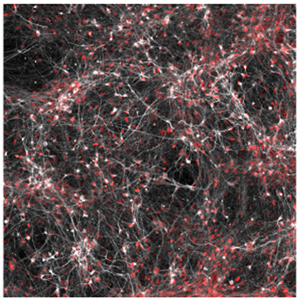
LA JOLLA—Scientists at the Salk Institute have taken human skin cells and turned them into neurons that signal to one another using serotonin, a brain chemical that is crucial to our mental well-being.
LA JOLLA—Diabetes is often the result of obesity and poor diet choices, but for some older adults the disease might simply be a consequence of aging. New research has discovered that diabetes—or insulin resistance—in aged, lean mice has a different cellular cause than the diabetes that results from weight gain (type 2). And the findings point toward a possible cure for what the co-leading scientists, Ronald Evans und Ye Zheng, are now calling a new kind of diabetes (type 4).
LA JOLLA—Nobel Prize-winning scientist Elizabeth Blackburn, a pioneering molecular biologist and highly respected leader in the scientific community, has been named president of the Salk Institute for Biological Studies.
LA JOLLA, CA—The Salk Institute will co-lead a new transatlantic ‘Dream Team’ of researchers that will launch a fresh attack on pancreatic cancer, one of the deadliest forms of cancer on both sides of the Atlantic. Stand Up To Cancer (SU2C), Cancer Research UK, and The Lustgarten Foundation selected the team and will provide $12 million in funding over three years.
LA JOLLA–Salk Institute researchers have found that an experimental drug candidate aimed at combating Alzheimer’s disease has a host of unexpected anti-aging effects in animals.
LA JOLLA–Scientists at the Salk Institute have uncovered a molecule whose mutation leads to the aggressive growth of a common and deadly type of lung Krebs in humans.
LA JOLLA – Angesichts wachsender Bedenken hinsichtlich tödlicher antibiotikaresistenter ‘Superbug’-Bakterienstämme bieten Wissenschaftler am Salk Institute eine mögliche Lösung für das Problem: ‘Superhelden’-Bakterien, die im Darm leben und sich in andere Körperteile bewegen, um lebensbedrohliche Nebenwirkungen von Infektionen zu lindern.
LA JOLLA–An insect lands on your arm, moving the tiny hairs on your skin just enough to make you want to scratch. Salk Institute researchers have uncovered evidence of a dedicated neural pathway that transmits the itchy feeling triggered by such a light touch.
LA JOLLA–The brain cells of patients with bipolar disorder, characterized by severe swings between depression and elation, are more sensitive to stimuli than other people’s brain cells, researchers have discovered.
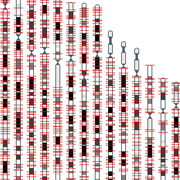
LA JOLLA–Scientists have discovered a previously unknown wellspring of genetic diversity in humans, chimps and most other primates. This diversity arises from a new component of itinerant sections of genetic code known as jumping genes.
LA JOLLA–As food demands rise to unprecedented levels, farmers are in a race against time to grow plants that can withstand environmental challenges–infestation, climate change and more. Now, new research at the Salk Institute, published in Wissenschaft on October 23, 2015, reveals details into a fundamental mechanism of how plants manage their energy intake, which could potentially be harnessed to improve yield.
LA JOLLA–Scientists have unraveled how mutant molecules damage the nervous system of people with Charcot-Marie-Tooth (CMT) disease, a group of disorders that hinder people’s ability to move and feel sensation in their hands and feet, according to a paper published October 21, 2015 in Natur.
LA JOLLA–Salk Fellows Dmitri Lyumkis und Patrick Hsu are among 16 scientists nationwide to receive the Director’s Early Independence Award from the Nationale Gesundheitsinstitute (NIH). The award supports junior scientists in their efforts to pursue innovative approaches to major contemporary challenges in biomedical research. Established in 2011, the Early Independence Award is part of the NIH’s High-Risk, High-Reward Research program, which encourages paradigm-shifting research projects that are inherently risky and untested.