August 10, 2017
Salk and UC San Diego scientists analyzed methylation patterns of neurons to find new subtypes
Salk and UC San Diego scientists analyzed methylation patterns of neurons to find new subtypes
LA JOLLA—Under a microscope, it can be hard to tell the difference between any two neurons, the brain cells that store and process information. So scientists have turned to molecular methods to try to identify groups of neurons with different functions.
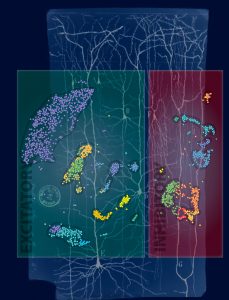
Now, Salk Institute and 加州大学圣迭戈分校 scientists have, for the first time, profiled chemical modifications of DNA molecules in individual neurons, giving the most detailed information yet on what makes one brain cell different from its neighbor. This is a critical step in beginning to identify how many types of neurons exist, which has eluded neuroscientists but could lead to a dramatically better understanding about brain development and dysfunction. Each cell’s methylome—the pattern of chemical markers made up of methyl groups that stud its DNA—gave a distinct readout that helped the Salk team sort neurons into subtypes. The work appears in the journal 科学 on August 10, 2017.
点击此处 用于高分辨率图像。.
Credit: Salk Institute/Jamie Simon
“We think it’s pretty striking that we can tease apart a brain into individual cells, sequence their methylomes, and identify many new cell types along with their gene regulatory elements, the genetic switches that make these neurons distinct from each other,” says co-senior author 约瑟夫·埃克尔, professor and director of Salk’s Genomic Analysis Laboratory and an investigator of the 霍华德·休斯医学研究所.
In the past, to identify what sets different types of neurons apart from each other, researchers have studied levels of RNA molecules inside individual brain cells. But levels of RNA can rapidly change when a cell is exposed to new conditions, or even throughout the day. So the Salk team turned instead to the cells’ methylomes, which are generally stable throughout adulthood.
“Our research shows that we can clearly define neuronal types based on their methylomes,” says 玛格丽塔·贝伦斯, a Salk senior staff-scientist and co-senior author of the new paper. “This opens up the possibility of understanding what makes two neurons—that sit in the same brain region and otherwise look similar—behave differently.”
点击此处 用于高分辨率图像。.
版权:萨克研究所
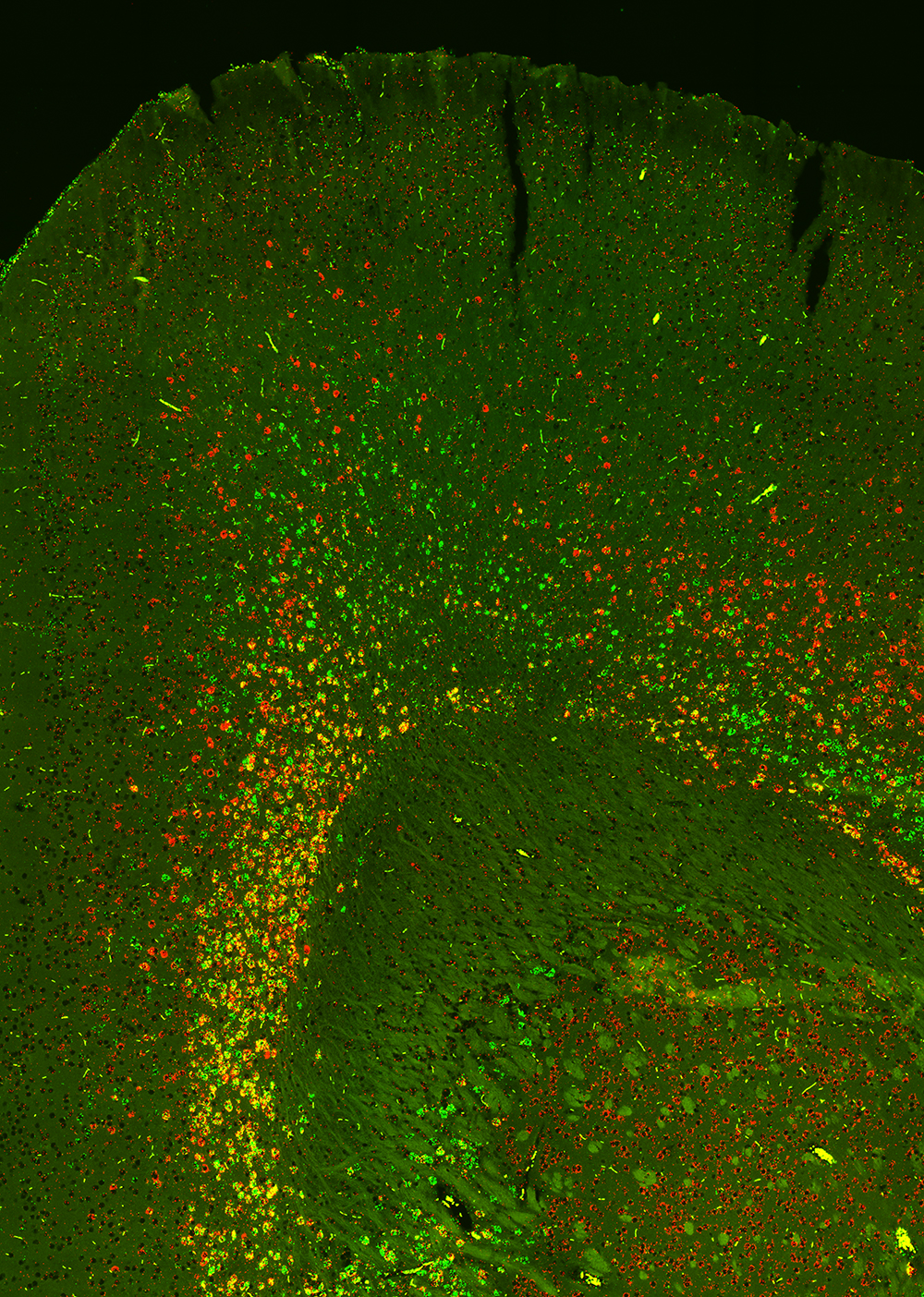
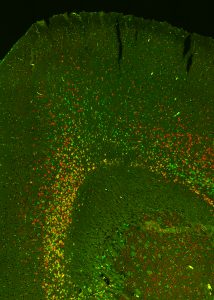
The team began their work on both mouse and human brains by focusing on the frontal cortex, the area of the brain responsible for complex thinking, personality, social behaviors and decision making, among other things. They isolated 3,377 neurons from the frontal cortex of mice and 2,784 neurons from the frontal cortex of a deceased 25-year-old human.
The researchers then used a new method they recently developed called snmC-seq to sequence the methylomes of each cell. Unlike other cells in the body, neurons have two types of methylation, so the approach mapped both types—called CG methylation (for DNA sequence containing the nucleotides cytosine and guanine) and non-CG methylation.
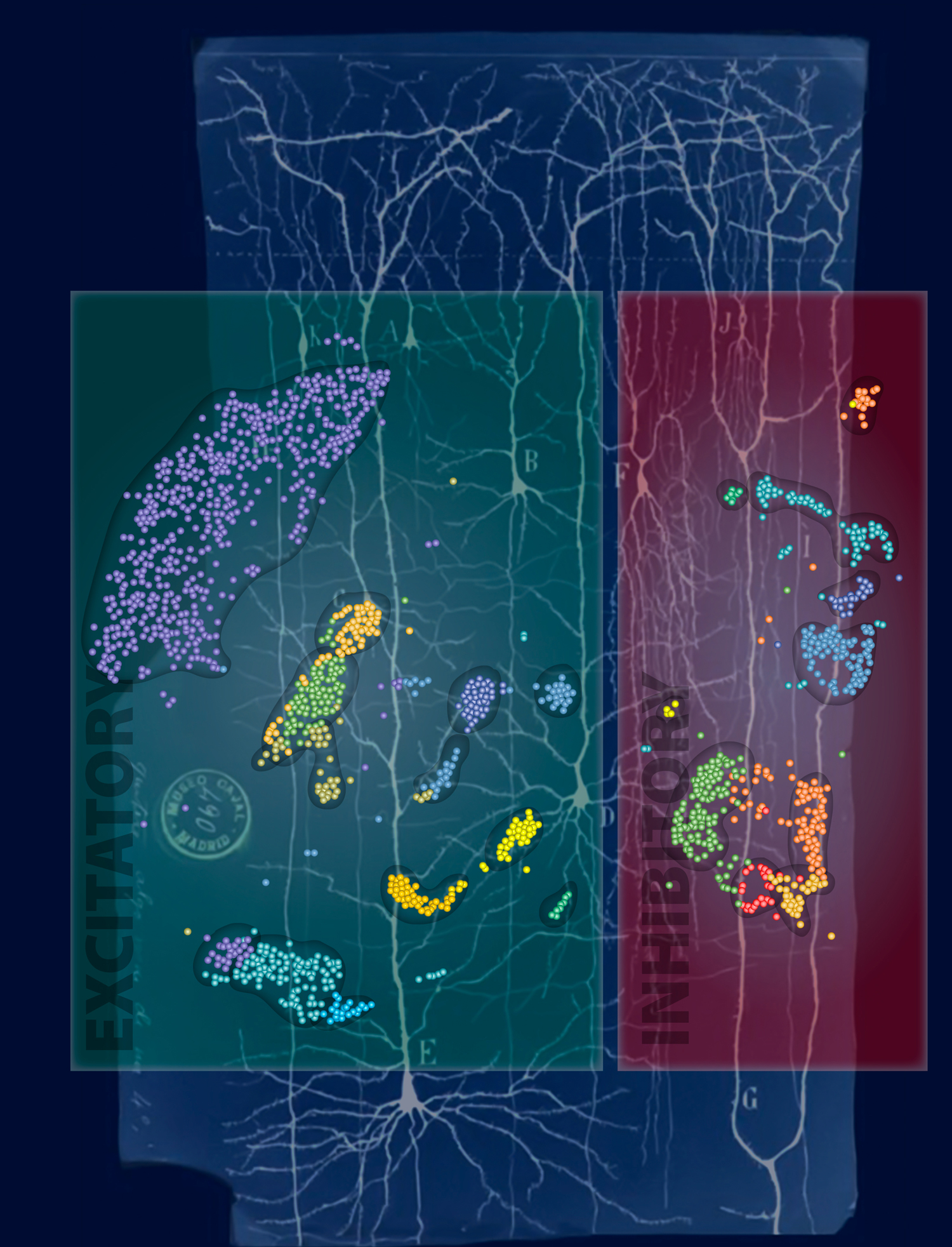
Neurons from the mouse frontal cortex, they found, clustered into 16 subtypes based on methylation patterns, while neurons from the human frontal cortex were more diverse and formed 21 subtypes. Inhibitory neurons—those that provide stop signals for messages in the brain—showed more conserved methylation patterns between mice and humans compared to excitatory neurons. The study also identified unique human neuron subtypes that had never been defined before. These results open the door to a deeper understanding of what sets human brains apart from those of other animals.
“This study opens a new window into the incredible diversity of brain cells,” says Eran Mukamel of the UC San Diego Department of Cognitive Science, a co-senior author of the work.
Next, the researchers plan to expand their methylome study to look at more parts of the brain, and more brains.
点击此处 用于高分辨率图像。.
版权:萨克研究所
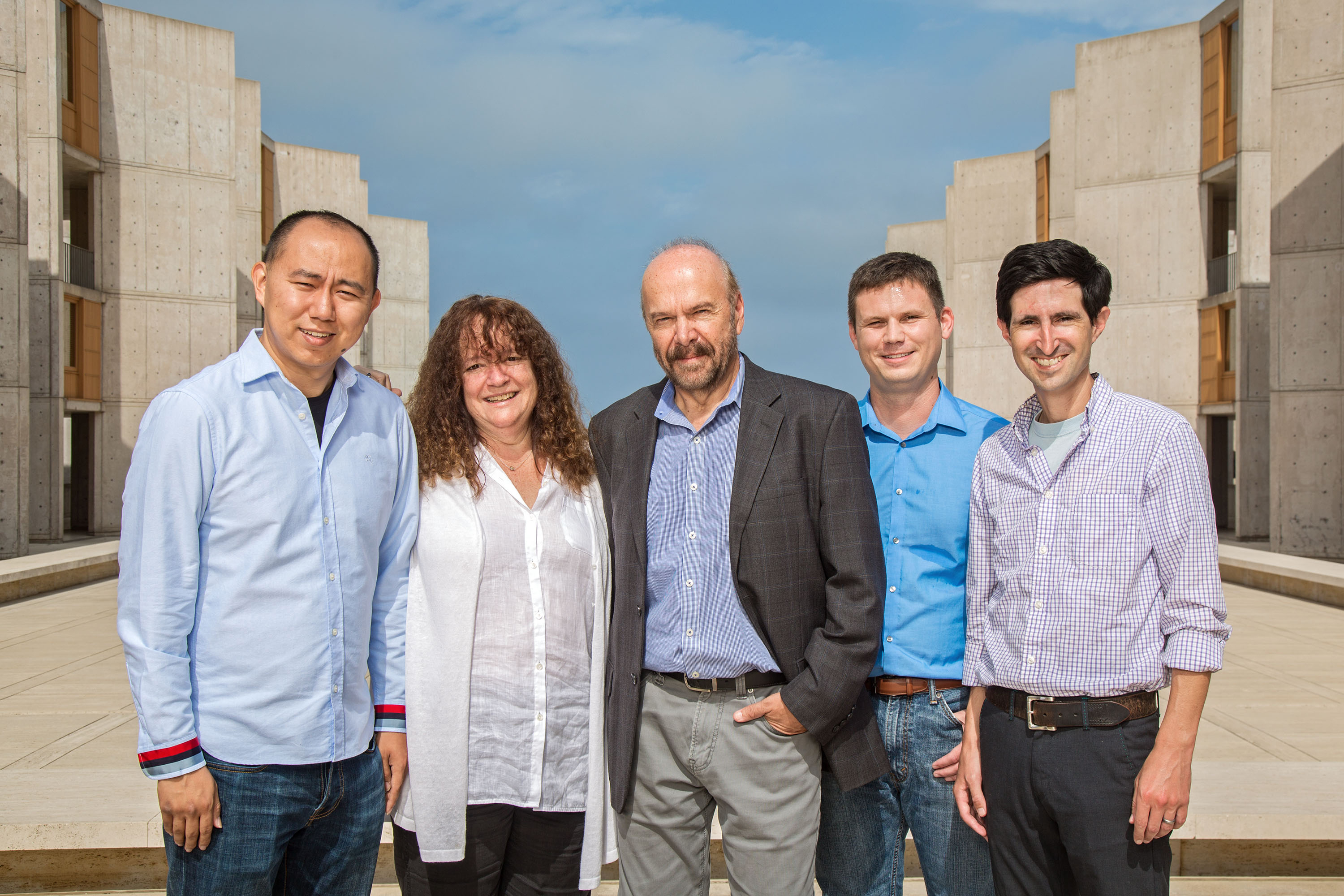
“There are hundreds, if not thousands, of types of brain cells that have different functions and behaviors and it’s important to know what all these types are to understand how the brain works,” says Chongyuan Luo, a Salk research associate and co-first author of the new paper, along with UC San Diego graduate student Christopher Keown. “Our goal is to create a parts list of both mouse and human brains.”
Once that “parts list” is complete, Ecker says they’d also like to begin studying whether the methylomes of neurons in people with brain diseases are different than those from healthy people. “If there’s a defect in just one percent of cells, we should be able to see it with this method,” he says. “Until now, we would have had no chance of picking something up in that small a percentage of cells.”
Other researchers on the study were Jingtian Zhou, Yupeng He, Rosa Castanon, Jacinta Lucero, Joseph Nery, Justin Sandoval, Brian Bui, and Terrence Sejnowski of the Salk Institute; Junhao Li of UC San Diego; and Laurie Kurihara and Timothy Harkins of Swift Biosciences Inc.
这项工作以及参与研究的学者得到了以下机构资助: NIH BRAIN Initiative, , 那个 霍华德·休斯医学研究所, ,和 美国国立卫生研究院.
日记
科学
作者
Chongyuan Luo, Christopher L. Keown, Laurie Kurihara, Jingtian Zhou, Yupeng He, Junhao Li, Rosa Castanon, Jacinta Lucero, Joseph R. Nery, Justin P. Sandoval, Brian Bui, Terrence J. Sejnowski, Timothy T. Harkins, Eran A. Mukamel, M. Margarita Behrens, Joseph R. Ecker
宣传办公室
电话:(858) 453-4100
press@salk.edu
萨尔克研究所是一个独立的非营利性研究机构,由首个安全有效的脊髓灰质炎疫苗的研发者乔纳斯·索尔克于1960年创立。该研究所的使命是推动以合作、敢于冒险为特点的基础性研究,以应对癌症、阿尔茨海默病和农业脆弱性等社会最紧迫的挑战。这项基础科学支撑着所有的转化研究,产生有助于全球新药和创新的见解。.