July 24, 2026
Salk Institute researchers discover that the enzyme acid ceramidase can make aging cells more vulnerable to the cell death pathway ferroptosis and may be a promising target for supporting healthy aging
Salk Institute researchers discover that the enzyme acid ceramidase can make aging cells more vulnerable to the cell death pathway ferroptosis and may be a promising target for supporting healthy aging
LA JOLLA—Our population is aging. The United Nations reports that by 2050, the number of people over the age of 85 on our planet is set to triple. But a longer life span isn’t the same as a longer healthspan (the number of years we spend healthy). Salk Institute scientists are working to change that through foundational research that explores the cellular mechanisms driving age-related dysfunction.
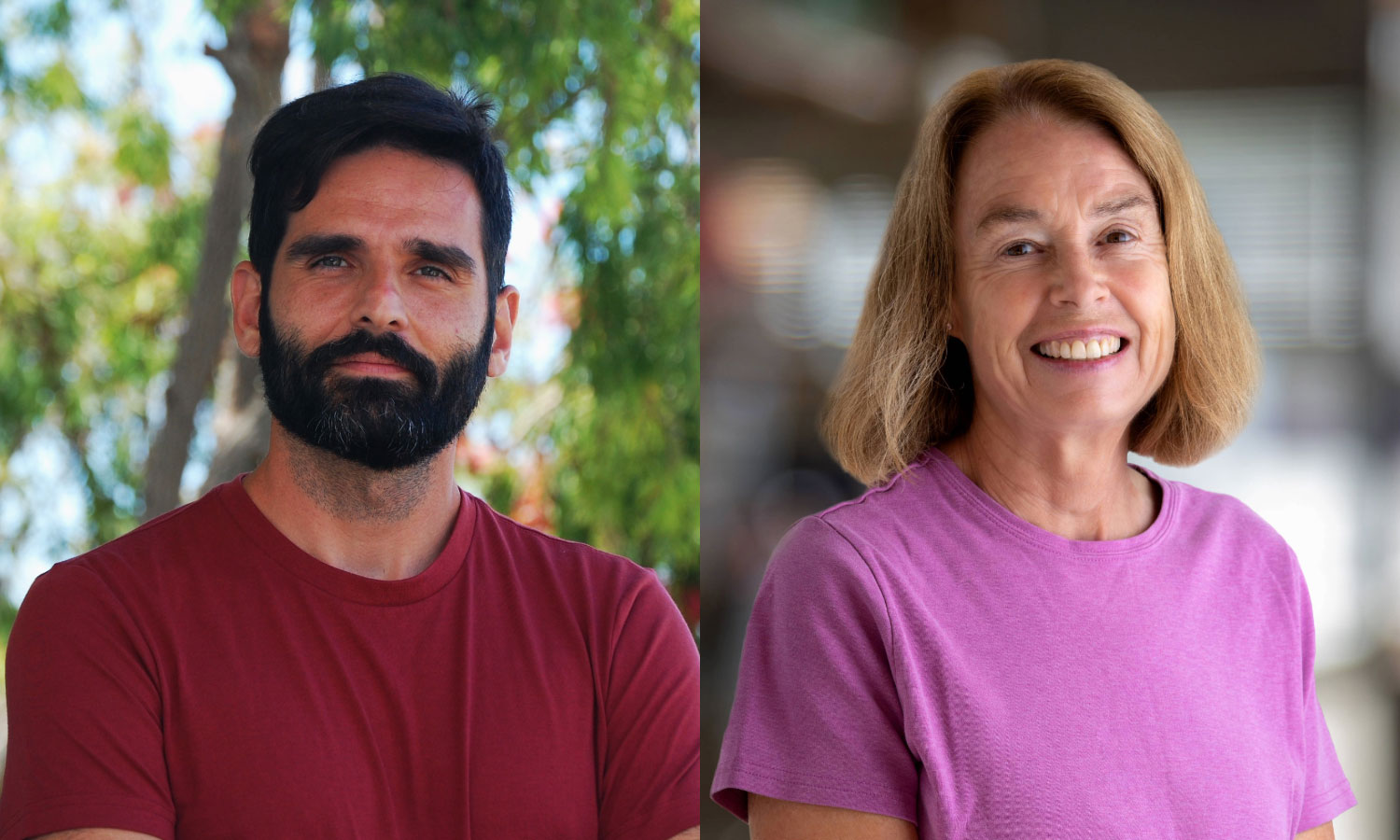
The latest efforts to understand cellular aging look at two processes prevalent in aged cells: 1) senescence, in which cells stop dividing but don’t die, and 2) ferroptosis, in which cells lose their ability to regulate fats and eventually die. While studying human lung cells, the Salk team discovered that elevated levels of the enzyme acid ceramidase make senescent cells more susceptible to ferroptosis and can pass that vulnerability to neighboring cells.
Experimental drugs that target acid ceramidase have already been developed for other therapeutic purposes, demonstrating that acid ceramidase is targetable and lighting the way to future innovation that could extend healthspans.
The study published in Cell Death and Disease on July 10, 2026.
“Senescent cells are linked to many age-related conditions, including arthritis, poor wound healing, and neurodegenerative diseases like Alzheimer’s or Parkinson’s,” says senior and co-corresponding author Pam Maher, PhD, a research professor at Salk. “Our findings are a big milestone in the ongoing public health effort to support healthy aging, as we now have a novel target for developing new therapeutics that could be applied to a multitude of diseases and disorders.”
Maher is the person to ask about ferroptosis—she discovered the cellular pathway and named it (“oxytosis” originally) in 2001. Ferroptosis is an iron-dependent cell death pathway in which the accumulation of lipid peroxides becomes toxic to cells. Healthy cells keep lipid peroxides at steady levels with the help of glutathione, an antioxidant that can stave off ferroptosis.
Recent studies have reinforced links between ferroptosis and Alzheimer’s and Parkinson’s diseases, including another recent study from Maher’s lab. In their recent Cell Death Discovery paper, Maher’s lab discovered that chronic iron overexposure in neurons makes them less resilient over time and more vulnerable to neurodegeneration.
This study is one of many to link ferroptosis to neurodegeneration, as targeting the pathway has become a promising therapeutic strategy for age-related diseases, alongside another growing area of interest: senescence.
Cellular senescence is a biological process in which cells don’t completely die but also aren’t quite alive. Often referred to as “zombie” cells, senescent cells are a hallmark of aging. Though sometimes they are harmless, other times they release harmful factors into surrounding tissues and can promote the development of diseases or disorders, including cancer.
Since ferroptosis and senescence have been independently linked to age-related dysfunction, and both have become promising therapeutic targets for age-related diseases, the Salk team wondered whether there was any overlap in the two cellular processes.
To find an answer, the researchers cultured senescent human lung cells in the lab. Then, they induced ferroptosis in the senescent cells to find they were far more sensitive to the cell death pathway than young, healthy cells. The sensitivity began as senescent cells expressed progressively higher levels of an enzyme (a type of protein that can speed up chemical reactions inside cells) called acid ceramidase.
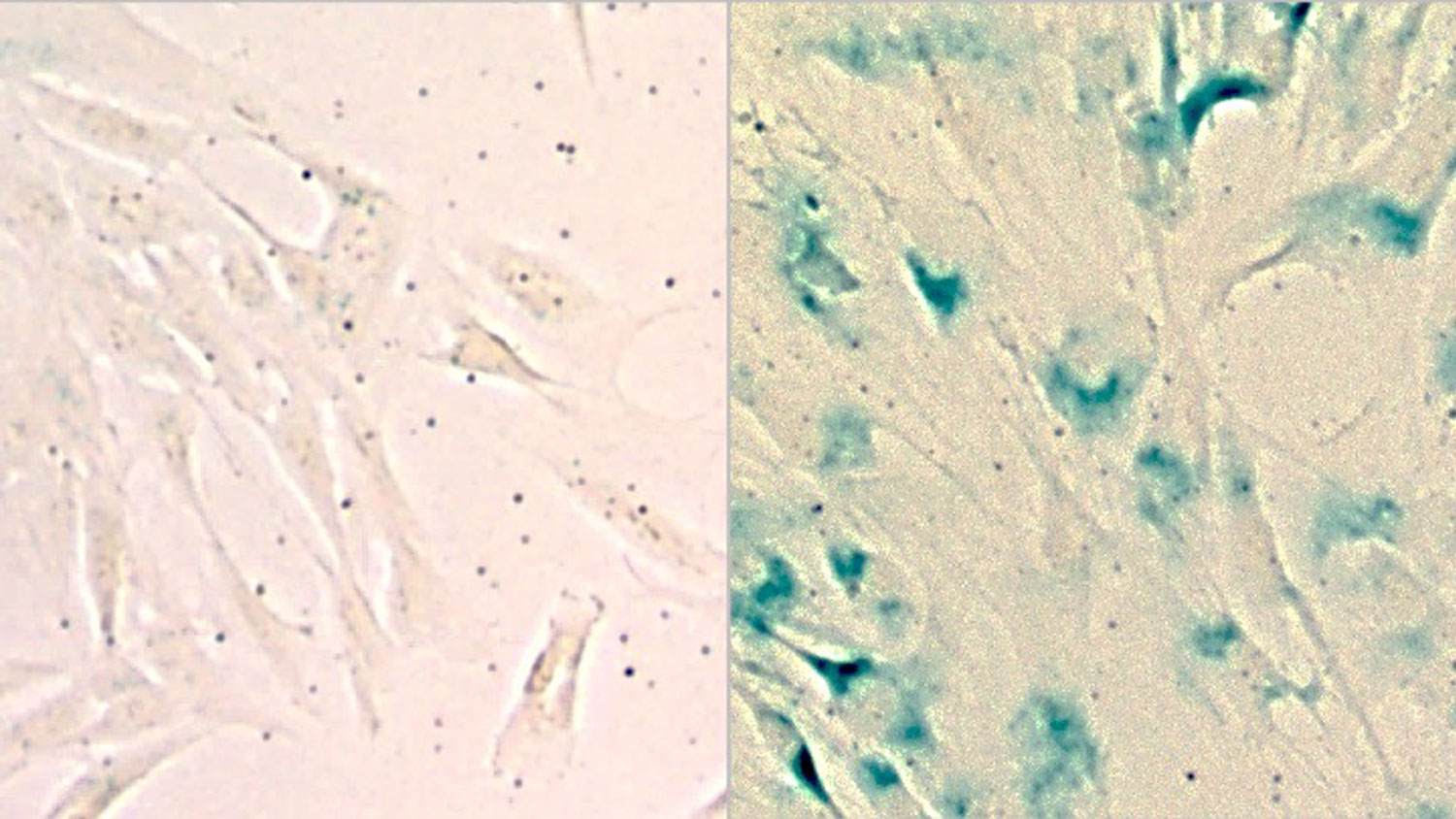
After discovering that excessive acid ceramidase drives cell sensitivity to ferroptosis, the researchers removed the enzyme from senescent and non-senescent cells to see whether its absence would make cells more resilient to induced ferroptosis. And it did. Removal of acid ceramidase from cells protected both young and old cells from ferroptosis.
“This is an entirely novel pathway that is independent of the mechanisms usually associated with ferroptosis-induced cell death, as it doesn’t involve any changes in iron or glutathione levels but instead modulates the lipid metabolism,” says first author David Soriano-Castell, PhD, a postdoctoral researcher in Maher’s lab.
The Salk team also observed something else: Vulnerable senescent cells were able to pass their vulnerability on to neighboring cells. This helps explain why only a few senescent cells can turn into more, ultimately impacting a larger tissue, as time goes on.
“We have unraveled a new mechanistic connection between ferroptosis and senescence,” explains Soriano-Castell. “This gives us a clear target that would eliminate two birds with one stone, eliminating senescent cells and keeping neighboring cells healthy for longer.”
Unrelated to the Salk study, scientists have already developed drugs to target acid ceramidase for the treatment of other diseases in which this enzyme also plays a role. The Salk findings bring forward a new potential use case for these drugs, and the fact that they are already in development is a great proof-of-concept that drugs can, in fact, be designed to target the enzyme.
“This is only the beginning,” says Soriano-Castell. “The next step is finding a more complete pathway and translating into animals and tissues, then clinical trials of our own, and so on. But what is important is that acid ceramidase is targetable, and other labs have already gotten that work started—later on, we can hopefully build on what they learn.”
“The more we learn about ferroptosis,” adds Maher, “the more possibilities there are for healthy aging innovations. This is an exciting time to be studying aging, resilience, and longevity, and I look forward to continuing to see how ferroptosis can be a useful target.”
Other authors include Marie Goujon, Nawab John Dar, and Antonio Currais of Salk.
The work was supported by the National Institutes of Health (AG069206, AG095974) and Bundy Foundation.
This press release was written by Isabella Davis
Contact: press@salk.edu
DOI: 10.1038/s41419-026-09108-y
日记
Cell Death and Disease
作者
David Soriano-Castell, Marie Goujon, Nawab John Dar, Antonio Currais, Pamela Maher
宣传办公室
电话:(858) 453-4100
press@salk.edu
萨尔克研究所是一个独立的非营利性研究机构,由首个安全有效的脊髓灰质炎疫苗的研发者乔纳斯·索尔克于1960年创立。该研究所的使命是推动以合作、敢于冒险为特点的基础性研究,以应对癌症、阿尔茨海默病和农业脆弱性等社会最紧迫的挑战。这项基础科学支撑着所有的转化研究,产生有助于全球新药和创新的见解。.