LA JOLLA, California—Un equipo de científicos, entre los que se encuentran investigadores del Instituto Salk de Estudios Biológicos, ha descubierto que un medicamento utilizado para tratar las aftas bucales parece revertir la obesidad en ratones. Los hallazgos, publicados el 10 de febrero en Nature Medicine, podría dar lugar a nuevos medicamentos para bajar de peso que podrían tener un impacto en las crecientes tasas de obesidad y diabetes en los Estados Unidos.
El medicamento, el amlexanox, lleva más de 15 años en el mercado. En Japón se utilizan diferentes formulaciones del medicamento para tratar el asma, mientras que en Estados Unidos se emplean para tratar las aftas bucales. Se prevé que los ensayos clínicos en humanos para la pérdida de peso comiencen a finales de este año.
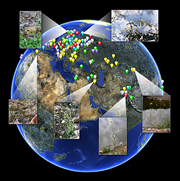
LA JOLLA, CA—Scientists at the Salk Institute for Biological Studies have identified patterns of epigenomic diversity that not only allow plants to adapt to various environments, but could also benefit crop production and the study of human diseases.
Ian Trowbridge, an esteemed researcher who had been a member of the Salk faculty for almost three decades, passed away on Wednesday, February 6.
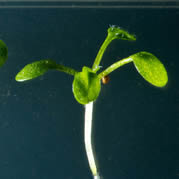
LA JOLLA, CA—You might think you have nothing in common with mustard except hotdogs. Yet based on research in a plant from the mustard family, Salk scientists have discovered a possible explanation for how organisms, including humans, directly regulate chemical reactions that quickly adjust the growth of organs. These findings overturn conventional views of how different body parts coordinate their growth, shedding light on the development of more productive plants and new therapies for metabolic diseases.
LA JOLLA, CA—In this week’s Naturaleza Métodos, Salk researchers share a how-to secret for biologists: code for Amazon Cloud that significantly reduces the time necessary to process data-intensive microscopic images.
LA JOLLA, CA—Ever since discovering a decade ago that a gene altered in lung cancer regulated an enzyme used in therapies against diabetes, Reuben Shaw has wondered if drugs originally designed to treat metabolic diseases could also work against cancer.
LA JOLLA, CA—The Salk Institute for Biological Studies has received a $42 million gift-the largest in the Institute’s history-to establish the Helmsley Center for Genomic Medicine (HCGM), a research center dedicated to decoding the common genetic factors underlying many complex chronic human diseases.
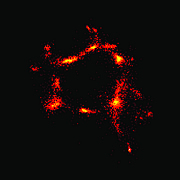
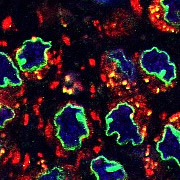
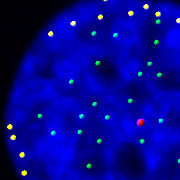
LA JOLLA, CA—For humans to grow and to replace and heal damaged tissues, the body’s cells must continually reproduce, a process known as “cell division,” by which one cell becomes two, two become four, and so on. A key question of biomedical research is how chromosomes, which are duplicated during cell division so that each daughter cell receives an exact copy of a person’s genome, are arranged during this process.
LA JOLLA, CA—When it’s dark, and we start to fall asleep, most of us think we’re tired because our bodies need rest. Yet circadian rhythms affect our bodies not just on a global scale, but at the level of individual organs, and even genes.
LA JOLLA, CA—A new method for generating stem cells from mature cells promises to boost stem cell production in the laboratory, helping to remove a barrier to regenerative medicine therapies that would replace damaged or unhealthy body tissues.
LA JOLLA,CA—Salk faculty members Joseph Ecker and Joseph Noel have been named as 2012 Fellows by the American Association for the Advancement of Science (AAAS), the world’s largest general scientific society and the publisher of the journal Science. Election as an AAAS Fellow is among the highest honors in American science and scholars are selected by their peers for “scientifically or socially distinguished efforts to advance science or its applications,” according to election administrators.
LA JOLLA,CA—The Salk Institute announced today that professors Edward M. Callaway y José Noel have been appointed to endowed chairs in acknowledgment of their outstanding contributions and dedication to scientific research.
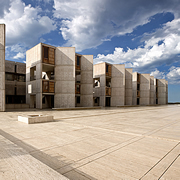
LA JOLLA, CA—The first architecture critic may have been Goldilocks. She complained that some things were too big and some too small, while others were “just right.” Yet how do architects determine what is just right? And why do we feel instantly at home in some spaces, while never feeling right in others?
LA JOLLA, CA—Growing evidence suggests that there may be a link between diabetes y Enfermedad de Alzheimer, but the physiological mechanisms by which diabetes impacts brain function and cognition are not fully understood. In a new study published in Aging Cell, researchers at the Salk Institute for Biological Studies show, for the first time, that diabetes enhances the development of aging features that may underlie early pathological events in Alzheimer’s.
LA JOLLA, CA—Scientists have long believed that glioblastoma multiforme (GBM), the most aggressive type of primary brain tumor, begins in glial cells that make up supportive tissue in the brain or in neural stem cells. In a paper published October 18 in Ciencia, however, researchers at the Salk Institute for Biological Studies have found that the tumors can originate from other types of differentiated cells in the nervous system, including cortical neurons.
LA JOLLA, CA—By reprogramming skin cells from Parkinson’s disease patients with a known genetic mutation, researchers at the Salk Institute for Biological Studies have identified damage to neural stem cells as a powerful player in the disease. The findings, reported online October 17, 2013 in Naturaleza, may lead to new ways to diagnose and treat the disease.
LA JOLLA, CA—Cold viruses generally get a bad rap—which they’ve certainly earned—but new findings by a team of scientists at the Salk Institute for Biological Studies suggest that these viruses might also be a valuable ally in the fight against cancer.
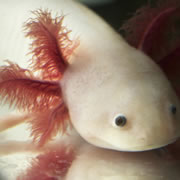
LA JOLLA, CA—Based on two new studies by researchers at the Salk Institute for Biological Studies, regeneration of a new limb or organ in a human will be much more difficult than the mad scientist and supervillain, Dr. Curt Connors, made it seem in the Amazing Spider-man comics and films.
LA JOLLA, CA—Salk scientists have identified a unique molecular signature in induced pluripotent stem cells (iPSCs), “reprogrammed” cells that show great promise in regenerative medicine thanks to their ability to generate a range of body tissues.
LA JOLLA, CA—The Salk Institute announced today that researchers Björn Lillemeier, and Axel Nimmerjahn, have been named recipients of the prestigious 2012 National Institutes of Health (NIH) Director’s New Innovator Award.