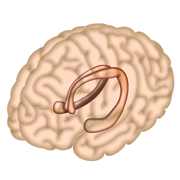
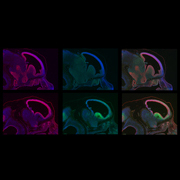
LA JOLLA—Scientists at the Salk Institute have created a new model of memory that explains how neurons retain select memories a few hours after an event.
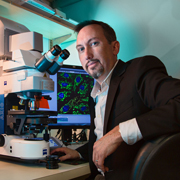
LA JOLLA—Reuben Shaw, a member of the Salk Institute’s Laboratorio de Biología Molecular y Celular and a Howard Hughes Medical Institute early career scientist, has been promoted from associate professor to full professor.
After a rigorous evaluation process by Salk senior faculty, nonresident fellows and scientific peers, the promotion was announced Friday.
LA JOLLA—Scientists at the Salk Institute have uncovered details into a surprising—and crucial—link between brain development and a gene whose mutation is tied to breast and ovarian cancer. Aside from better understanding neurological damage associated in a small percentage of people susceptible to breast cancers, the new work also helps to better understand the evolution of the brain.
LA JOLLA—Janelle Ayres, assistant professor at Salk Institute’s Nomis Foundation Laboratories for Immunobiology and Microbial Pathogenesis, has received the prestigious Searle Scholar award, which each year is given to only 15 researchers in the fields of chemical and biological sciences.
LA JOLLA—Vicki Lundblad, professor of the Salk Institute’s Molecular and Cell Biology Laboratory, has been awarded the Becky and Ralph S. O’Connor Chair and elected a Fellow of the American Academy of Microbiology.
LA JOLLA — A new science outreach program promotes virtual interaction and learning between Salk Institute scientists and students at the Del Mar Hills Academy of Arts and Sciences in Del Mar, California.
LA JOLLA—The Salk Institute for Biological Studies will join Universidad de Stanford in leading a new Center of Excellence in Stem Cell Genomics, created through a $40 million award by California’s stem cell agency, the California Institute for Regenerative Medicine.
LA JOLLA—A chemical that’s found in fruits and vegetables from strawberries to cucumbers appears to stop memory loss that accompanies Enfermedad de Alzheimer in mice, scientists at the Instituto Salk de Estudios Biológicos have discovered. In experiments on mice that normally develop Alzheimer’s symptoms less than a year after birth, a daily dose of the compound—a flavonol called fisetin—prevented the progressive memory and learning impairments. The drug, however, did not alter the formation of amyloid plaques in the brain, accumulations of proteins which are commonly blamed for Alzheimer’s disease. The new finding suggests a way to treat Alzheimer’s symptoms independently of targeting amyloid plaques.
LA JOLLA, CA—Highly diverse cancers share one trait: the capacity for endless cell division. Unregulated growth is due in large part to the fact that tumor cells can rebuild protective ends of their chromosomes, which are made of repeated DNA sequences and proteins. Normally, cell division halts once these structures, called telomeres, wear down. But cancer cells keep on going by deploying one of two strategies to reconstruct telomeres.
LA JOLLA—Fred H. Gage, professor in the Salk Institute’s Laboratory of Genetics and holder of the Vi and John Adler Chair for Research on Age-Related Neurodegenerative Disease, has been elected a Fellow of the National Academy of Inventors (NAI).
LA JOLLA, CA—It takes dozens of chemical reactions for a cell to make isoprenoids, a diverse class of molecules found in every type of living organism. Cholesterol, for example, an important component of the membranes of cells, is a large isoprenoid chemical. The molecule that gives oranges their citrusy smell and taste is an isoprenoid, as is the natural antimalarial drug artemisinin.
LA JOLLA, CA—The Salk Institute is pleased to announce that Alan D. Gold and David F. Hale have been elected to its Board of Trustees.
LA JOLLA, CA—A new approach to mapping how proteins interact with each other, developed at the Salk Institute for Biological Studies, could aid in the design of new drugs for diseases such as diabetes and osteoporosis. By reengineering proteins using artificial amino acids, the Salk scientists determine the detailed molecular structure of a cellular
switch and its ligand, the molecule that turns it on. The switch—corticotrophin releasing factor type 1
(CRF1R)—belongs to a class of cellular receptors whose structures are notoriously hard to determine. These receptors regulate processes throughout the body and are involved in many diseases.
LA JOLLA, CA—Establishing links between genes, the brain and human behavior is a central issue in cognitive neuroscience research, but studying how genes influence cognitive abilities and behavior as the brain develops from childhood to adulthood has proven difficult.
LA JOLLA, CA—Diseases affecting the kidneys represent a major and unsolved health issue worldwide. The kidneys rarely recover function once they are damaged by disease, highlighting the urgent need for better knowledge of kidney development and physiology.
LA JOLLA, CA—It was once thought that each cell in a person’s body possesses the same DNA code and that the particular way the genome is read imparts cell function and defines the individual. For many cell types in our bodies, however, that is an oversimplification. Studies of neuronal genomes published in the past decade have turned up extra or missing chromosomes, or pieces of DNA that can copy and paste themselves throughout the genomes.
LA JOLLA, CA—Researchers at the Salk Institute for Biological Studies have, for the first time, taken chimpanzee and bonobo skin cells and turned them into induced pluripotent stem cells (iPSCs), a type of cell that has the ability to form any other cell or tissue in the body.
LA JOLLA, CA—With the flick of a light switch, researchers at the Salk Institute for Biological Studies can change the shape of a protein in the brain of a mouse, turning on the protein at the precise moment they want. This allows the scientists to observe the exact effect of the protein’s activation. The new method, described in the Oct. 16, 2013, issue of the journal Neurona, relies on specially engineered amino acids—the molecules that make up proteins—and light from an LED. Now that it has been shown to work, the technique can be adapted to give researchers control of a wide variety of other proteins in the brain to study their functions.
LA JOLLA, CA—The National Institutes of Health (NIH) has selected Axel Nimmerjahn for a highly competitive EUREKA (Exceptional Unconventional Research Enabling Knowledge Acceleration) grant. Nimmerjahn is an Assistant Professor in the Centro Waitt de Biofotónica Avanzada and holds the Richard Allan Barry Developmental Chair. The award, in the amount of $1.38M over four years, will support Nimmerjahn’s goal of better understanding the relationship between spinal cord physiology and brain activity and behavior. Data from this research should foster development of new treatment and rehabilitation strategies for spinal cord injury, tumors, infections, and neurodegenerative diseases such as amyotrophic lateral sclerosis (ALS) and spinal muscular dystrophy.
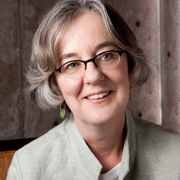
LA JOLLA, CA—The Board of Trustees of the Salk Institute is pleased to announce the election of Elizabeth Keadle as its newest member.