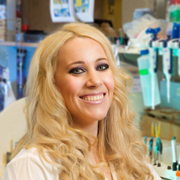
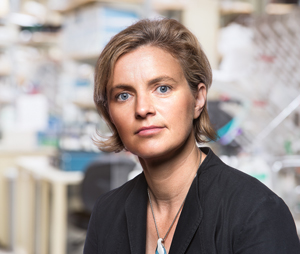
LA JOLLA—Profesor del Salk Beverly Emerson has been named a 2015 Fellow of the American Association for the Advancement of Science (AAAS), the world’s largest general scientific society. She earned the recognition for her distinguished contributions to the understanding of the mechanisms by which genes are transcriptionally regulated and how these processes can malfunction to cause disease.
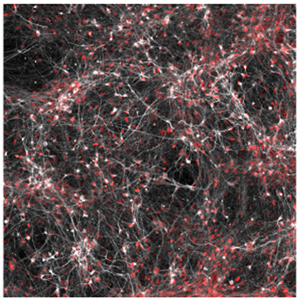
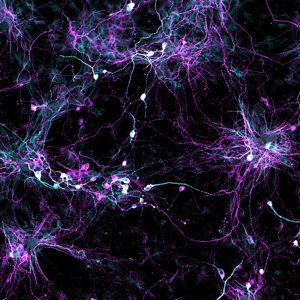
LA JOLLA—Scientists at the Salk Institute have taken human skin cells and turned them into neurons that signal to one another using serotonin, a brain chemical that is crucial to our mental well-being.
LA JOLLA—Diabetes is often the result of obesity and poor diet choices, but for some older adults the disease might simply be a consequence of aging. New research has discovered that diabetes—or insulin resistance—in aged, lean mice has a different cellular cause than the diabetes that results from weight gain (type 2). And the findings point toward a possible cure for what the co-leading scientists, Ronald Evans y Ye Zheng, are now calling a new kind of diabetes (type 4).
LA JOLLA—La científica ganadora del Premio Nobel Elizabeth Blackburn, bióloga molecular pionera y líder muy respetada en la comunidad científica, ha sido nombrada presidenta del Instituto Salk de Estudios Biológicos.
LA JOLLA, CA—The Salk Institute will co-lead a new transatlantic ‘Dream Team’ of researchers that will launch a fresh attack on pancreatic cancer, one of the deadliest forms of cancer on both sides of the Atlantic. Stand Up To Cancer (SU2C), Cancer Research UK, and The Lustgarten Foundation selected the team and will provide $12 million in funding over three years.
LA JOLLA–Salk Institute researchers have found that an experimental drug candidate aimed at combating Alzheimer’s disease has a host of unexpected anti-aging effects in animals.
LA JOLLA–Científicos del Instituto Salk descubrieron una molécula cuya mutación conduce al crecimiento agresivo de un tipo común y mortal de cáncer de pulmón. cáncer en humanos.
LA JOLLA–As concerns over deadly antibiotic-resistant strains of ‘superbug’ bacteria grow, scientists at the Salk Institute are offering a possible solution to the problem: ‘superhero’ bacteria that live in the gut and move to other parts of the body to alleviate life-threatening side effects caused by infections.
LA JOLLA–An insect lands on your arm, moving the tiny hairs on your skin just enough to make you want to scratch. Salk Institute researchers have uncovered evidence of a dedicated neural pathway that transmits the itchy feeling triggered by such a light touch.
LA JOLLA–Las células cerebrales de pacientes con trastorno bipolar, caracterizado por fuertes oscilaciones entre depresión y euforia, son más sensibles a los estímulos que las células cerebrales de otras personas, han descubierto investigadores.
LA JOLLA–Scientists have discovered a previously unknown wellspring of genetic diversity in humans, chimps and most other primates. This diversity arises from a new component of itinerant sections of genetic code known as jumping genes.
LA JOLLA–As food demands rise to unprecedented levels, farmers are in a race against time to grow plants that can withstand environmental challenges–infestation, climate change and more. Now, new research at the Salk Institute, published in Ciencia on October 23, 2015, reveals details into a fundamental mechanism of how plants manage their energy intake, which could potentially be harnessed to improve yield.
LA JOLLA–Scientists have unraveled how mutant molecules damage the nervous system of people with Charcot-Marie-Tooth (CMT) disease, a group of disorders that hinder people’s ability to move and feel sensation in their hands and feet, according to a paper published October 21, 2015 in Naturaleza.
LA JOLLA–Salk Fellows Dmitry Lyumkis y Patrick Hsu are among 16 scientists nationwide to receive the Director’s Early Independence Award from the Institutos Nacionales de Salud (NIH). The award supports junior scientists in their efforts to pursue innovative approaches to major contemporary challenges in biomedical research. Established in 2011, the Early Independence Award is part of the NIH’s High-Risk, High-Reward Research program, which encourages paradigm-shifting research projects that are inherently risky and untested.
LA JOLLA–La Sociedad de Neurociencia La SfN, una organización de casi 40.000 científicos y médicos, otorgará el Premio Swartz de Neurociencia Teórica y Computacional a Terrence Sejnowski, profesor del Instituto Salk y jefe de Laboratorio de Neurobiología Computacional.
LA JOLLA–Salk Institute scientist Janelle Ayres has received an award of $500,000 over two years from the Defense Advanced Research Projects Agency (DARPA) to further her research on bolstering a person’s microbiome to help their body overcome an infection. The award comes with the possibility of an additional $500,000 for a third year.
LA JOLLA–For the first time, scientists can use skin samples from older patients to create brain cells without rolling back the youthfulness clock in the cells first. The new technique, which yields cells resembling those found in older people’s brains, will be a boon to scientists studying age-related diseases like Alzheimer’s and Parkinson’s.
LA JOLLA–As part of a $120 million, 5-year initiative to understand the cell’s nucleus, the Institutos Nacionales de Salud (NIH) has awarded more than $30 million to San Diego researchers, including the Salk Institute and the Universidad de California, San Diego (UC San Diego). Salk Associate Professor Clodagh O’Shea has been awarded a grant of $3 million over 5 years, along with the possibility of tapping into an additional opportunity pool of $3 million each year for the period.
LA JOLLA—The Salk Institute is pleased to announce the appointment of bioengineer Patrick Hsu in the innovative Programa de Becarios Salk. Hsu, who hails from Harvard University and MIT’s Broad Institute, aims to develop the next generation of medical therapeutics by harnessing the gene editing technology known as CRISPR. A gene editing technique originally derived from bacterial immune systems, CRISPR has recently made headlines for its use in modifying DNA with unprecedented ease and accuracy.
LA JOLLA–Breakfast, lunch and dinner? For too many of us, the three meals of the day go more like: morning meeting pastry, mid-afternoon energy drink and midnight pizza. In Metabolismo celular on September 24, Salk Institute scientists present daily food and beverage intake data collected from over 150 participants of a mobile research app over three weeks. They show that a majority of people eat for 15 hours or longer, with less than a quarter of the day’s calories being consumed before noon and over a third consumed after 6 p.m.