LA JOLLA–Four Salk Institute faculty members have been promoted after the latest round of faculty reviews determined they are scientific leaders who have made original, innovative and notable contributions to biological research.
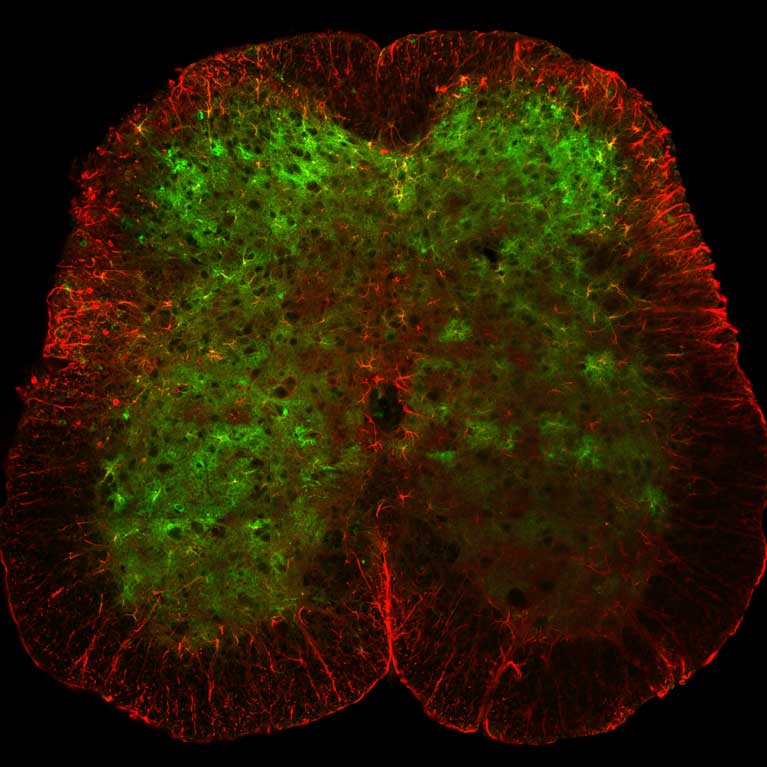
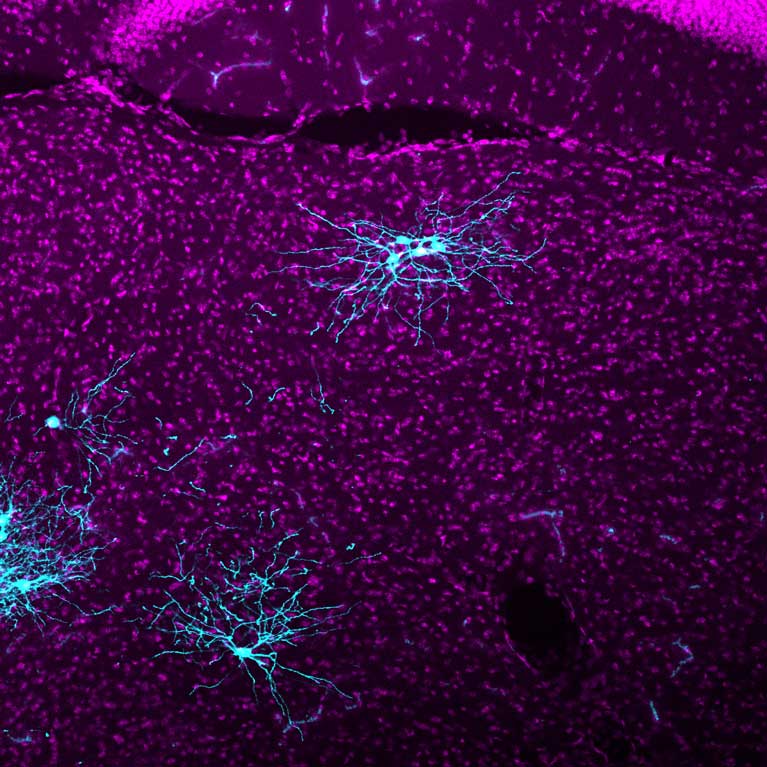
LA JOLLA—A microscope about the size of a penny is giving scientists a new window into the everyday activity of cells within the spinal cord. The innovative technology revealed that astrocytes—cells in the nervous system that do not conduct electrical signals and were traditionally viewed as merely supportive—unexpectedly react to intense sensation.
LA JOLLA—Salk Institute scientists showed how an FDA-approved drug boosts the health of brain cells by limiting their energy use. Like removing unnecessary lighting from a financially strapped household to save on electricity bills, the drug—called rapamycin—prolongs the survival of diseased neurons by forcing them to reduce protein production to conserve cellular energy.
LA JOLLA—(April 25, 2016) Salk scientists have revealed how a cellular “fuel gauge” responsible for monitoring and managing cells’ energy processes also has an unexpected role in development. This critical link could help researchers better understand cancer and diabetes pathways.
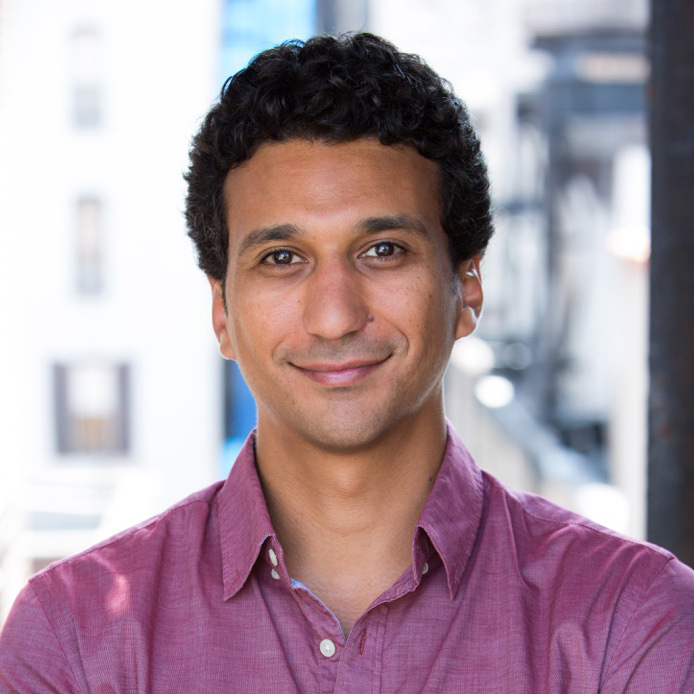
LA JOLLA—Broadening its expertise in neuroscience, the Salk Institute is pleased to announce the appointment of Eiman Azim as an assistant professor in the Molecular Neurobiology Laboratory. He will join the Institute in May.
LA JOLLA-The Salk Institute awarded two American scientists with its prestigious Medal for Research Excellence, a distinction that has only been bestowed twice before in the Institute’s 55-year history. The honorees, who received their awards April 13, independently addressed the Salk community in presentations prior to an awards reception.
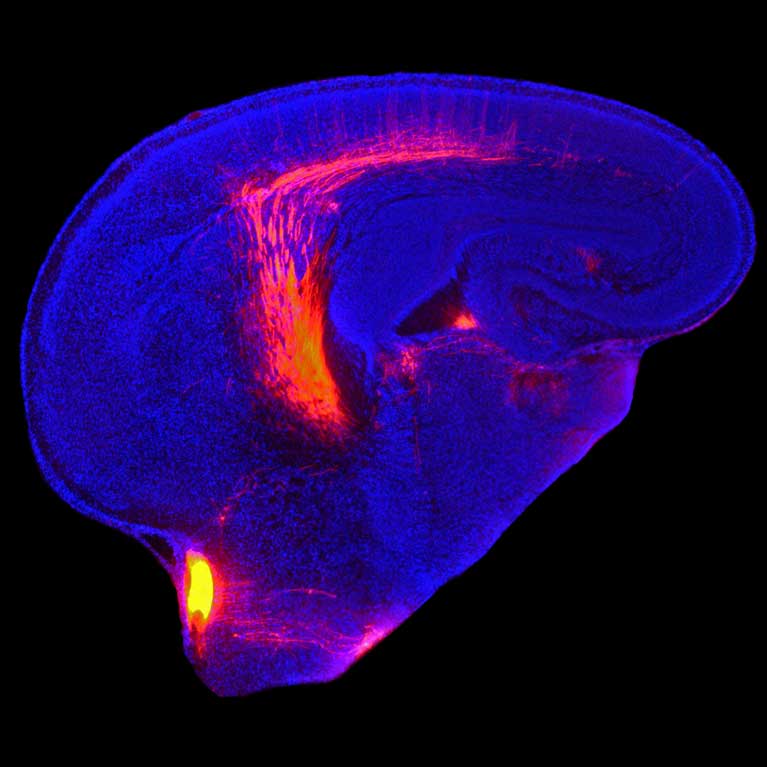
LA JOLLA—Salk Institute scientists have developed a new reagent to map the brain’s complex network of connections that is 20 times more efficient than their previous version. This tool improves upon a technique called rabies virus tracing, which was originally developed in the Callaway lab at Salk and is commonly used to map neural connections.
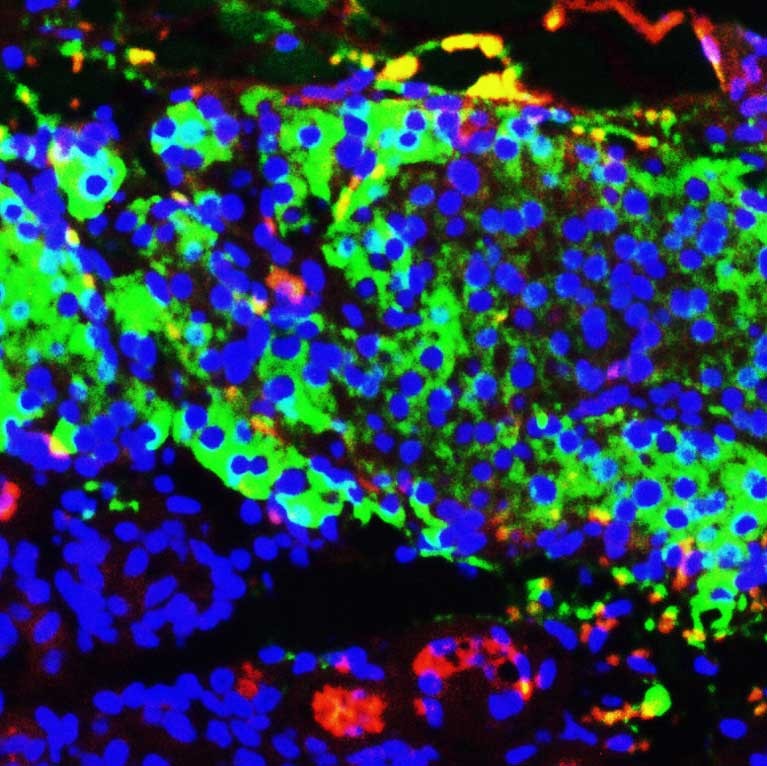
LA JOLLA—Salk scientists have solved a longstanding problem in the effort to create replacement cells for diabetic patients. The team uncovered a hidden energy switch that, when flipped, powers up pancreatic cells to respond to glucose, a step that eluded previous research. The result is the production of hundreds of millions of lab-produced human beta cells—able to relieve diabetes in mice.
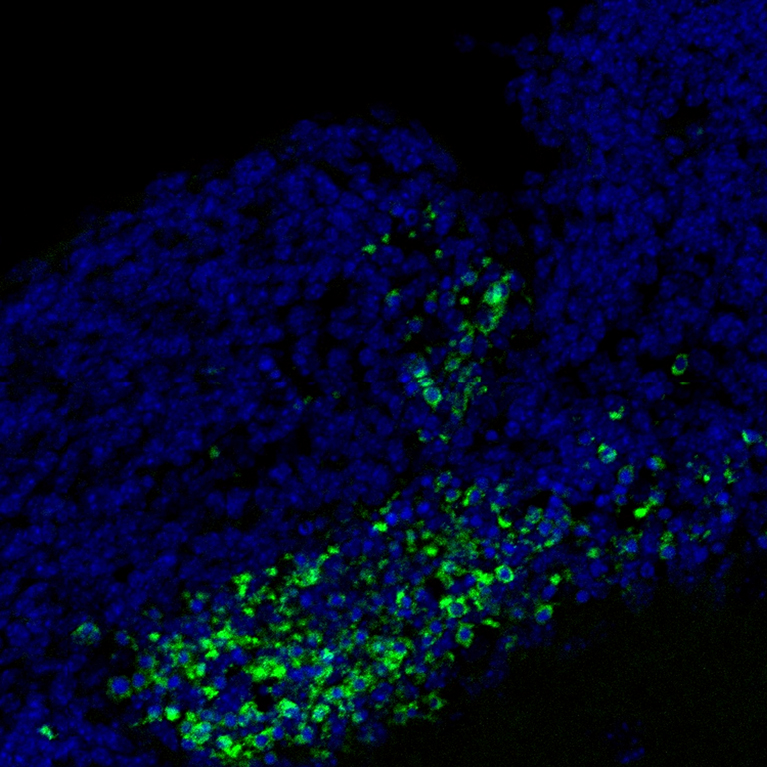
LA JOLLA—By adolescence, your brain already contains most of the neurons that you’ll have for the rest of your life. But a few regions continue to grow new nerve cells—and require the services of cellular sentinels, specialized immune cells that keep the brain safe by getting rid of dead or dysfunctional cells.
LA JOLLA—A team led by scientists at El Instituto Scripps de Investigación (TSRI) and the Salk Institute for Biological Studies has discovered two enzymes that appear to play a role in metabolism and inflammation—and might someday be targeted with drugs to treat type 2 diabetes and inflammatory disorders.
LA JOLLA—Distinguished Salk Institute Professor Rusty Gage is one of four new members to be elected to the Academia Nacional de Ciencias (NAS) Governing Council. Gage is a professor in Salk’s Laboratory of Genetics and holds the Vi and John Adler Chair for Research on Age-Related Neurodegenerative Disease.
El Instituto Salk abrirá sus puertas al público el sábado 16 de abril para la cuarta edición anual Explora Salk, la jornada de puertas abiertas anual a la comunidad del Instituto. Además de recorridos guiados por laboratorios y stands de ciencia, el evento de este año presenta una charla del nuevo presidente de Salk, el premio Nobel Dra. Elizabeth Blackburn, titulado “No te vendas barato”.”
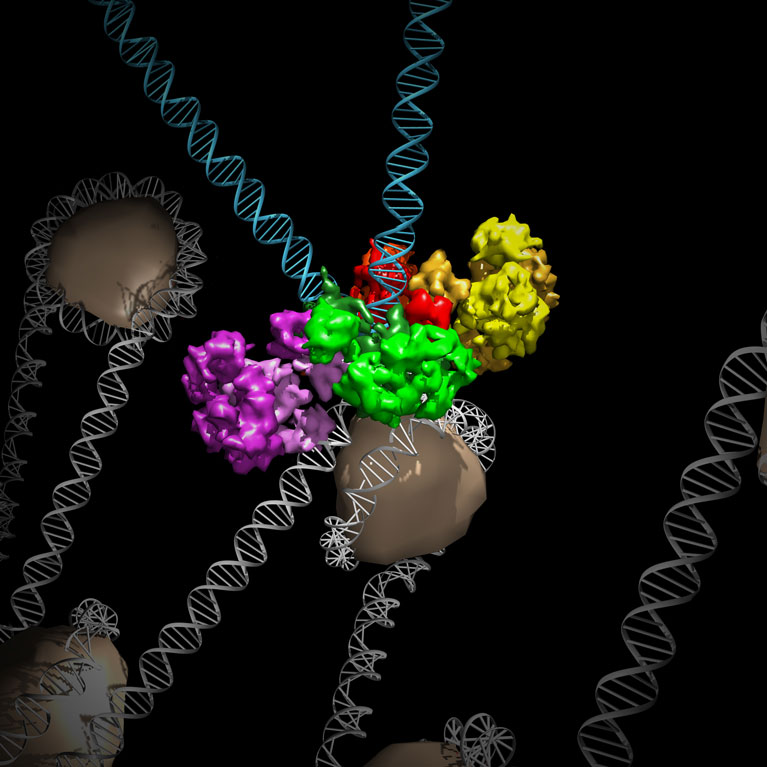
LA JOLLA—Using cutting-edge imaging technology, Salk Institute and Escuela de Medicina de Harvard researchers have determined the structure of a protein complex that lets viruses similar to the human immunodeficiency virus (HIV) establish permanent infections within their hosts.
LA JOLLA—When you stare in puzzlement at an optical illusion, two distinct parts of the neocortex in your brain are hard at work: the primary visual cortex is receiving information on what your eyes see, and the surrounding higher order visual areas are trying to interpret that tricky amalgam of information. These two areas, though, are linked in more ways than just function—the same gene controls the size of each area, Salk researchers led by Dennis O’Leary have now discovered.
Salk Institute scientists Joanne Chory, Joseph Ecker y Rusty Gage have been named to the 2015 list of “The World’s Most Influential Scientific Minds” by Thomson Reuters.
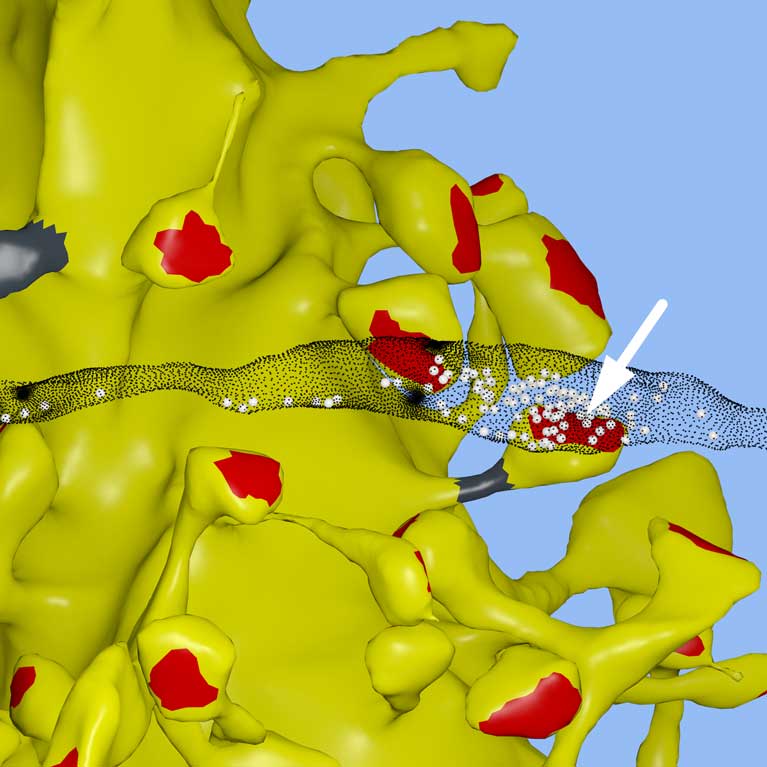
LA JOLLA — Investigadores del Salk y colaboradores han obtenido información crítica sobre el tamaño de las conexiones neuronales, lo que sitúa la capacidad de memoria del cerebro mucho más allá de las estimaciones comunes. El nuevo trabajo también responde a una pregunta de mucho tiempo sobre cómo el cerebro es tan eficiente energéticamente y podría ayudar a los ingenieros a construir computadoras increíblemente potentes pero que también conservan energía.
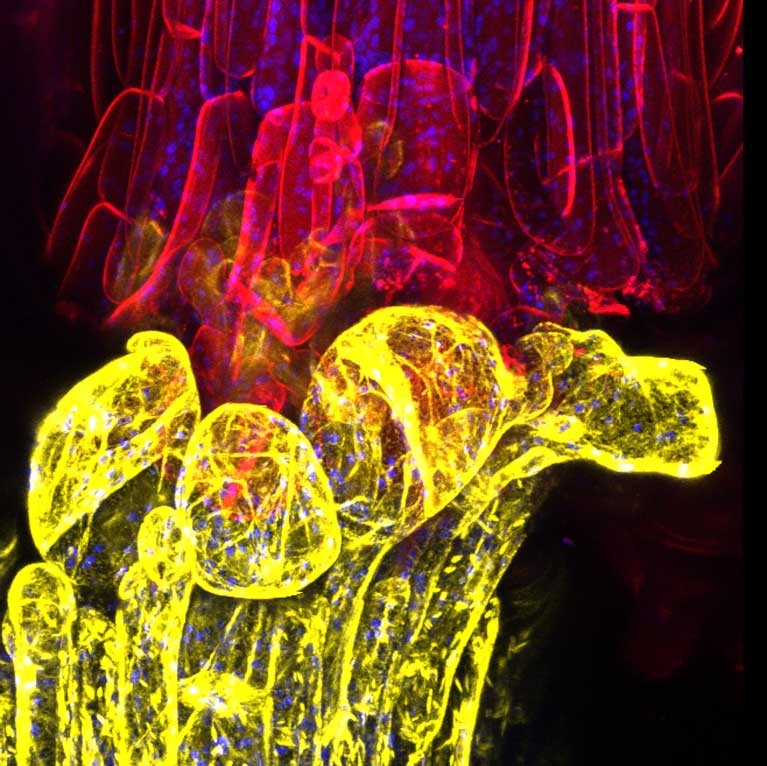
LA JOLLA—Agricultural grafting dates back nearly 3,000 years. By trial and error, people from ancient China to ancient Greece realized that joining a cut branch from one plant onto the stalk of another could improve the quality of crops.
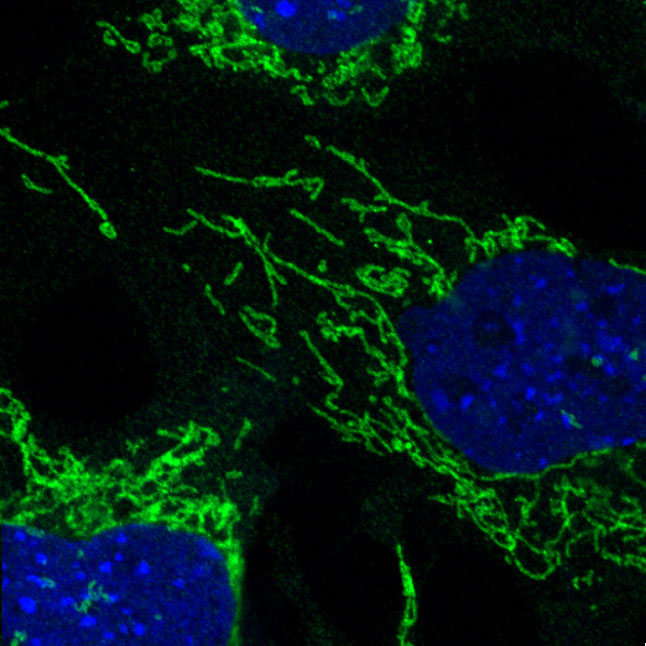
LA JOLLA—Mitochondria, the power generators in our cells, are essential for life. When they are under attack—from poisons, environmental stress or genetic mutations—cells wrench these power stations apart, strip out the damaged pieces and reassemble them into usable mitochondria.
LA JOLLA—A gene linked to mental disorders helps lays the foundation for a crucial brain structure during prenatal development, according to Salk Institute research published January 14, 2016 in Cell Reports.
LA JOLLA-On December 4, the Salk Institute Consejo de Administración unanimously voted to elect three new trustees to the board: International business executive Markus Reinhard, philanthropist Haeyoung Kong Tang and chemist Terry Rosen.