7. Juli 2014
LA JOLLA—The Salk Institute is pleased to welcome a new full professor and three new assistant professors, all exceptional leaders in their respective fields. The new faculty will facilitate innovative and collaborative breakthroughs in understanding human health and disease.
“The Salk Institute’s efforts in groundbreaking and inventive work targeting some of our most pressing research and disease questions will be greatly enhanced by these outstanding researchers,” says Salk President William R. Brody. “We could not be more pleased to welcome such accomplished scientists.”
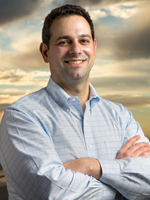
Alan Saghatelian, Professor – Clayton Foundations Laboratories for Peptide Biology
Alan Saghatelian, whose appointment was announced last fall, joined the Institute on July 1 as a professor in the Clayton Foundation Laboratorien für Peptidbiologie. Saghatelian’s lab focuses on the biology of metabolites and peptides, two classes of molecules that are extremely important in disease—particularly Diabetes, Krebs and autoimmune disease—but are understudied because of technical challenges.
Saghatelian developed new mass spectrometry methods that enable his lab to measure changes in these molecules, which could accelerate the development of novel medicines. Saghatelian plans to integrate these new methods into many areas of research through cross-disciplinary collaborations aimed at discovering new targets for disease therapy. By identifying how key metabolic hormones that control blood glucose levels are processed, for example, Saghatelian and his colleague developed a drug-like compound that improves blood glucose in mice.
Saghatelian, who comes to the Salk from Harvard University, was previously awarded a Sloan Foundation Fellowship, a Searle Scholars Program Award, a New Innovator Award from the Nationale Gesundheitsinstitute and a Burroughs Wellcome Fund Career Award in Biomedical Sciences. He attended University of California, Los Angeles for his undergraduate work in chemistry and pursued his graduate degree and postgraduate work at Das Scripps Research Institute.
Assistant Professors
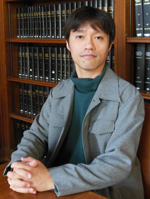
Kenta Asahina, Assistant Professor – Molecular Neurobiology Laboratory
Kenta Asahina will join the Labor für molekulare Neurobiologie as an assistant professor. He is currently a postdoctoral scientist working with David Anderson at the California Institute of Technology where he strives to understand the connection between gene functions, the nervous system and social behavior. In particular, his work on aggression in fruit flies with Anderson garnered attention from the New York Times. Asahina received his undergraduate degree from the University of Tokyo and his PhD in neurobiology from the Rockefeller University.
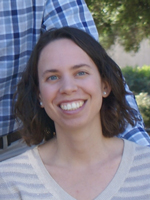
Diana Hargreaves, Assistant Professor – Cancer Research Center
Diana Hargreaves will be an assistant professor in the Cancer Research Center. She is a postdoctoral research fellow in pathology at the Stanford School of Medicine, where she is exploring the tumor suppressor mechanism of several epigenetic regulators recently identified in genome sequencing efforts of primary human tumors. Particularly, she is aiming to uncover how mutations in a complex within a cell’s nucleus contribute to the creation of tumors. She is the recipient of fellowships from the Nationale Wissenschaftsstiftung und Helen Hay Whitney Foundation and received her PhD in immunology at Yale University and her undergraduate degree from Haverford College.
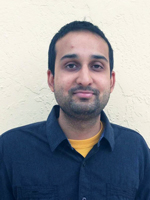
Saket Navlakha, Assistant Professor – Salk Center for Integrative Biology
Saket Navlakha joins the Salk Center for Integrative Biology as an assistant professor. Navlakha, a postdoctoral computer scientist at Carnegie Mellon University, studies “algorithms in nature”—how collections of molecules, cells and organisms communicate, process inputs and coordinate responses to solve problems. He develops algorithms to predict and understand the dynamics and structure of signaling pathways, the evolution of molecular and cellular networks, and the resilience of biological systems in the face of perturbations. He plans to develop collaborations with biologists to create biological network analyses that bridge theoretical computer science and systems biology. Navlakha studied computer science as an undergraduate at Simon’s Rock College und Cornell University and received a PhD in computer science focusing on biological networks at the University of Maryland College Park. In 2013, he received an F32 post-doctoral fellowship award from the NIH.
Über das Salk Institute for Biological Studies:
Das Salk Institute for Biological Studies ist eine der weltweit führenden Institutionen für Grundlagenforschung, an der international anerkannte Fakultätsmitglieder in einem einzigartigen, kollaborativen und kreativen Umfeld grundlegende Fragen der Biowissenschaften erforschen. Mit dem Fokus auf Entdeckungen und die Ausbildung zukünftiger Forschergenerationen leisten Salk-Wissenschaftler bahnbrechende Beiträge zu unserem Verständnis von Krebs, Altern, Alzheimer, Diabetes und Infektionskrankheiten durch die Erforschung von Neurowissenschaften, Genetik, Zell- und Pflanzenbiologie sowie verwandten Disziplinen.
Die Leistungen der Fakultät wurden mit zahlreichen Auszeichnungen gewürdigt, darunter Nobelpreise und Mitgliedschaften in der National Academy of Sciences. Gegründet im Jahr 1960 von Jonas Salk, MD, dem Pionier der Polio-Schluckimpfung, ist das Institut eine unabhängige gemeinnützige Organisation und ein architektonisches Wahrzeichen.
Büro für Kommunikation
Telefon: (858) 453-4100
press@salk.edu