December 15, 2016
New technique rejuvenated organs and helped animals live longer
New technique rejuvenated organs and helped animals live longer
LA JOLLA—Graying hair, crow’s feet, an injury that’s taking longer to heal than when we were 20—faced with the unmistakable signs of aging, most of us have had a least one fantasy of turning back time. Now, scientists at the Salk Institute have found that intermittent expression of genes normally associated with an embryonic state can reverse the hallmarks of old age.
This approach, which not only prompted human skin cells in a dish to look and behave young again, also resulted in the rejuvenation of mice with a premature aging disease, countering signs of aging and increasing the animals’ lifespan by 30 percent. The early-stage work provides insight both into the cellular drivers of aging and possible therapeutic approaches for improving human health and longevity.
“Our study shows that aging may not have to proceed in one single direction,” says 胡安·卡洛斯·伊兹皮苏亚·贝尔蒙特, a professor in Salk’s Gene Expression Laboratory and senior author of the paper appearing in the December 15, 2016, issue of 细胞. “It has plasticity and, with careful modulation, aging might be reversed.”
As people in modern societies live longer, their risk of developing age-related diseases goes up. In fact, data shows that the biggest risk factor for heart disease, cancer and neurodegenerative disorders is simply age. One clue to halting or reversing aging lies in the study of cellular reprogramming, a process in which the expression of four genes known as the Yamanaka factors allows scientists to convert any cell into induced pluripotent stem cells (iPSCs). Like embryonic stem calls, iPSCs are capable of dividing indefinitely and becoming any cell type present in our body.
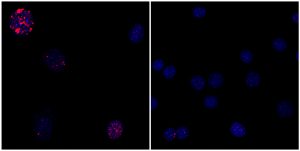
点击此处 用于高分辨率图像
版权:萨克研究所
“What we and other stem-cell labs have observed is that when you induce cellular reprogramming, cells look younger,” says Alejandro Ocampo, a research associate and first author of the paper. “The next question was whether we could induce this rejuvenation process in a live animal.”
While cellular rejuvenation certainly sounds desirable, a process that works for laboratory cells is not necessarily a good idea for an entire organism. For one thing, although rapid cell division is critical in growing embryos, in adults such growth is one of the hallmarks of cancer. For another, having large numbers of cells revert back to embryonic status in an adult could result in organ failure, ultimately leading to death. For these reasons, the Salk team wondered whether they could avoid cancer and improve aging characteristics by inducing the Yamanaka factors for a short period of time.
To find out, the team turned to a rare genetic disease called progeria. Both mice and humans with progeria show many signs of aging including DNA damage, organ dysfunction and dramatically shortened lifespan. Moreover, the chemical marks on DNA responsible for the regulation of genes and protection of our genome, known as epigenetic marks, are prematurely dysregulated in progeria mice and humans. Importantly, epigenetic marks are modified during cellular reprogramming.
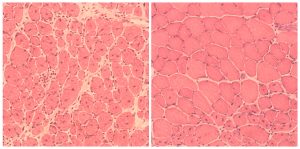
点击此处 用于高分辨率图像。.
版权:萨克研究所
Using skin cells from mice with progeria, the team induced the Yamanaka factors for a short duration. When they examined the cells using standard laboratory methods, the cells showed reversal of multiple aging hallmarks without losing their skin-cell identity.
“In other studies scientists have completely reprogrammed cells all the way back to a stem-cell-like state,” says co-first author Pradeep Reddy, also a Salk research associate. “But we show, for the first time, that by expressing these factors for a short duration you can maintain the cell’s identity while reversing age-associated hallmarks.”
Encouraged by this result, the team used the same short reprogramming method during cyclic periods in live mice with progeria. The results were striking: Compared to untreated mice, the reprogrammed mice looked younger; their cardiovascular and other organ function improved and—most surprising of all—they lived 30 percent longer, yet did not develop cancer. On a cellular level, the animals showed the recovery of molecular aging hallmarks that are affected not only in progeria, but also in normal aging.
“This work shows that epigenetic changes are at least partially driving aging,” says co-first author Paloma Martinez-Redondo, another Salk research associate. “It gives us exciting insights into which pathways could be targeted to delay cellular aging.”
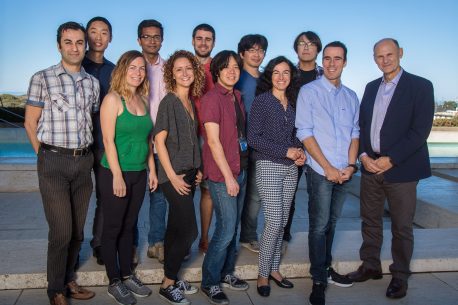
点击此处 用于高分辨率图像。.
版权:萨克研究所
Lastly, the Salk scientists turned their efforts to normal, aged mice. In these animals, the cyclic induction of the Yamanaka factors led to improvement in the regeneration capacity of pancreas and muscle. In this case, injured pancreas and muscle healed faster in aged mice that were reprogrammed, indicating a clear improvement in the quality of life by cellular reprogramming.
“Obviously, mice are not humans and we know it will be much more complex to rejuvenate a person,” says Izpisua Belmonte. “But this study shows that aging is a very dynamic and plastic process, and therefore will be more amenable to therapeutic interventions than what we previously thought.”
The Salk researchers believe that induction of epigenetic changes via chemicals or small molecules may be the most promising approach to achieve rejuvenation in humans. However, they caution that, due to the complexity of aging, these therapies may take up to 10 years to reach clinical trials.
Other authors included: Aida Platero-Luengo, Fumiyuki Hatanaka, Tomoaki Hishida, Mo Li, David Lam, Masakazu Kurita, Ergin Beyret, Toshikazu Araoka, Eric Vazquez-Ferrer, David Donoso, Jose Luis Roman, Jinna Xu and Concepcion Rodriguez of the Salk Institute; Estrella Nuñez Delicado of Universidad Católica San Antonio de Murcia; Gabriel Núñez of the University of Michigan Medical School; Josep Maria Campistol of Hosplital Clinic of Barcelona and Isabel Guillén and Pedro Guillén of Fundación Dr. Pedro Guillén.
The work and the researchers involved were supported in part by a National Institutes of Health Ruth L. Kirschstein National Research Service Award Individual Postdoctoral Fellowship, , 那个 Muscular Dystrophy Association, Fundación Alfonso Martin Escudero, the Hewitt Foundation, the Uehara Memorial Foundation, the Nomis Foundation, ,, JSPS Postdoctoral Fellowship for Research Abroad, , 那个 加州大学圣地亚哥分校, , 那个 G.哈罗德和莱拉·Y·马瑟斯慈善基金会, 利昂娜·M·哈里·B·赫尔姆斯利慈善信托 (2012-PG-MED002), The Glenn Foundation, Universidad Católica San Antonio de Murcia (UCAM) 和 Fundación Dr. Pedro Guillén.
日记
细胞
作者
Alejandro Ocampo, Pradeep Reddy, Paloma Martinez-Redondo, Aida Platero-Luengo, Fumiyuki Hatanaka, Tomoaki Hishida, Mo Li, David Lam, Masakazu Kurita, Ergin Beyret, Toshikazu Araoka, Eric Vazquez-Ferrer, David Donoso, Jose Luis Roman, Jinna Xu, Concepcion Rodriguez, Gabriel Núñez, Estrella Núñez-Delicado, Josep M. Campistol, Isabel Guillén, Pedro Guillén, and Juan Carlos Izpisua Belmonte.
宣传办公室
电话:(858) 453-4100
press@salk.edu
萨尔克研究所是一个独立的非营利性研究机构,由首个安全有效的脊髓灰质炎疫苗的研发者乔纳斯·索尔克于1960年创立。该研究所的使命是推动以合作、敢于冒险为特点的基础性研究,以应对癌症、阿尔茨海默病和农业脆弱性等社会最紧迫的挑战。这项基础科学支撑着所有的转化研究,产生有助于全球新药和创新的见解。.