March 29, 2018
Salk scientist who discovered “on switch” for cancer helps find mechanism that turns it off
Salk scientist who discovered “on switch” for cancer helps find mechanism that turns it off
LA JOLLA—Salk Institute scientists, together with researchers from Switzerland’s University of Basel and University Hospital Basel, discovered a protein called LHPP that acts as a molecular switch to turn off the uncontrolled growth of cells in liver cancer. The tumor suppressor, which could be useful as a biomarker to help diagnose and monitor treatment for liver cancer, could also be relevant for other cancer types. The work appeared in print in the journal 自然 on March 29, 2018, and adds to the growing body of knowledge about cellular processes that either promote or prevent cancer.
点击此处 用于高分辨率图像。.
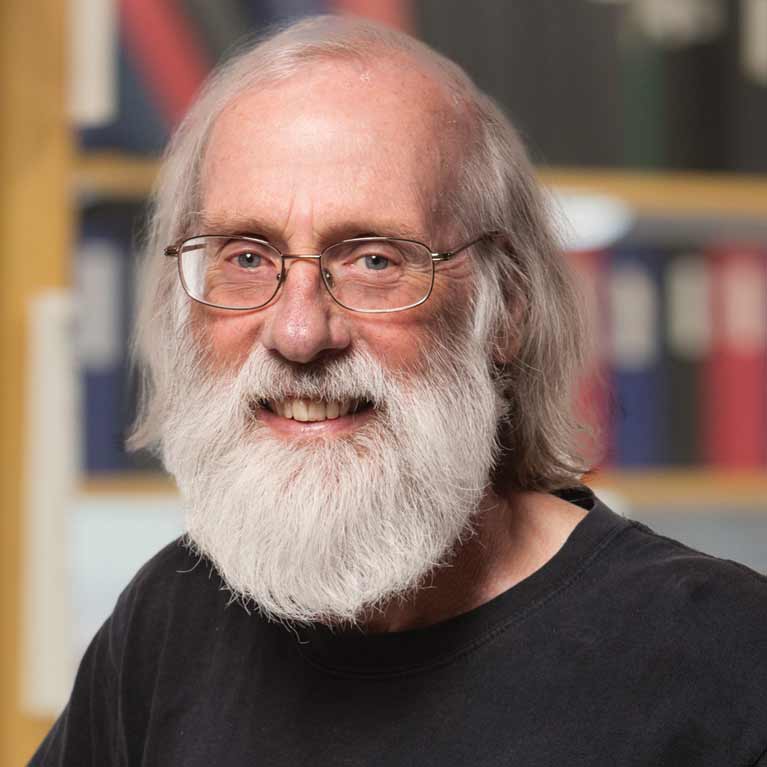
“I think we’ve discovered a new control mechanism for cell proteins that, when disrupted, could be a driver for cancer,” says 托尼·亨特, Salk’s American Cancer Society Professor and an author on the new paper. “It’s exciting because it offers the possibility of new therapeutics or new diagnostics for a cancer that’s basically untreatable—liver cancer—and potentially others, as well.”
Hunter is known for his 1979 discovery of a molecular signaling process called tyrosine phosphorylation. In this process, proteins called kinases attach the chemical phosphate—like a sticky note—to the amino acid tyrosine in target proteins. But, when dysfunctional, tyrosine phosphorylation can also turn on the uncontrolled cell growth that leads to cancer. Hunter’s breakthrough opened the door to the development of a new class of anti-cancer pharmaceuticals called tyrosine kinase inhibitors, including the life-saving leukemia drug Gleevec.
Since then, Hunter’s lab has continued to study the process of phosphorylation, not only in terms of adding phosphates (via kinases or “on switches”) but also removing them (via proteins called phosphatases or “off switches”). In 2015, his team developed an antibody to identify and study phosphates bonded to another amino acid called histidine.
In the new work, the international team, led by Professor Michael Hall of the Biozentrum, University of Basel, examined these switches in a mouse model of the most common form of primary liver cancer—hepatocellular carcinoma. To compare tumor cells with normal cells, the team analyzed more than 4,000 proteins in healthy and diseased liver tissue. By the end, three proteins stood out: the histidine kinases NME1 and NME2 were elevated in tumor cells, and the suspected histidine phosphatase LHPP was deficient.
“It is striking that LHPP is present in healthy tissue and completely absent in tumor tissue,” says Sravanth Hindupur, a postdoctoral researcher at the University of Basel and the paper’s first author. That gave the researchers a clue to explore histidine phosphorylation as a potential cancer target. Indeed, they found that the levels of protein phosphorylated in histidine were significantly higher in the tumor tissue than in normal liver tissue.
NME1 and NME2 are known histidine kinases and LHPP had been suspected to be a histidine phosphatase. With further experiments, the team verified that not only is LHPP a histidine phosphatase, but it is also a tumor suppressor—essentially an “off” switch for cancer. Reintroducing LHPP into the liver of the model mice destined to develop tumors prevented the formation of tumors.
When the researchers next examined samples from human liver tumors, they found a similar pattern: NME1 and 2 levels were high and LHPP was low compared to healthy liver tissue. Furthermore, the Cancer Genome Atlas database, a collection of RNA sequences obtained from different human cancers, showed that a significant fraction of human liver cancers have low levels of LHPP, and that both disease severity and life expectancy are correlated with LHPP levels.
“The parallels between tyrosine phosphorylation and histidine phosphorylation are what really got me interested in the project,” adds Hunter. “Whether this can be used as a therapeutic avenue, I don’t know. But the fact that it could be so disease-relevant motivates me.”
Other authors included: Marco Colombi, Yakir Guri, Marion Cornu, Charles Betz, Suzette Moses and Paul Jenoe of the University of Basel; Stephen R. Fuhs, formerly of Salk and Kevin Adam of Salk; and Mathias S. Matter, Salvatore Piscuoglu, Charlotte K. Y. Ng, Luca Quagliata, Luigi M. Terracciano, and Markus H. Heim of University Hospital Basel.
The work was funded by the Swiss National Foundation, the US Public Health Service, the Louis Jeantet Foundation, SystemsX.ch and the European Research Council.
日记
自然
作者
Sravanth K. Hindupur, Marco Colombi, Stephen R. Fuhs, Matthias S. Matter, Yakir Guri, Kevin Adam, Marion Cornu, Salvatore Piscuoglio, Charlotte K. Y. Ng, Charles Betz, Dritan Liko, Luca Quagliata, Suzette Moes, Paul Jenoe, Luigi M. Terracciano, Markus H. Heim, Tony Hunter and Michael N. Hall
宣传办公室
电话:(858) 453-4100
press@salk.edu
萨尔克研究所是一个独立的非营利性研究机构,由首个安全有效的脊髓灰质炎疫苗的研发者乔纳斯·索尔克于1960年创立。该研究所的使命是推动以合作、敢于冒险为特点的基础性研究,以应对癌症、阿尔茨海默病和农业脆弱性等社会最紧迫的挑战。这项基础科学支撑着所有的转化研究,产生有助于全球新药和创新的见解。.