2026 年 4 月 2 日
New professor will begin at the Institute in September 2026, expanding Salk’s strengths in cancer metabolism and immunology
New professor will begin at the Institute in September 2026, expanding Salk’s strengths in cancer metabolism and immunology
洛杉矶-索尔克研究所聘请全球知名癌症科学家泰勒斯-帕帕吉安纳克普洛斯(Thales “PapaG” Papagiannakopoulos)博士自2026年9月起担任该研究所教授。Papagiannakopoulos 自 2015 年以来一直在纽约大学格罗斯曼医学院任教,目前是纽约大学格罗斯曼医学院病理学系和 Perlmutter 癌症中心的终身副教授。他将为索尔克带来癌症代谢、癌症免疫学和肿瘤-宿主沟通方面的更多专业知识,为索尔克国家癌症研究所(NCI)指定癌症中心内部以及整个研究所的合作开辟新的机遇。.
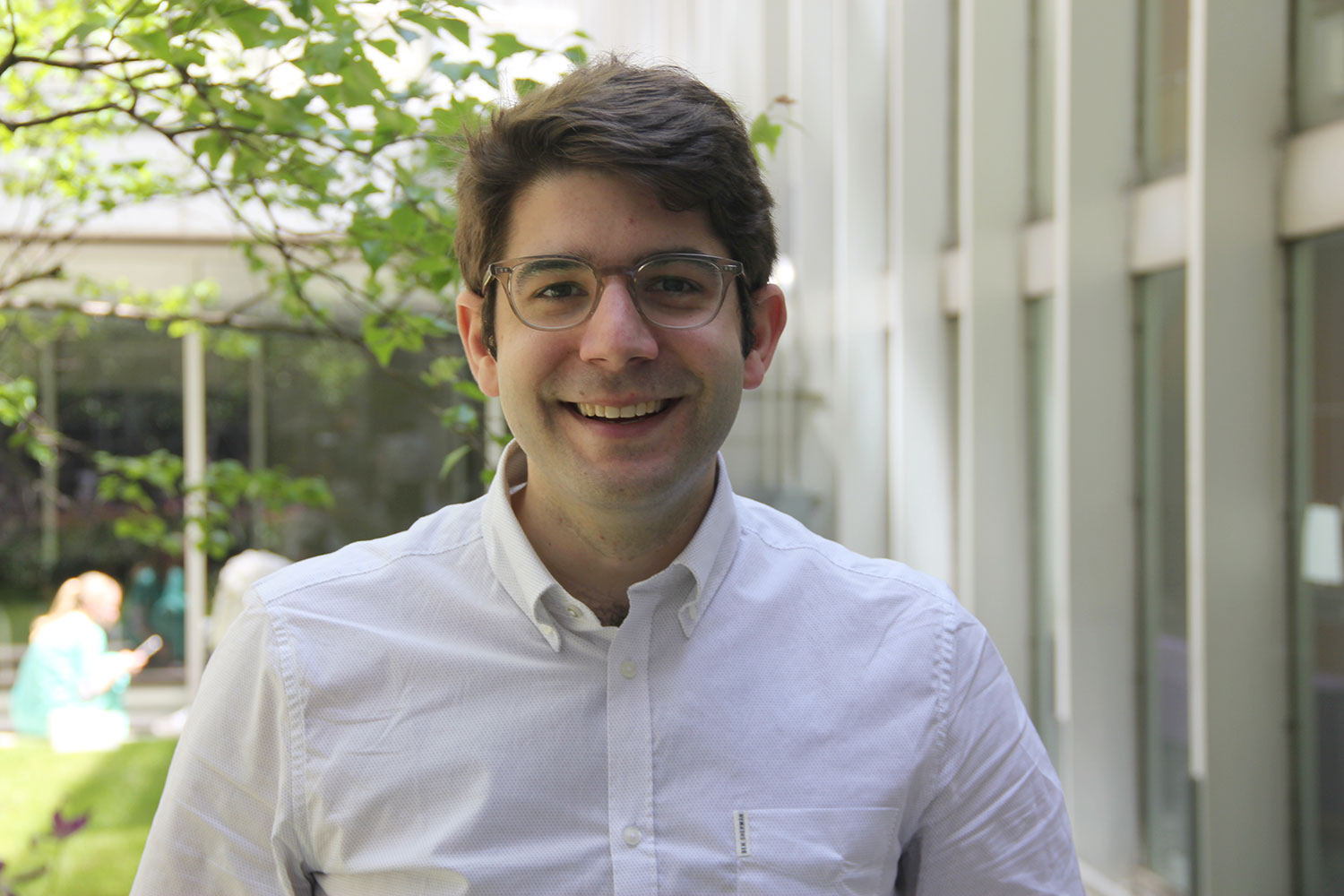
“Thales is the kind of scientist who starts with fundamental questions about cancer initiation and progression and pursues them with creativity, rigor, and an eye for what the field needs next,” says Salk President Gerald Joyce. “His ability to bridge metabolism and immunology exemplifies Salk’s commitment to foundational research that can pave the way for future breakthroughs. We look forward to welcoming him to Salk.”
Papagiannakopoulos studies how tumors adapt under stress by rewiring the way cells use nutrients and energy, how those changes shape the surrounding immune environment, and how cancers communicate with distant organs and the nervous system. His laboratory is known for developing advanced approaches to study cancer in living models, using cutting-edge genome engineering and functional screening strategies to test which genetic alterations truly drive disease and which vulnerabilities may be leveraged to stop it.
More recently, Papagiannakopoulos’ research has expanded to investigate how cancers engage the brain and peripheral nervous system to influence tumor growth, metabolism, and immune responses, which can result in debilitating symptoms such as fatigue, loss of appetite, and weight loss. He is part of the InteroCANCEption team, which was recently awarded a Cancer Grand Challenges grant to understand how the brain and nervous system sense and respond to cancer throughout the body.
“I chose Salk because it is one of the rare places where ambitious, curiosity-driven science is the culture, and collaboration is the default,” says Papagiannakopoulos. “The opportunity to join a community that excels in both metabolism and immunology, and to contribute to an NCI-Designated Cancer Center built around foundational discovery, is incredibly compelling. I’m excited to work with new colleagues to uncover not only how tumors survive and evade the immune system, but also work closely with the outstanding neuroscience community and the NOMIS Center at Salk to investigate how cancers interact with the nervous system to drive disease progression and patient symptoms.”
A recent example of the translational potential of Papagiannakopoulos’s research grew directly from foundational discovery. In two recent studies published in Nature, his team demonstrated that blocking a protein that helps cancer cells resist a self-destruct program called ferroptosis or a protein that dampens anti-tumor immunity markedly reduces lung and pancreatic cancer in mice, revealing promising new therapeutic strategies.
Papagiannakopoulos earned his BS in Molecular Genetics at the University of Sussex and his PhD in Molecular and Cellular Biology at UC Santa Barbara. He completed his postdoctoral training at MIT. His research has been funded by both federal grants and private philanthropy, including from the National Institutes of Health, the American Cancer Society, and Cancer Grand Challenges.
At Salk, Papagiannakopoulos will build a research program that complements the Institute’s strengths in cancer genetics, immunobiology, metabolism, and neurobiology, while accelerating collaborative efforts to understand cancer not only as a cellular and genetic disease, but also as a disorder shaped by integrated whole-body systems. His arrival will also add momentum to Salk’s 攻克癌症倡议, which unites scientists across disciplines to develop new strategies against five deadly cancers, including lung cancer.
“PapaG brings a rare combination of technical innovation and biological insight,” says 鲁宾·肖,博士, professor and director of Salk’s NCI-Designated Cancer Center. “His ability to unite sophisticated in vivo genetic engineering with deep expertise in tumor metabolism and immune interactions, combined with the emerging brain-body dimensions of cancer biology, will greatly strengthen our Cancer Center’s efforts to identify new vulnerabilities in cancer. Thales’s work connects to many labs at Salk, and he will be a catalyst for new collaborations, as well as a thoughtful mentor for the next generation of scientists.”
Office of Communications
Tel: (858) 453-4100
press@salk.edu
The Salk Institute is an independent, nonprofit research institute founded in 1960 by Jonas Salk, developer of the first safe and effective polio vaccine. The Institute’s mission is to drive foundational, collaborative, risk-taking research that addresses society’s most pressing challenges, including cancer, Alzheimer's disease, and agricultural vulnerability. This foundational science underpins all translational efforts, generating insights that enable new medicines and innovations worldwide.