
January 31, 2014
Collaborative research center will bridge genomics and stem cell projects to find new therapies
Collaborative research center will bridge genomics and stem cell projects to find new therapies
拉霍亚The Salk Institute for Biological Studies will join Stanford University in leading a new Center of Excellence in Stem Cell Genomics, created through a $40 million award by California’s stem cell agency, the 加州再生医学研究所.
The center will bring together experts and investigators from seven major California institutions to focus on bridging the fields of genomics — the study of the complete genetic make-up of a cell or organism — with cutting-edge stem cell research.
The goal is to use these tools to gain a deeper understanding of the disease processes in cancer, diabetes, endocrine disorders, heart disease and mental health, and ultimately to find safer and more effective ways of using stem cells in medical research and therapy.
“The center will provide a platform for collaboration, allowing California’s stem cell scientists and genomics researchers to bridge these two fields,” says 约瑟夫·埃克尔, a Salk professor and Howard Hughes Medical Institute and Gordon and Betty Moore Foundation Investigator. “The Center will generate critical genomics data that will be shared with scientists throughout California and the rest of the world.”
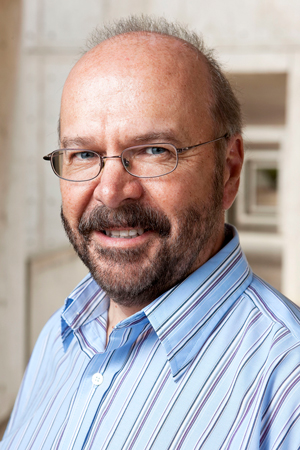
Joseph R. Ecker, Professor – Plant Molecular and Cellular Biology Laboratory
图片:由萨克生物研究所提供
Ecker, holder of the Salk International Council Chair in Genetics, is co-director of the new center along with Michael Snyder, a professor and chair of genetics at Stanford.
Salk and Stanford will lead the center, and U.C. San Diego, Ludwig Institute for Cancer Research, , 那个 斯克里普斯研究所, , 那个 J. Craig Venter Institute 和 Illumina Inc., all in San Diego, will collaborate on the project, in addition to U.C. Santa Cruz, which will also run the data coordination and management component.
“This Center of Excellence in Stem Cell Genomics shows why we are considered one of the global leaders in stem cell research,” says Alan Trounson, president of the stem cell agency. “Bringing together this team to do this kind of work means we will be better able to understand how stem cells change as they grow and become different kinds of cells. That deeper knowledge, that you can only get through a genomic analysis of the cells, will help us develop better ways of using these cells to come up with new treatments for deadly diseases.”
In addition to outside collaborations, the center will pursue some fundamental questions and goals of its own, including collecting and characterizing induced pluripotent stem cell lines from patients with familial cardiomyopathy; applying single-cell genomic techniques to better understand cellular subpopulations within diseased and healthy brain and pancreatic tissues; and developing novel computational tools to analyze networks underlying stem cell genome function.
The award includes $19 million for the center team to carry out collaborative projects with California scientists from outside the center, including investigations of disease mechanisms and the development of stem cell-based therapies. The Data Coordination and Management program will enable the research to be shared with other investigators around California and the world.
In addition to the Center of Excellence, the stem cell agency’s governing Board, the Independent Citizens Oversight Committee (ICOC), also approved more than $27 million in funding for the Basic Biology V awards. These go to researchers trying to advance the field by tackling significant, unresolved issues in human stem cell biology.
Salk Professor 罗纳德·埃文斯, holder of Salk’s March of Dimes Chair in Molecular and Developmental Biology and a Howard Hughes Medical Institute Investigator, was among the recipients. He was awarded $1,491,900 to investigate the role nuclear hormone receptors play in the generation of stem cells, research that holds potential to expand scientists’ understanding of cancer cell growth and the regeneration of tissues.
CIRM was established in November 2004 with the passage of Proposition 71, the California Stem Cell Research and Cures Act. The statewide ballot measure, which provided $3 billion in funding for stem cell research at California universities and research institutions, was overwhelmingly approved by voters, and called for the establishment of an entity to make grants and provide loans for stem cell research, research facilities, and other vital research.
关于索尔克生物研究所:
索尔克生物研究所是世界顶尖的基础研究机构之一,其国际知名的教职人员在一个独特、协作和富有创造性的环境中,深入探究生命科学的基本问题。索尔克科学家们致力于发现和指导未来几代研究人员,通过研究神经科学、遗传学、细胞和植物生物学以及相关学科,在癌症、衰老、阿尔茨海默氏症、糖尿病和传染病的认识方面做出了开创性的贡献。.
学院取得了许多成就,获得了包括诺贝尔奖和美国国家科学院院士在内的无数荣誉。该研究所由脊髓灰质炎疫苗先驱 Jonas Salk 博士于 1960 年创立,是一家独立的非营利组织和建筑地标。.
宣传办公室
电话:(858) 453-4100
press@salk.edu




