April 5, 2023
Discovery that distinct brain pathways underlie itch-scratch responses and chronic itch conditions in mice paves the way for new therapeutic targets
Discovery that distinct brain pathways underlie itch-scratch responses and chronic itch conditions in mice paves the way for new therapeutic targets
LA JOLLA—Itch is a protective signal that animals use to prevent parasites from introducing potentially hazardous pathogens into the body. If a mosquito lands on a person’s arm, they sense its presence on their skin and quickly scratch the spot to remove it. Itchiness due to something like a crawling insect is known as “mechanical” and is distinct from “chemical” itchiness generated by an irritant such as the mosquito’s saliva if it were to bite the person’s arm. While both scenarios cause the same response (scratching), recent research by Salk Institute scientists has revealed that, in mice, a dedicated brain pathway drives the mechanical sensation and is distinct from the neural pathway that encodes the chemical sensation.
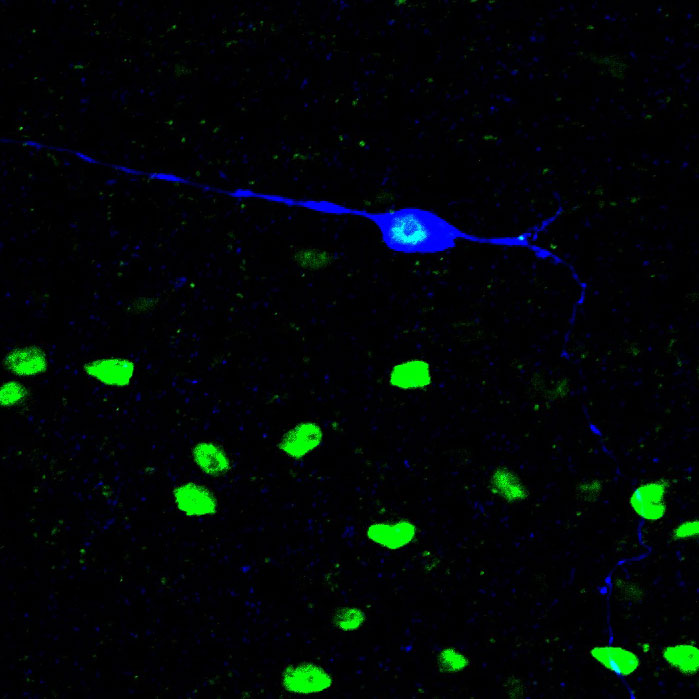
Their findings, published in 神经元 on April 5, 2023, show that a small population of neurons relay mechanical itch information from the spinal cord to the brain and identify the neuropeptide signals that regulate both itch types.
“This study provides fundamental insights into how these two forms of itch are encoded by the brain and opens up new avenues for therapeutic interventions for patients that suffer from a range of chronic itch conditions, including atopic dermatitis and psoriasis,” says co-corresponding author Martyn Goulding, professor and holder of the Frederick W. and Joanna J. Mitchell Chair.
The discovery builds on previous work in Goulding’s lab that had identified the neurons in the spinal cord that control mechanical itch and not chemical itch. Members of Goulding’s lab teamed up with co-corresponding author 孙汉, assistant professor and holder of the Pioneer Fund Developmental Chair, who had previously found that a small region of the brain serves as an alarm center that fields threat signals, both external and internal from within the body.
Han’s team had noticed that a specific group of neurons were crucial for encoding threat signals. Goulding’s lab then decided to focus on these neurons and ask if they play a specific role in relaying mechanical itch signals to this alarm center.
The team used genetic approaches combined with wearable miniaturized microscopes that allowed the researchers to see itch-induced activity in single neurons of mice. The scientists discovered that by removing an inhibitory pathway involved in itch, they could activate a mechanical itch. By observing subsequent activity and changes occurring in the brainstem, they saw that different cells were responding to either mechanical or chemical itch. This allowed the team to classify distinctions between a chemical itch pathway and a mechanical itch pathway and clearly identify the molecules important for regulating them.

“We found that if you sensitize one pathway, you can stimulate a pathological itch state, and vice versa,” says Han. “This indicates that these two pathways act together to drive chronic itch.”
Next, the scientists plan to examine where in the brain these pathways converge, and then explore the parts of the brain that receive signals that determine the decision of whether to scratch an itch. They also want to better understand how the spinal cord and brainstem differentiate between pain and itch.
“The prevalence of chronic itch increases as we age. For this reason, we would also like to understand more about what is happening to the neural circuits that relay itch as we get older,” says Goulding. “Given that chronic itch is an intractable problem, our findings should help leverage the development of new therapies for treating it.”
Other authors include Xiangyu Ren, Shijia Liu, Amandine Virlogeux, Sukjae J. Kang, Jeremy Brusch, and David Acton of Salk, Yuanyuan Liu of the National Institutes of Health, and Susan M. Dymecki of Harvard Medical School.
The work was supported by the National Institutes of Health (NS111643 and 5ROIMH116203).
DOI: 10.1016/j.neuron.2023.03.013
日记
神经元
作者
Xiangyu Ren, Shijia Liu, Amandine Virlogeux, Sukjae J. Kang, Jeremy Brusch, Yuanyuan Liu, Susan M. Dymecki, Sung Han, Martyn Goulding, David Acton
宣传办公室
电话:(858) 453-4100
press@salk.edu
萨尔克研究所是一个独立的非营利性研究机构,由首个安全有效的脊髓灰质炎疫苗的研发者乔纳斯·索尔克于1960年创立。该研究所的使命是推动以合作、敢于冒险为特点的基础性研究,以应对癌症、阿尔茨海默病和农业脆弱性等社会最紧迫的挑战。这项基础科学支撑着所有的转化研究,产生有助于全球新药和创新的见解。.