2024 年 11 月 19 日
Salk scientists identify brain circuit used to consciously slow breathing and confirm this reduces anxiety and negative emotions
Salk scientists identify brain circuit used to consciously slow breathing and confirm this reduces anxiety and negative emotions
拉霍亚Deep breath in, slow breath out… Isn’t it odd that we can self-soothe by slowing down our breathing? Humans have long used slow breathing to regulate their emotions, and practices like yoga and mindfulness have even popularized formal techniques like box breathing. Still, there has been little scientific understanding of how the brain consciously controls our breathing and whether this actually has a direct effect on our anxiety and emotional state.
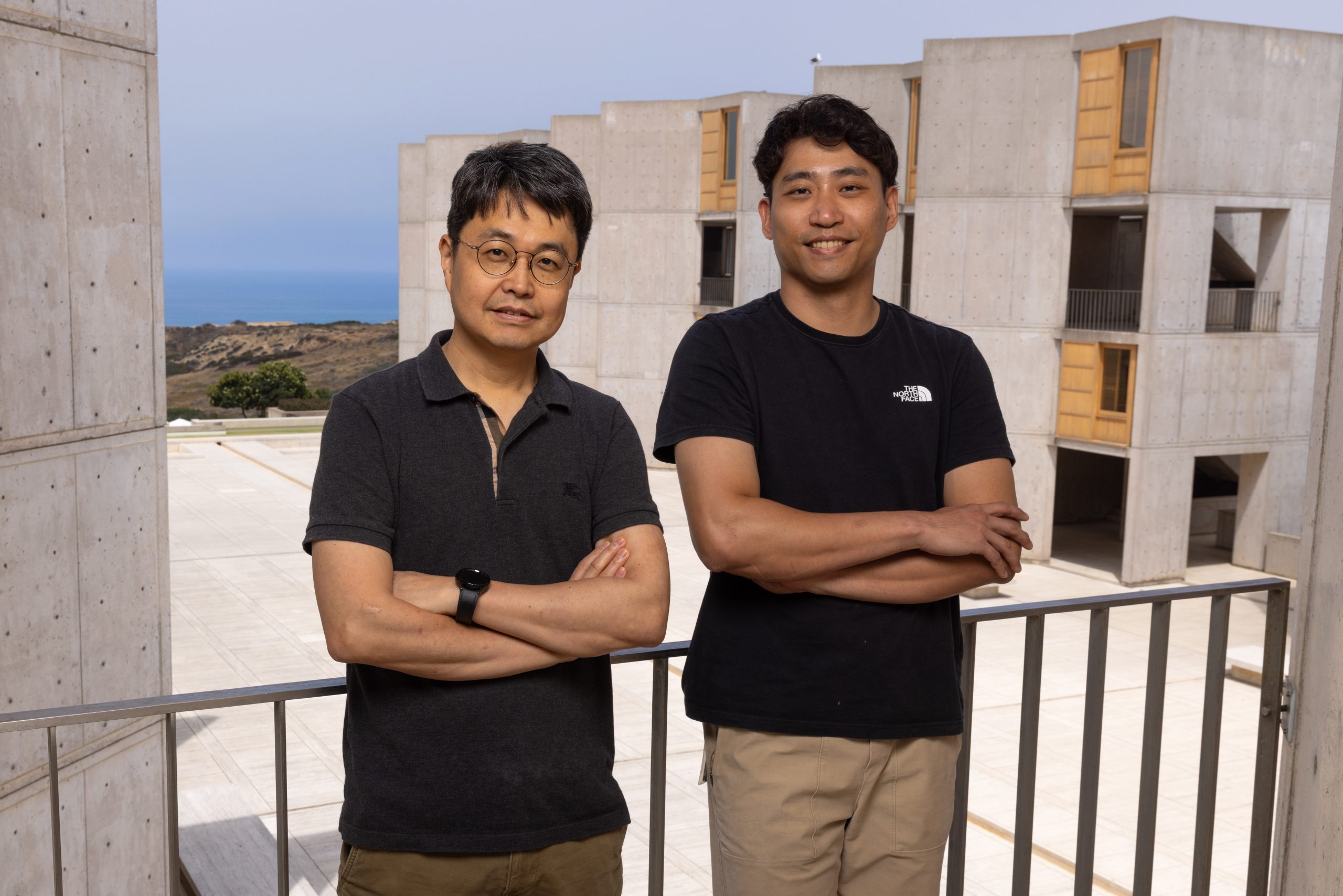
Neuroscientists at the Salk Institute have now, for the first time, identified a specific brain circuit that regulates breathing voluntarily. Using mice, the researchers pinpointed a group of brain cells in the frontal cortex that connects to the brainstem, where vital actions like breathing are controlled. Their findings suggest this connection between the more sophisticated parts of the brain and the lower brainstem’s breathing center allows us to coordinate our breathing with our current behaviors and emotional state.
研究发现,发表于 自然-神经科学 on November 19, 2024, describe a new set of brain cells and molecules that could be targeted with therapeutics to prevent hyperventilation and regulate anxiety, panic, or post-traumatic stress disorders.
“The body naturally regulates itself with deep breaths, so aligning our breathing with our emotions seems almost intuitive to us—but we didn’t really know how this worked in the brain,” says senior author 孙汉, associate professor and Pioneer Fund Developmental Chair at Salk. “By uncovering a specific brain mechanism responsible for slowing breathing, our discovery may offer a scientific explanation for the beneficial effects of practices like yoga and mindfulness on alleviating negative emotions, grounding them further in science.”
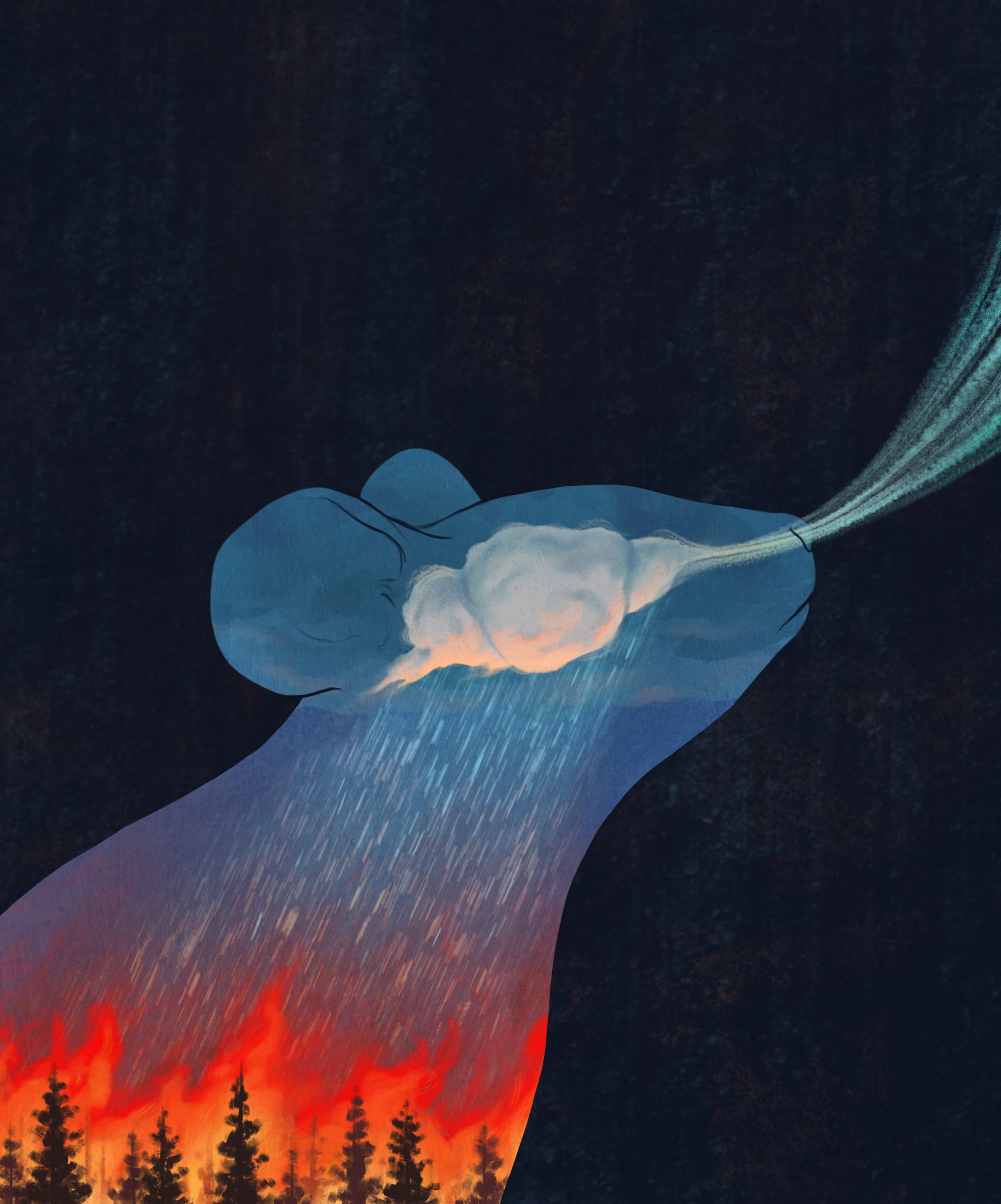
Breathing patterns and emotional state are difficult to untangle—if anxiety increases or decreases, so does the breathing rate. Despite this seemingly obvious connection between emotional regulation and breathing, previous studies had only thoroughly explored subconscious breathing mechanisms in the brainstem. And while newer studies had started to describe conscious top-down mechanisms, no specific brain circuits were discovered until the Salk team took a crack at the case.
The researchers assumed the brain’s frontal cortex, which orchestrates complex thoughts and behaviors, was somehow communicating to a brainstem region called the medulla, which controls automatic breathing. To test this, they first consulted a neural connectivity database and then did experiments to trace the connections between these different brain areas.
These initial experiments revealed a potential new breathing circuit: Neurons in a frontal region called the anterior cingulate cortex were connected to an intermediate brainstem area in the pons, which was then connected to the medulla just below.
Beyond the physical connections of these brain areas, it was also important to consider the types of messages they might send each other. For example, when the medulla is active, it initiates breathing. However, messages coming down from the pons actually inhibit activity in the medulla, leading breathing rates to slow down. Han’s team hypothesized that certain emotions or behaviors could lead cortical neurons to activate the pons, which would then lower activity in the medulla, resulting in slower breath.
To test this, the researchers recorded brain activity in mice during behaviors that alter breathing, such as sniffing, swimming, and drinking, as well as during conditions that induce fear and anxiety. They also used a technique called optogenetics to turn parts of this brain circuit on or off in different emotional and behavioral contexts while measuring the animals’ breathing and behavior.
Their findings confirmed that when the connection between the cortex and the pons was activated, mice were calmer and breathed more slowly, but when mice were in anxiety-inducing situations, this communication decreased, and breathing rates went up. Furthermore, when the researchers artificially activated this cortex-pons-medulla circuit, the animals’ breath slowed, and they showed fewer signs of anxiety. On the other hand, if researchers shut this circuit off, breathing rates went up, and the mice became more anxious.
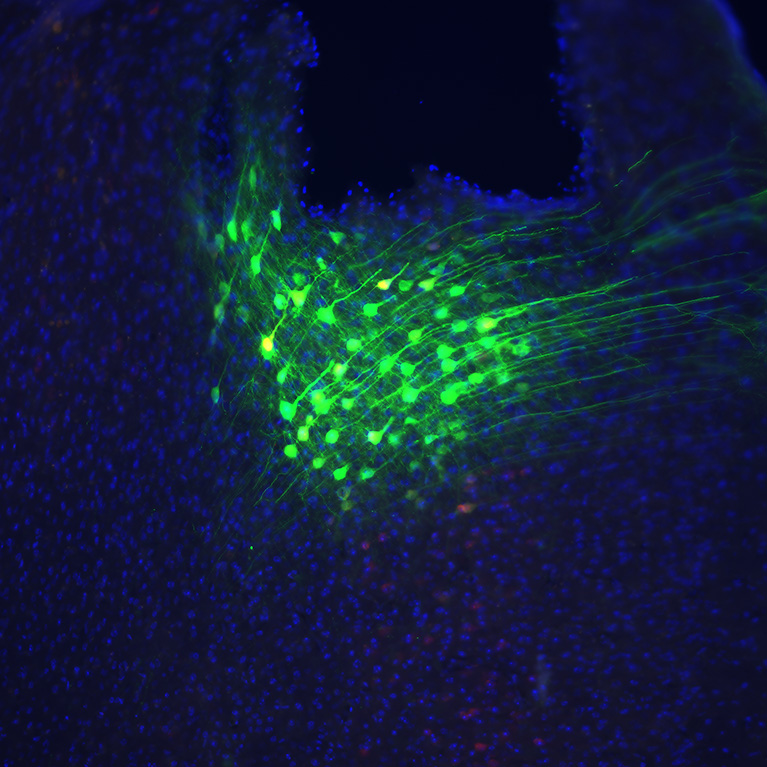
Altogether, this anterior cingulate cortex-pons-medulla circuit supported the voluntary coordination of breathing rates with behavioral and emotional states.
“Our findings got me thinking: Could we develop drugs to activate these neurons and manually slow our breathing or prevent hyperventilation in panic disorder?” says first author of the study Jinho Jhang, a senior research associate in Han’s lab. “My sister, three years younger than me, has suffered from panic disorder for many years. She continues to inspire my research questions and my dedication to answering them.”
The researchers will continue analyzing the circuit to determine whether drugs could activate it to slow breathing on command. Additionally, the team is working to find the circuit’s converse—a fast breathing circuit, which they believe is likely also tied to emotion. They are hopeful their findings will result in long-term solutions for people with anxiety, stress, and panic disorders, who inspire their discovery and dedication.
“I want to use these findings to design a yoga pill,” says Han. “It may sound silly, and the translation of our work into a marketable drug will take years, but we now have a potentially targetable brain circuit for creating therapeutics that could instantly slow breathing and initiate a peaceful, meditative state.”
Other authors include Shijia Liu, Seahyung Park, and David O’Keefe of Salk.
The work was supported by the Kavli Institute for Brain and Mind (IRGS 2020-1710).
DOI: 10.1038/s41593-024-01799-w
日记
自然-神经科学
作者
Jinho Jhang, Seahyung Park, Shijia Liu, David D. O’Keefe, and Sung Han
宣传办公室
电话:(858) 453-4100
press@salk.edu
萨尔克研究所是一个独立的非营利性研究机构,由首个安全有效的脊髓灰质炎疫苗的研发者乔纳斯·索尔克于1960年创立。该研究所的使命是推动以合作、敢于冒险为特点的基础性研究,以应对癌症、阿尔茨海默病和农业脆弱性等社会最紧迫的挑战。这项基础科学支撑着所有的转化研究,产生有助于全球新药和创新的见解。.