April 20, 2026
Salk Institute researchers uncover how a liver-made protein times the daily rhythm of hepatic fat secretion, revealing a new circadian lipid trafficking mechanism with implications for fatty liver diseases
Salk Institute researchers uncover how a liver-made protein times the daily rhythm of hepatic fat secretion, revealing a new circadian lipid trafficking mechanism with implications for fatty liver diseases
LA JOLLA—Every day, the liver packages fat and releases it into the bloodstream to fuel the body, supplying energy to the heart, muscles, and other organs during the active hours of the day. The liver does not release fat into the bloodstream at random. Like much of human physiology, this daily export of fat follows a precise rhythm, timed to the body’s internal clock. But what molecular signal tells the liver when to act?
A new Salk Institute study identifies a surprising answer: Fibroblast Growth Factor 1 (FGF1), a protein whose production in the liver rises and falls on a daily schedule to trigger a daily pulse of fat release from the liver. In other words, the liver uses FGF1 signaling to time the export of fat to provide energy to tissues such as the heart and muscles when they need it most.
If FGF1 sets this essential clock, then what happens in FGF1’s absence? Fat accumulates in the liver, setting the stage for MASLD.
The findings, published by Nature Communications on March 19, 2026, shed light on how liver fat secretion is regulated in healthy physiology, and what goes wrong in MASLD and other metabolic disorders.
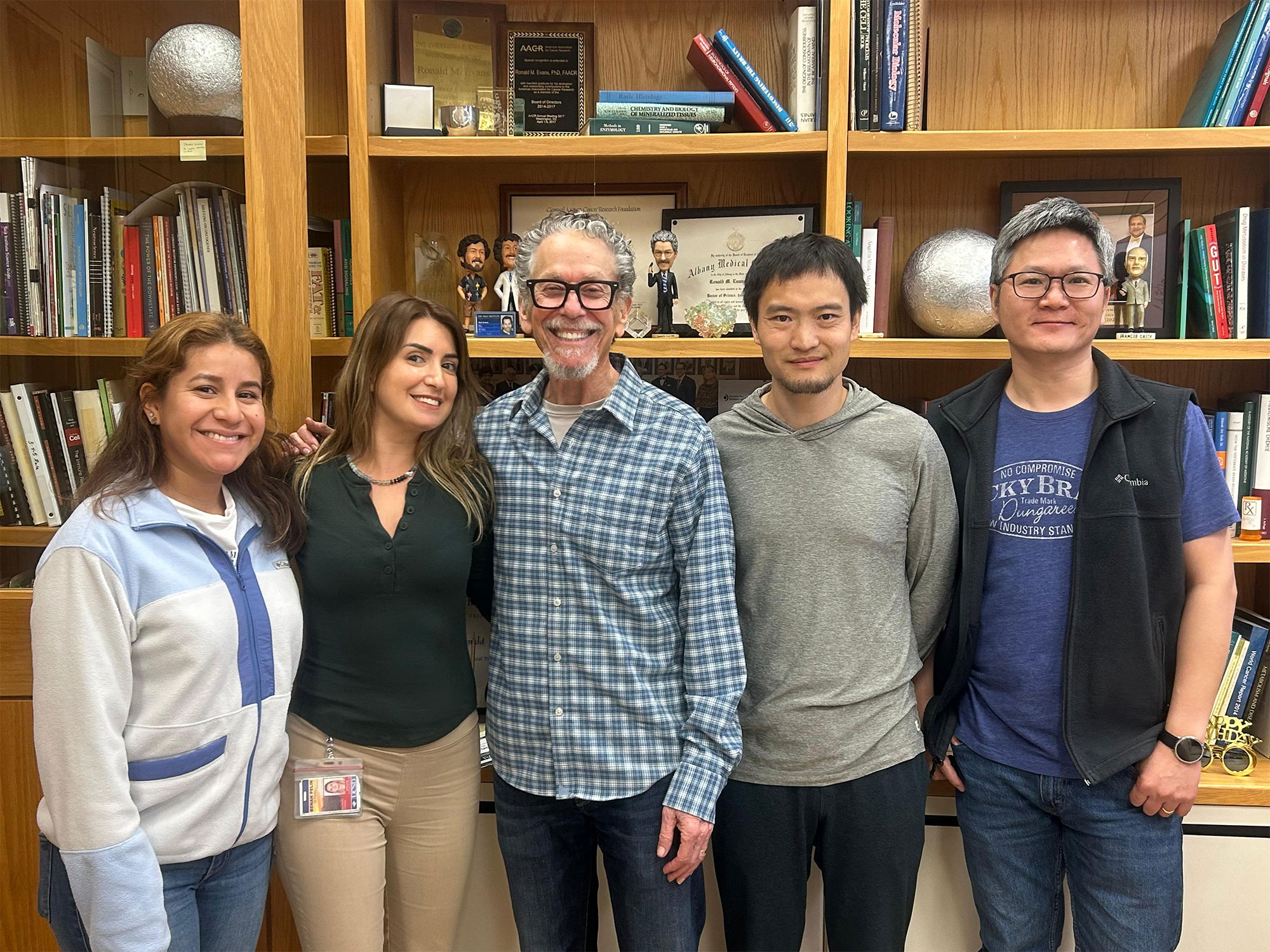
“We knew that liver fat metabolism follows a circadian rhythm, but the molecular logic connecting the clock to that output was unclear,” says study senior and co-corresponding author 罗纳德·埃文斯博士, professor and holder of the March of Dimes Chair in Molecular and Developmental Biology at Salk. “FGF1 turned out to be a key timekeeper—a signal the liver uses to coordinate when and how much fat it secretes.”
The Salk team, led by co-first authors Benan Pelin Sermikli, PhD, and Sihao Liu, PhD, showed that FGF1 is an output of the liver’s internal clock, continuing to rise and fall each day even when feeding schedules and light cues are removed. FGF1 works by binding to a receptor on the surface of liver cells, setting off a chain reaction inside the cell, including, surprisingly, affecting a protein normally known as a cellular stress sensor that ultimately tells the liver to package and release fat into the bloodstream.
“This was unexpected,” says Sermikli, a postdoctoral researcher in Evans’s lab. “We’re used to thinking of this cellular sensor as a distress signal. Seeing it activated as part of a normal, daily rhythm reframes how we think about its role in metabolic health.”
To test what happens without FGF1, the team deleted it specifically in the liver. The daily rhythm of fat secretion disappeared, leading to fat accumulation and accelerated disease in mouse models. What’s more, when MASLD had already developed, adding FGF1 back stalled disease progression.
The findings illustrate a broader principle: Pinpointing the molecular signals that govern normal physiology, in this case the daily rhythm of fat export from the liver, can expose new vulnerabilities in disease and guide future therapies.
“This research builds on an emerging picture of FGF1 as a systemic lipid trafficker,” says co-corresponding author Michael Downes, a senior staff scientist in Evans’s lab.
The work may also help explain why circadian disruption, from shift work to chronic sleep loss, has been linked to metabolic disease. Each mechanistic step uncovered brings the field closer to therapies grounded not just in symptom management, but in the fundamental biology of how the body regulates fat.
Other authors include Kyeongkyu Kim, Linnea Hases, Ashley Untereiner, Jocelyn Torres, Mingxiao He, Lillian Crossley, Yang Dai, Jonathan Zhu, Chandra Lekha Koopari, Weiwei Fan, Morgan Truitt, Annette Atkins, Michael Downes, and Ronald Evans of Salk; and Tim van Zutphen and Johan Jonker of University of Groningen.
This study was funded by the National Institutes of Health (DK057978-45, HL147835, DK057978, DK120515) and Larry L. Hillblom Foundation, Inc. (2021-D-001-NET).
DOI: 10.1038/s41467-026-70849-7
日记
Nature Communications
作者
Benan Pelin Sermikli, Sihao Liu, Kyeongkyu Kim, Linnea Hases, Tim van Zutphen, Ashley Untereiner, Jocelyn Torres, Mingxiao He, Lillian Crossley, Yang Dai, Jonathan Zhu, Chandra Lekha Koopari, Weiwei Fan, Morgan L. Truitt, Johan W. Jonker, Annette R. Atkins, Michael Downes, Ronald M. Evans
宣传办公室
电话:(858) 453-4100
press@salk.edu
萨尔克研究所是一个独立的非营利性研究机构,由首个安全有效的脊髓灰质炎疫苗的研发者乔纳斯·索尔克于1960年创立。该研究所的使命是推动以合作、敢于冒险为特点的基础性研究,以应对癌症、阿尔茨海默病和农业脆弱性等社会最紧迫的挑战。这项基础科学支撑着所有的转化研究,产生有助于全球新药和创新的见解。.