November 18, 2015
Salk Institute research reveals that diabetes in elderly, lean animals has a different cause—and potential treatment—from obesity-associated type 2 diabetes
Salk Institute research reveals that diabetes in elderly, lean animals has a different cause—and potential treatment—from obesity-associated type 2 diabetes
拉霍亚Diabetes is often the result of obesity and poor diet choices, but for some older adults the disease might simply be a consequence of aging. New research has discovered that diabetes—or insulin resistance—in aged, lean mice has a different cellular cause than the diabetes that results from weight gain (type 2). And the findings point toward a possible cure for what the co-leading scientists, 罗纳德·埃文斯 和 叶正, are now calling a new kind of diabetes (type 4).
“A lot of diabetes in the elderly goes undiagnosed because they don’t have the classical risk factors for type 2 diabetes, such as obesity,” says Evans, director of Salk’s Gene Expression Laboratory and senior author of the new paper, which was published November 18, 2015 in 自然. “We hope our discovery not only leads to therapeutics, but to an increased recognition of type 4 diabetes as a distinct disease.”
In healthy people, the pancreas produces the hormone insulin, which signals to cells to take sugar out of the blood after a meal. In people with diabetes, however, the cycle is broken: either insulin is not produced in response to a meal or the muscle and liver cells don’t respond to the insulin (also known as insulin resistance). In either case, sugar stays in the bloodstream for longer times, leading to a host of health issues ranging from loss of limbs to death.
图片:由萨克生物研究所提供
Traditionally, diabetes has been grouped into the rarer type 1 disease, which most often appears in childhood when the pancreas stops producing insulin; and type 2, which is characterized by the body’s failure to respond to insulin and most often attributed to being overweight. Both forms of the disease lead to high blood sugar levels. A third type of diabetes results in symptoms mimicking Alzheimer’s. But Evans—after a thin, older family friend developed diabetes—wondered why some people developed the disease later in life without weight gain.
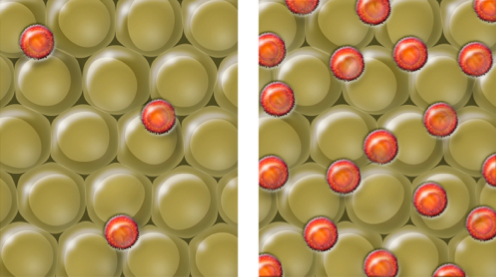
Evans, along with Zheng, an assistant professor in Salk’s Nomis Foundation Laboratories for Immunobiology and Microbial Pathogenesis, and colleagues, set out to compare the immune systems of healthy mice, those with obesity-related diabetes and those with age-related diabetes. The mice with age-related disease, they found, had abnormally high levels of immune cells called T regulatory cells (Tregs) inside their fat tissue. Mice with obesity-related diabetes, on the other hand, had normal levels of Tregs within the tissue, despite having more fat tissue.
图片:由萨克生物研究所提供
“We created a census of immune cells in the fat of these mice,” says Sagar Bapat, a graduate student in the Evans and Zheng labs and first author of the new paper. “Simply by counting cell types, we immediately saw that there were more Tregs in the older mice with diabetes than any other group.”
Normally, Bapat explains, Tregs help calm inflammation. Because fat tissue is constantly broken down and built back up as it stores and releases energy, it requires low levels of inflammation to constantly remodel itself. But as someone ages, the new research suggests, Tregs gradually accumulate within fat. And if the cells reach a tipping point where they completely block inflammation in fat tissue, they can cause fat deposits to build up inside unseen areas of the body, including the liver, leading to insulin resistance.
“It was a little bit surprising since normally Tregs are supposed to be beneficial for the body,” says Zheng.
When the scientists blocked Treg cells from accumulating in the fat by targeting a molecule that the immune cells require, mice no longer developed type 4 diabetes in old age. However, if mice became obese, blocking the Tregs in fat did not prevent type 2 insulin resistance.
“It turns out that for this type of diabetes, the treatment is not losing weight,” says Evans. “The treatment is actually losing these cells, and we show that it’s possible to do that.”
The researchers now want to find out exactly how Tregs interact with fat tissue and whether the immune cells accumulate in other organs during normal aging. They’re also planning studies to see whether the results hold true in humans. “We’re working with clinicians to get samples from older, lean people with diabetes to see if this cell type is also implicated in human disease,” says Michael Downes, a senior staff scientist at Salk involved in the new study.
Other researchers on the study were Jae Myoung Suh, Sungsoon Fang, Sihao Liu, Yang Zhang, Albert Cheng, Carmen Zhou, Yuqiong Liang, Mathias LeBlanc, Annette R. Atkins and Ruth T. Yu of the Salk Institute; and Christopher Liddle of the University of Sydney.
这项工作以及参与研究的学者得到了以下机构资助: 美国国立卫生研究院, 霍华德·休斯医学研究所, 澳大利亚国家健康与医学研究委员会, , 那个 格伦医学研究基金会, , 那个 Leona M. 和 Harry B. Helmsley 慈善信托基金, 益普森/生物测量, 加州再生医学研究所, The Ellison Medical Foundation, the Nomis Foundation, the 丽塔·艾伦基金会, the Emerald Foundation, the Hearst Foundation, , 那个 National Multiple Sclerosis Society, and the James B. Pendleton Charitable Trust.
日记
自然
作者
Sagar P. Bapat, Jae Myoung Suh, Sungsoon Fang, Sihao Liu, Yang Zhang, Albert Cheng, Carmen Zhou, Yuqiong Liang, Mathias LeBlanc, Christopher Liddle, Annette R. Atkins, Ruth T. Yu, Michael Downes, Ronald M. Evans & Ye Zheng
宣传办公室
电话:(858) 453-4100
press@salk.edu
萨尔克研究所是一个独立的非营利性研究机构,由首个安全有效的脊髓灰质炎疫苗的研发者乔纳斯·索尔克于1960年创立。该研究所的使命是推动以合作、敢于冒险为特点的基础性研究,以应对癌症、阿尔茨海默病和农业脆弱性等社会最紧迫的挑战。这项基础科学支撑着所有的转化研究,产生有助于全球新药和创新的见解。.