
2016 年 1 月 14 日
Salk scientists uncover pathway in highly suspect disease gene also tied to schizophrenia and bipolar disease
Salk scientists uncover pathway in highly suspect disease gene also tied to schizophrenia and bipolar disease
LA JOLLA—A gene linked to mental disorders helps lays the foundation for a crucial brain structure during prenatal development, according to Salk Institute research published January 14, 2016 in 细胞报告.
The findings reveal new mechanistic insights into the gene, known as MDGA1, which may bring a better understanding of neurodevelopmental disorders in people, says Carlos Perez-Garcia, the study’s lead author and a staff researcher in the laboratory of Professor Dennis O’Leary, holder of the Vincent J. Coates Chair in Molecular Neurobiology.
Signs of autism, schizophrenia and bipolar disorder often take years to manifest. Studying suspect disease genes in the brain early in life could prove valuable in the development of new treatments or interventions.
More than a decade ago, O’Leary’s group discovered MDGA1, which codes for a protein that influences neuron migration in the developing brain. Coating the outer surfaces of neurons, MDGA1 is particularly abundant in the cerebral cortex, a six-layered area of the brain needed to process information from the five senses and coordinate movement, as well as to be self-aware and plan ahead.
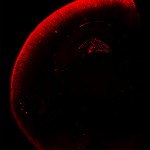
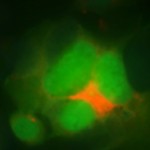
As the lab was investigating the role of MDGA1 in brain development, other research groups published large population-based studies implicating the gene in autism, schizophrenia and bipolar disorder. “The human data brought a whole new level of meaning to our work,” says Perez-Garcia. “It allowed us to consider our findings in the context of human disease.”
The team decided to look at the protein’s role in early brain development, when the foundation of a proper, six-layer cortex is being laid. When Perez-Garcia disabled the gene in mice a little more than halfway through pregnancy, to his surprise, the neuron precursors in the cerebral cortex migrated to the wrong places in the brain. These cells die off before they can become neurons and, overall, without MDGA1, the cerebral cortex loses about half its neurons.
These new results suggest that mutations in MDGA1 while the cortex is developing (during the first half of pregnancy in humans) could produce snowball effects leading to the development of brain disorders. The severe depletion of neurons in the cortex strongly compromises its ability to communicate with other brain areas, says Perez-Garcia.
More experiments by the group revealed what happens when MDGA1 is mutated: It prevents neuron precursors from sticking to one another, which is critical for those cells to divide and generate neurons.
The lab plans to continue to examine the role of MDGA1 earlier in development and also during adulthood, as well as assess behaviors of mice lacking the gene.
该研究得到了 美国国立卫生研究院.
日记
细胞报告
作者
Carlos Perez-Garcia and Dennis O’Leary
宣传办公室
电话:(858) 453-4100
press@salk.edu
萨尔克研究所是一个独立的非营利性研究机构,由首个安全有效的脊髓灰质炎疫苗的研发者乔纳斯·索尔克于1960年创立。该研究所的使命是推动以合作、敢于冒险为特点的基础性研究,以应对癌症、阿尔茨海默病和农业脆弱性等社会最紧迫的挑战。这项基础科学支撑着所有的转化研究,产生有助于全球新药和创新的见解。.