December 20, 2018
Salk researchers analyze skin cells from more than 100 people of different ages to find molecular signatures that change as people get older
LA JOLLA—Doctors have long observed that biological age and chronological age are not always one and the same. A 55-year-old may exhibit many signs of old age and have numerous age-related diseases, whereas an 80-year-old may be healthy and robust. While diet, physical activity and other factors play a role, there are many contributors as to why and how some people age better than others. Those contributors remain poorly understood.
For a study published December 19, 2018 in Genome Biology, a collaborative team at the Salk Institute analyzed skin cells ranging from the very young to the very old and looked for molecular signatures that can be predictive of age. Developing a better understanding of the biological processes of aging could eventually help to address health conditions that are more common in old age, such as heart disease and dementia.

点击此处 用于高分辨率图像
版权:萨克研究所
“This experiment was designed to determine whether there are molecular signatures of aging across the entire range of the human life span,” says co-senior author 萨凯特·纳夫拉克哈, an assistant professor in Salk’s Integrative Biology Laboratory. “We want to develop algorithms that can predict healthy aging and nonhealthy aging, and try to find the differences.”
“The study provides a foundation for quantitatively addressing unresolved questions in human aging, such as the rate of aging during times of stress,” says Professor 马丁·赫策尔, co-senior author, as well as Salk’s vice president and chief science officer.
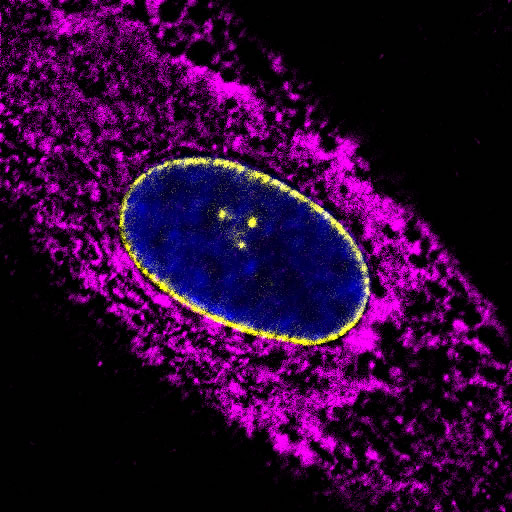
The researchers focused on a type of skin cell called dermal fibroblasts, which generate connective tissue and help the skin to heal after injury. They chose this type of cell for two reasons: first, the cells are easy to obtain with a simple, non-invasive skin biopsy; second, earlier studies indicated that fibroblasts are likely to contain signatures of aging. This is because, unlike most types of cells that completely turn over every few weeks or months, a subset of these cells stays with us our entire lives.
The investigators analyzed fibroblasts taken from 133 healthy individuals ranging in age from 1 to 94. To get a representative sample, the team studied an average of 13 people for each decade of age. The lab cultured the cells to multiply, then used a method called RNA sequencing (RNA-Seq) to look for biomarkers in the cells that change as people get older. RNA-Seq uses deep-sequencing technologies to determine which genes are turned on in certain cells. Using custom machine-learning algorithms to sort the RNA-Seq data, the team found certain biomarkers indicating aging, and were able to predict a person’s age with less than eight years error on average.

点击此处 用于高分辨率图像。.
Credit: Roberta Schulte/Swati Tyagi/Salk Institute
“We took a ‘kitchen sink’ approach with this project,” says first author Jason Fleischer, a Salk postdoctoral fellow. “Rather than going into this research with an idea of what we wanted to find, we decided to look at the changes in expression of all the protein-coding genes and let the algorithms sort it out. We used what’s called an ensemble machine-learning method to do this.”
The analysis from the Salk team was different from earlier approaches taken by other labs to study biological aging. Most previous studies focused on changes at only a few DNA methylation sites, rather than looking at changes of expression on the whole genome. The dataset was also much larger than any research of this type that’s ever been done before, because it included so many people representing a range of decades. The researchers have made the data public so that other investigators can use it.
To validate the algorithm, the team also used fibroblasts from 10 patients with progeria, a genetic disease characterized by accelerated aging. Based on analysis of the molecular signatures from these patients, who ranged in age from two to eight, the model predicted them to be about a decade older than their calendar age.
“The fact that our system can predict this kind of aging shows that this model is starting to get at the true underpinnings of biological age,” Fleischer says.
Although this study uncovered age-related biomarkers, the investigators emphasize that just because something is predictive of aging doesn’t mean it is the cause of aging. In the meantime, however, if the findings are validated, doctors could use this type of analysis to determine when to begin screening their patients for age-related conditions and to advise them about healthy lifestyle choices.
More research needs to be done before any preventive treatments could be developed. One of the next steps of this research will be look for these signatures in other types of cells.
“Aging is a driver of so many diseases, including Alzheimer’s and other neurologic problems,” Navlakha concludes. “If we are able to show that the changes we’ve seen in fibroblasts are connected with aging in other types of cells, we may eventually be able to use these signatures to develop targeted interventions.”
Other researchers on the paper were Roberta Schulte, Hsiao H. Tsai, Swati Tyagi, Maxim N. Shokhirev and Ling Huang of Salk; and Arkaitz Ibarra of Molecular Stethoscope, Inc.
This work was funded by a National Institutes of Health Transformative Research Award grant (R01 NS096786), the Keck Foundation, the NOMIS Foundation, the National Institute on Deafness and Other Communication Disorders of the National Institutes of Health (1R01DC017695), and the Pew Charitable Trusts.
日记
Genome Biology
作者
Jason G. Fleischer, Roberta Schulte, Hsiao H. Tsai, Swati Tyagi, Arkaitz Ibarra, Maxim N. Shokhirev, Ling Huang, Martin W. Hetzer, Saket Navlakha
宣传办公室
电话:(858) 453-4100
press@salk.edu
萨尔克研究所是一个独立的非营利性研究机构,由首个安全有效的脊髓灰质炎疫苗的研发者乔纳斯·索尔克于1960年创立。该研究所的使命是推动以合作、敢于冒险为特点的基础性研究,以应对癌症、阿尔茨海默病和农业脆弱性等社会最紧迫的挑战。这项基础科学支撑着所有的转化研究,产生有助于全球新药和创新的见解。.