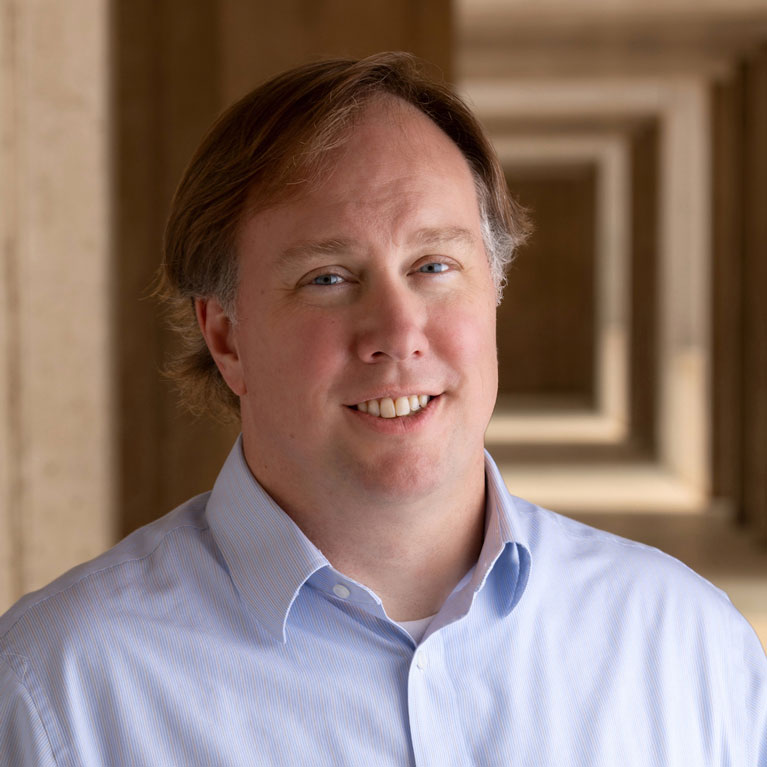
LA JOLLA—Profesor Asistente del Instituto Salk Edward Stites ha sido nombrado/a NIH Director’s New Innovator for 2020 as part of the National Institutes of Health’s High-Risk, High-Reward Research Program. The award “supports unusually innovative research from early career investigators,” according to the NIH and provides $1.5 million for a 5-year project. For his project, Stites will use mathematical and biological approaches to identify strategies to convert failed therapeutics into effective agents.
Joanne Chory, quien fue pionera en la aplicación de la genética molecular a la biología vegetal y transformó nuestra comprensión de la fotosíntesis, recibirá el Premio Pearl Meister Greengard 2020, el máximo galardón de Rockefeller que reconoce a mujeres científicas destacadas. Chory es titular de la Cátedra Howard H. and Maryam R. Newman en Biología Vegetal y directora del Laboratorio de Biología Molecular y Celular de Plantas del Instituto Salk. También es Investigadora del Instituto Médico Howard Hughes. Frances Beinecke, expresidenta del Natural Resources Defense Council, entregará el premio en una ceremonia virtual organizada por Rockefeller el 22 de octubre.
LA JOLLA—The Salk Institute will establish a world-class San Diego Nathan Shock Center (SD-NSC), a consortium with Sanford Burnham Prebys Medical Discovery Institute and the University of California San Diego (UC San Diego), to study cellular and tissue aging in humans. The Center will be funded by a grant from the National Institute on Aging (NIA) of the National Institutes of Health expected to total $5 million over the next 5 years (NIA grant number P30AG068635).
LA JOLLA—The diabetes drug metformin—derived from a lilac plant that’s been used medicinally for more than a thousand years—has been prescribed to hundreds of millions of people worldwide as the frontline treatment for type 2 diabetes. Yet scientists don’t fully understand how the drug is so effective at controlling blood glucose.
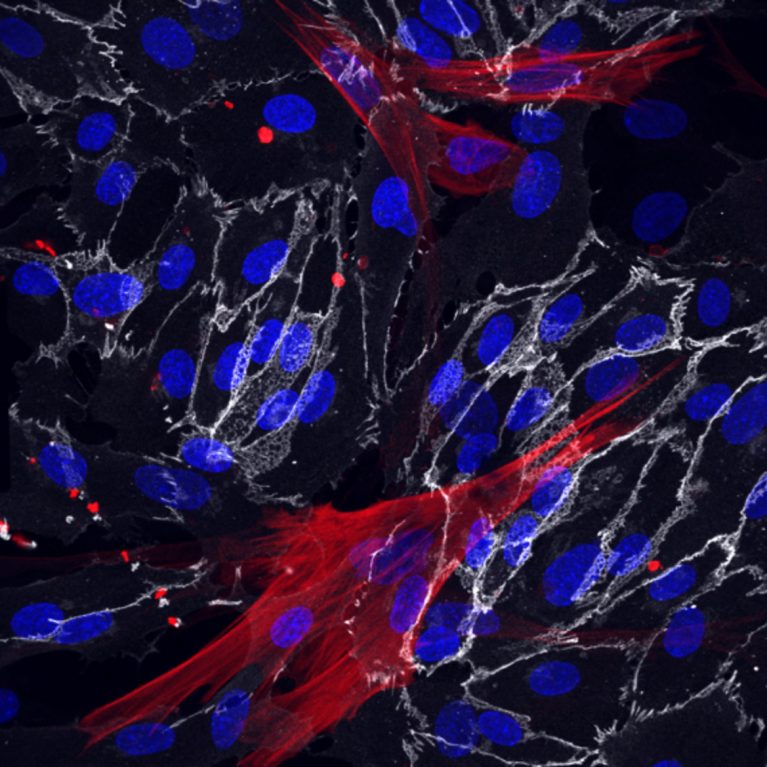
LA JOLLA—Salk scientists have used skin cells called fibroblasts from young and old patients to successfully create blood vessels cells that retain their molecular markers of age. The team’s approach, described in the journal eLife on September 8, 2020, revealed clues as to why blood vessels tend to become leaky and hardened with aging, and lets researchers identify new molecular targets to potentially slow aging in vascular cells.
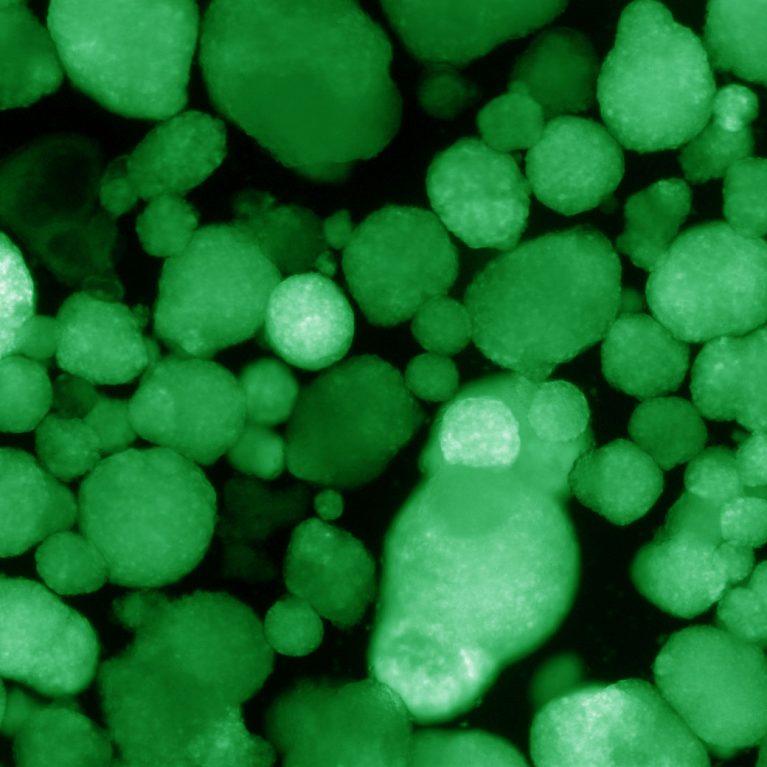
LA JOLLA—Salk Institute scientists have made a major advance in the pursuit of a safe and effective treatment for type 1 diabetes, an illness that impacts an estimated 1.6 million Americans with a cost of $14.4 billion annually.
LA JOLLA—Renowned cell biologist and Salk Professor David Schubert passed away on August 6 at the age of 77 in La Jolla, California. He was known for the development of novel screening techniques that allowed his team to identify naturally occurring chemicals that can slow or prevent the neurological damage that occurs in neurodegenerative disorders, such as Alzheimer’s disease.
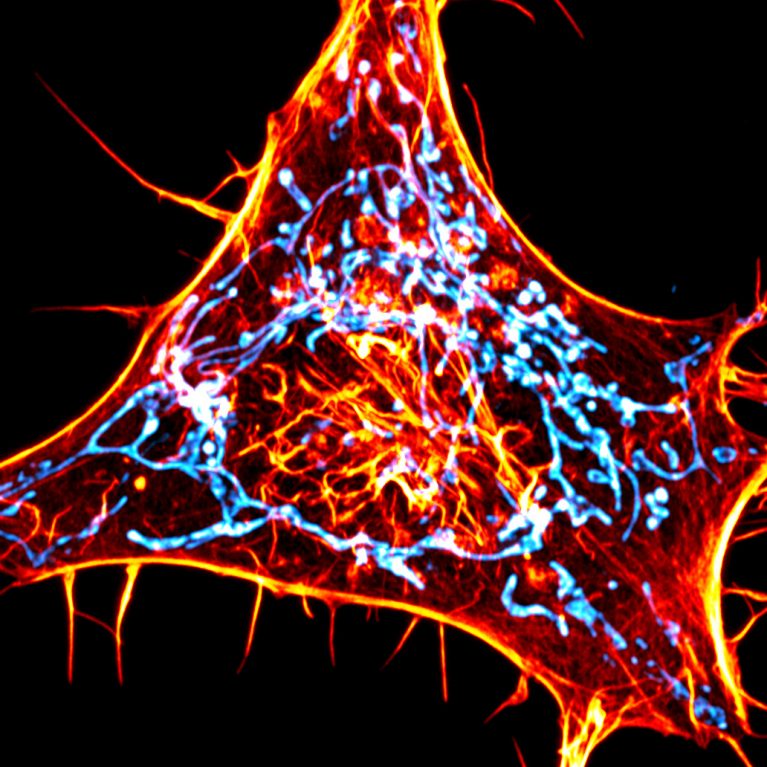
LA JOLLA—While your skeleton helps your body to move, fine skeleton-like filaments within your cells likewise help cellular structures to move. Now, Salk researchers have developed a new imaging method that lets them monitor a small subset of these filaments, called actin.
LA JOLLA—A drug candidate developed by Salk researchers, and previously shown to slow aging in brain cells, successfully reversed memory loss in a mouse model of inherited Alzheimer’s disease. The new research, published online in July 2020 in the journal Biología Redox, also revealed that the drug, CMS121, works by changing how brain cells metabolize fatty molecules known as lipids.
LA JOLLA—In research that aims to illuminate the causes of human developmental disorders, Salk scientists have generated 168 new maps of chemical marks on strands of DNA—called methylation—in developing mice.
LA JOLLA—Las personas acusadas erróneamente de un delito a menudo esperan años, si es que llegan, a ser exoneradas. Muchos de estos casos de acusaciones erróneas provienen de testimonios poco confiables de testigos presenciales. Ahora, científicos del Salk han identificado una nueva forma de presentar una fila de sospechosos a un testigo presencial que podría mejorar la probabilidad de identificar al sospechoso correcto y reducir el número de personas inocentes condenadas a prisión. Su informe se publica en Comunicaciones de la Naturaleza el 14 de julio de 2020.
LA JOLLA—The Salk Institute is pleased to welcome two new assistant professors in the fields of cancer biology and biophysics, respectively. Daniel Hollern and Pallav Kosuri will bring fresh perspectives to advance an understanding of, and find new treatments for, breast cancer and heart disease.
LA JOLLA—The human immune system is a finely-tuned machine, balancing when to release a cellular army to deal with pathogens, with when to rein in that army, stopping an onslaught from attacking the body itself. Now, Salk researchers have discovered a way to control regulatory T cells, immune cells that act as a cease-fire signal, telling the immune system when to stand down.
LA JOLLA—Chronic liver disease represents a major global public health problem affecting an estimated 844 million people, according to the World Health Organization. It is among the top causes of mortality in Australia, the UK and the United States. At the same time, it is both difficult to manage and there is no FDA-approved anti-fibrotic liver therapy. The microbiome—a complex collection of microbes that inhabit the gut—may be an unexpected indictor of health. Now, a collaborative team of Salk Institute and UC San Diego scientists have created a novel microbiome-based diagnostic tool that, with the accuracy of the best physicians, quickly and inexpensively identifies liver fibrosis and cirrhosis over 90 percent of the time in human patients.
LA JOLLA—As the COVID-19 pandemic continues across the globe, the Salk Institute joins in efforts to understand the fundamental science behind the novel coronavirus to pave the way to treatments and cures. COVID-19 exploits a vulnerability in the immune system’s armor: because the SARS-CoV-2 virus—the novel coronavirus that causes COVID-19—appeared in humans recently, our immune systems have no experience with the virus—and sometimes have difficulty fighting it.
LA JOLLA—A significant site of damage during COVID-19 infection is the lungs. Understanding how the lungs’ immune cells are responding to viral infections could help scientists develop a vaccine.
Our mission to better humanity must extend beyond science. That was the core premise on which we founded the Office of Equity and Inclusion (OEI) at Salk. Repugnant racial discrimination and violence against Black people are devastating reminders of the vital importance of this work, but also of the need to be vigilant in continually assessing and enhancing our efforts. Just as “every cure has a starting point” is championed as our mantra in research towards eradicating disease and other issues threatening human health, it so too must be our mindset in doing our part to eradicate systemic racism and injustice. For each, the essential starting point is an absolute commitment to being constructive forces for progress and agents of meaningful change.
LA JOLLA—Cancer is often the result of DNA mutations or problems with how cells divide, which can lead to cells “forgetting” what type of cell they are or how to function properly. Now, Professor Martín Hetzer and a team of scientists have provided clarity into how new cells remember their identity after cell division. These memory mechanisms, published in Genes & Development on June 4, 2020, could explicate problems that occur when cell identity is not maintained, such as cancer.
El racismo no debe ser tolerado en nuestro país y no será tolerado dentro del Instituto Salk, el cual tiene como valor fundamental la mejora de la humanidad. Las declaraciones hechas recientemente por un empleado van completamente en contra de la misión y las creencias humanistas del Instituto, han provocado una respuesta enérgica dentro de nuestro campus y han profundizado el dolor que experimentan nuestras comunidades negras ante la abominable injusticia.
Each of us has a responsibility to maintain a work environment that is professional, civil and enables people and creativity to thrive. It is important that all of us approach this ongoing dialogue with respect and consideration for how our words and actions may impact one another.